


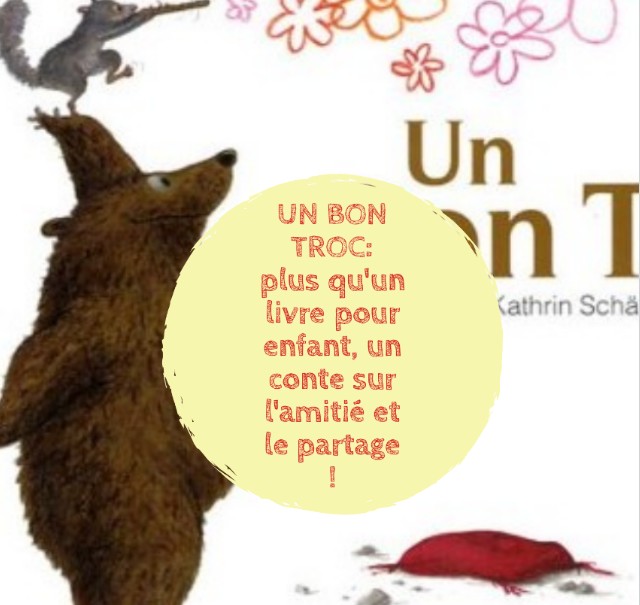
A good trade can be cleverly negotiated, but is friendship really a matter of calculation? A Good Trade by Lorenz Pauli is more than a children's book: it is a tale about friendship and sharing.
A bear is sitting on his favourite cushion when a dormouse approaches, playing a flute. The bear asks the dormouse to let him try the flute in exchange for his cushion. What begins as a bargain slowly turns into something warmer.

Through small exchanges, the two animals discover that giving freely brings more joy than any deal. It is a quiet story that invites children to look at generosity, simplicity and wonder in a new light.
Quick takeaways
- A bear and a dormouse trade objects, then discover the joy of giving freely
- The story gently introduces sharing, minimalism and wonder
- Warm, expressive illustrations carry much of the emotion
- Light humour reflects real childhood squabbles and their resolution
- Music and dance run through the book, inviting movement
- A calm read-aloud for bedtime or quiet afternoons
The Story: From Bargain to Friendship
The bear sits on his preferred cushion while a dormouse comes closer, playing a flute. The bear asks to try the instrument and offers his cushion in return. This first swap opens a story of friendship built on exchanges and sharing between the two animals.
The dormouse offers his music, and the bear carries him on his head. The dormouse shows the way, and the bear offers his soft fur as a bed. The dormouse gives a lucky stone to his friend, and the bear shakes the hazel tree so the dormouse can gather the fallen nuts.
Little by little, the two companions learn how much they enjoy giving. For parents thinking about how children build bonds, this mirrors the way children misbehaving moments between friends are often resolved through kindness and patience.
The Bear's Realisation: You Don't Need Much
Then the bear realises he needs neither the cushion, nor the flute, nor the lucky charm. He hands his pretty lucky stone back to the dormouse: "Here, my friend, I'm giving you my lucky stone. Giving it to you makes me happy. We both win."
That line captures the heart of the book. A gift freely given, with no calculation, leaves both friends richer. It is a gentle introduction to minimalism and to the idea that happiness rarely comes from owning more.
Children absorb this message without a lecture. The story simply shows two friends who discover that open ended toys and shared moments matter more than possessions, a lesson that carries into everyday play at home. Like the bear shedding what he doesn't need, little ones learn to let go of small skin bumps and other worries with gentle reassurance.

| Exchange | Who gives | What it shows |
|---|---|---|
| Cushion for a turn on the flute | Bear | A fair bargain starts the friendship |
| Music and a ride on the bear's head | Dormouse | Sharing talents and strength |
| Soft fur as a bed | Bear | Comfort offered without asking |
| A lucky stone, given back freely | Dormouse and Bear | Generosity without calculation |
| Moonlight, scents, wind and colours | Both | Wonder at simple things |
Sharing the Beauty of Nature
In the end, the two friends offer each other the beauties of nature: a reflection of moonlight, the scent of flowers, the breath of the wind, colours. There is so much to share with those we love.
This closing sequence invites children to marvel at simple things. It also gives families an easy prompt for a walk outside, naming what they can see, hear and smell together.
Such shared wonder supports early curiosity, much like the playful exploration behind best toys chosen for babies, where discovery matters more than complexity.

What Makes This Book Stand Out
The story carries beautiful values: sharing, happiness, minimalism and wonder. The illustrations are tender and remarkable, colourful yet soft, full of expression. The friendship and complicity grow step by step, just as the great friendships of childhood are born.
Touches of humour will remind children and their parents of the gentle teasing and squabbles that always arise between two friends, and that always get resolved. A reference to music and dance runs through the book, making you want to join the two friends in their round.
A Read-Aloud for Many Ages
Because the text is short and rhythmic, it works well as a bedtime read. The themes also open conversations about values we learned from stories, and about how we treat the people we care about. Gentle stories like this can also help parents find the right words, as explored in what not to a mother.

Reading It with Your Child
A picture book like this works best when it is read slowly. Pause on each exchange and ask your child what the bear and the dormouse are giving, and why. The answer is rarely about the object itself.
You can extend the story with a simple game: each person names one thing they would happily give away. This connects naturally to the way child learn to write through storytelling, drawing and retelling favourite scenes.
Families who enjoy calm, thoughtful books often build a small shelf of them. If you are choosing more titles, it helps to know what backyard toys and quiet indoor reads can offer a young child's day.
My hands-on take
I read this one slowly the first time, expecting a simple swap story, and was surprised by how much the ending stayed with me. My child kept asking why the bear gave the stone back, and we talked about it for a while.
What I appreciate most is that it never lectures. There is no moral spelled out, just two animals being kind to each other. We now play a small game on walks, naming one thing we would share, and it has become a quiet family ritual.
Frequently asked questions
What age is A Good Trade suitable for?
It suits young children who enjoy short picture books read aloud, roughly from preschool age upward. The simple text and expressive illustrations also work for early independent readers.
Is the book only about trading objects?
No. The trades are only the starting point. The story moves toward generosity, friendship and sharing the beauty of nature, which is the real message.
Does it contain anything frightening?
No. The tone is gentle and warm throughout, with light humour rather than tension. It makes a calm bedtime or quiet-time read.
Can it support conversations about sharing at home?
Yes. The exchanges give you an easy prompt to ask your child what they would give a friend, and why giving can feel good.
Product Reviews
 Best Toys for Dogs With High Prey Drive |
Best Outdoor Toys for 3-4 Year Olds |
Best Outdoor Toys for 6 Year Olds |
Best Harness for Poodle |
Best LEGO Sets for Adults |
Best Travel Toys for 4 Year Olds on Airplane |
Best Toy Stores in Washington DC |
Best Potty Training Toys |
Best Toys for Tripod Dogs |
Maillot equipe de france







