


Slow parenting is an approach that seeks out the learning rhythm of each child and each activity, then respects it, stimulates it and amplifies it rather than overriding it. It treats education as a slow activity by nature, one that does not punish slowness and does not aim at standardisation.
Instead of squeezing every child into the same timetable, slow parenting asks a simple question: should the time spent on learning depend on the activity, or should the activity depend on time already fixed in advance? The principles below follow that question through school, play and family life.

Quick takeaways
- Education is naturally slow: do not penalise slowness or chase standardisation
- Let the activity set the time it needs, not the reverse
- Less is often more: school hours are not correlated with assessment results
- Memorising, knowing and understanding are three different things
- Connect subjects and facts to context instead of compartmentalising them
- Every child and every learning has its own right moment
Education is a slow activity
Slow parenting does not penalise slowness, and it does not chase standardisation. It starts from the idea that education is, by its nature, a slow activity, and that this is a strength rather than a flaw to correct.
This has a direct consequence for how we plan learning. Educational activities should define the time they need, not the other way round. When the clock is fixed first and the activity has to fit inside it, it is the learning that gets squeezed. Ask yourself honestly whether the time spent on an apprenticeship depends on the activity, or whether the activity depends on time already allotted.
Less is often more
We say we want to prepare pupils better, and that is exactly why school programmes get overloaded. Yet the time a pupil spends at school is not correlated with results on international assessments. So it is worth asking which activities bring no meaningful learning, and how much free time dropping them would release.
Learning is a qualitative process
Memorising is not learning. Learning for an exam is not knowing. Knowing is not understanding. When we learn for a test and forget everything the moment it is over, that is quantitative learning: volume without depth.
As Joan Domenech Francesch puts it, in a democratic framework intelligence only makes sense when it is placed at the service of humanity. That sentence is a useful compass when you are deciding what really deserves your child's attention, whether at school or at the kitchen table, and the same care applies to everyday choices such as choosing nipple creams or children's sunglasses.
Practical, hands-on play supports this qualitative view well. Building with construction toys, for instance, rewards patience and iteration rather than speed, and knowing loose LEGO joints can be fixed teaches that things are worth repairing rather than replacing.

| Principle | Fast approach | Slow approach |
|---|---|---|
| Pace | Fixed timetable first | Activity defines its time |
| Quantity | Fill every slot | Fewer, deeper activities |
| Goal | Pass the test | Understand and retain |
| Subjects | Separated and closed | Connected to context |
| Timing | Earlier is better | Right moment for each child |
| Parent's role | Direct and correct | Observe and accompany |
Educational time is global and interconnected
When subjects are specialised and closed off from one another, the mind loses its natural ability to put knowledge and facts back into context. Our own education taught us to separate, compartmentalise and isolate rather than to connect, so the whole of what we know can become an unintelligible puzzle.
Edgar Morin describes the result: the great human problems disappear in favour of particular technical problems. A weakened perception of the global weakens responsibility, since each person tends to feel responsible only for their own specialised task, and it weakens solidarity, since each person no longer feels the link with fellow citizens. Blind intelligence, unable to consider context and planetary complexity, makes us unconscious and irresponsible.
Education should therefore nurture the mind's natural aptitude for posing and solving essential problems, and stimulate the full use of general intelligence. In daily life that means connecting what a child learns to the world around them, whether you are explaining anti-mosquito bracelets on a summer evening, packing your summer bag together, or talking through goat's milk allergy after a diagnosis. Parents who want to keep learning connected can also draw on motherhood blogs for everyday perspective.
Building an education that lasts
An educational process has to take account of what the past has given us and consider the consequences of what we do now. Slow education deliberately sets aside time to prepare children for a future that is uncertain and blurred.
For Morin, the future is named uncertainty, and history is not a linear evolution. He suggests teaching children the uncertainty of knowledge and of reality, but also the uncertainty of action: an action begins to escape our intentions the moment we undertake it, because the environment and interactions take hold of it, sometimes in a direction contrary to the original intention.
His conclusion is a hopeful one. History has often shown the possible becoming impossible, yet it has also shown the unhoped-for becoming real, and the improbable happening rather than the probable. So we should hope for the unhoped-for and work for the improbable. A child who is allowed school route practice without pressure learns exactly this kind of patience.
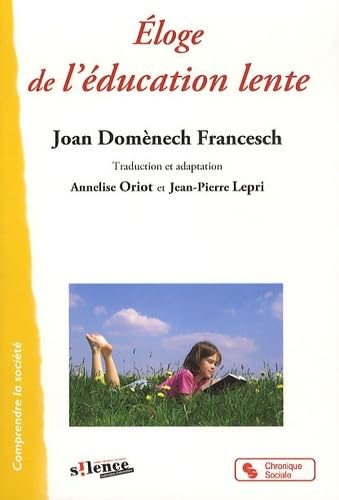
Every child needs their own time to learn
Claiming the right time for each pupil means paying attention to the diversity of learners, and inevitably running into the rigidity of school timetables. It means starting from the child and using more participatory methods, where learning does not rest on standard textbooks offering the same activities and content to everyone.
It also means accepting that every learning has its moment. As Domenech Francesch says, in education "earlier" is not always a synonym for "better". Pushing young children to learn colours, animal names or the number rhyme too early can be cognitively effective, since early acquisitions do happen, but it carries risks of distortion. A child who is rushed may master the label without the understanding, and lose the pleasure of discovery along the way.
Observing your child closely is the practical answer. Notice when they are absorbed and when they are merely compliant, and let the absorbed moments run longer. Even small routines, like throwing everything on the floor, are learning in progress rather than misbehaviour.
Making slow parenting work at home
Slow parenting is not permissiveness and it is not a rejection of structure. It is a shift of emphasis: fewer activities, chosen better, with enough space around them for a child to go deep instead of wide.
In practice, this often means protecting empty afternoons, resisting the urge to fill every gap, and letting a child finish something at their own speed. It also means being realistic about family logistics, since rest and calm depend on practical care too, from babies sleep routines to the small daily decisions that shape a household.
Above all, it asks parents to slow down themselves. Children borrow our rhythm long before they understand our words, so the pace we keep is the pace we teach.

My hands-on take
I tried this at home almost by accident. One rainy afternoon I decided not to suggest anything, no craft, no game, no screen, and just see what happened. My child spent nearly an hour arranging a small box of building bricks into something I did not recognise, then took it apart and started again. I would normally have interrupted twice by then, once to praise and once to move things along.
What struck me was how calm the house felt afterwards, and how much easier bedtime was. Since then I have tried to protect one empty block of time each week and to resist filling it. It is harder than it sounds, because the urge to be useful is strong, but the slower afternoons are the ones my child talks about later.
Frequently asked questions
Does slow parenting mean my child will fall behind?
Not necessarily. The approach argues that time spent is not the same as learning achieved, and that understanding matters more than covering content quickly. It is about choosing fewer activities and giving them real depth.
Is slow parenting the same as permissive parenting?
No. Slow parenting keeps structure and expectations but adjusts the pace and the quantity. Limits still exist; what changes is the pressure to rush and to standardise.
How do I start if our schedule is already full?
Begin with one slot. Remove a single activity that brings no real learning, and protect the time it frees. Then watch how your child uses that space before adding anything new.
What if school moves faster than my child?
Talk to the teacher about which skills matter most and where extra time would help. At home, focus on understanding rather than on finishing everything, and keep the evenings calm.
Product Reviews
 Best Toys for Dogs With High Prey Drive |
Best Outdoor Toys for 3-4 Year Olds |
Best Outdoor Toys for 6 Year Olds |
Best Harness for Poodle |
Best LEGO Sets for Adults |
Best Travel Toys for 4 Year Olds on Airplane |
Best Toy Stores in Washington DC |
Best Potty Training Toys |
Best Toys for Tripod Dogs |
Maillot equipe de france







