


These books to help children understand death and grief do the difficult work of naming what adults often avoid. Each of the three illustrated albums below approaches loss from a child's eye level, so the feelings feel recognisable rather than frightening.
One follows a young boy after his mother dies; another follows Annabelle and her beloved Simon, who dies of leukaemia; the third follows Evan the fox when his best friend, a dog, dies. Together they cover the death of a parent, a friend and a pet.

Quick takeaways
- Match the book to the loss: parent, friend or pet.
- La croûte suits ages 7+ and explores anger, fear and forgetting.
- Le Cimetière des mots doux suits ages 5+ and centres on rituals.
- Le jardin d'Evan uses a garden as an allegory of the life cycle.
- Let the child set the pace and close the book when needed.
- Rituals such as letters or drawings help children process grief.
La croûte: a long album about the death of a parent (7+)
This album is deeply moving because it stays inside a small boy's point of view after his mother dies following a long illness. Page by page it tracks his anger at her for leaving, his sadness that nothing will ever be the same, his hesitation around a father who is also drowning in grief, and his fear of forgetting her voice, her smell, her habits.
The longer format (30 pages) lets those emotions develop properly. He pretends not to have understood the news, then admits he knows that dying means never living again; he wonders how his father will manage the little split roll with honey zigzagged on top. He builds small rituals to keep her close, shutting every window so her smell cannot escape, and cries over something trivial that adults would not notice.
His grandmother gently reminds him that his mother lives in his heart. The title refers to a scab: after a fall he heard his mother's comforting voice and began scratching the wound to hear it again. In time new habits form between father and son, and he can let the scab fall. The scar echoes the scar on his heart, the acceptance stage of grief: remembering and reorganising, a slow process rather than a finish line.
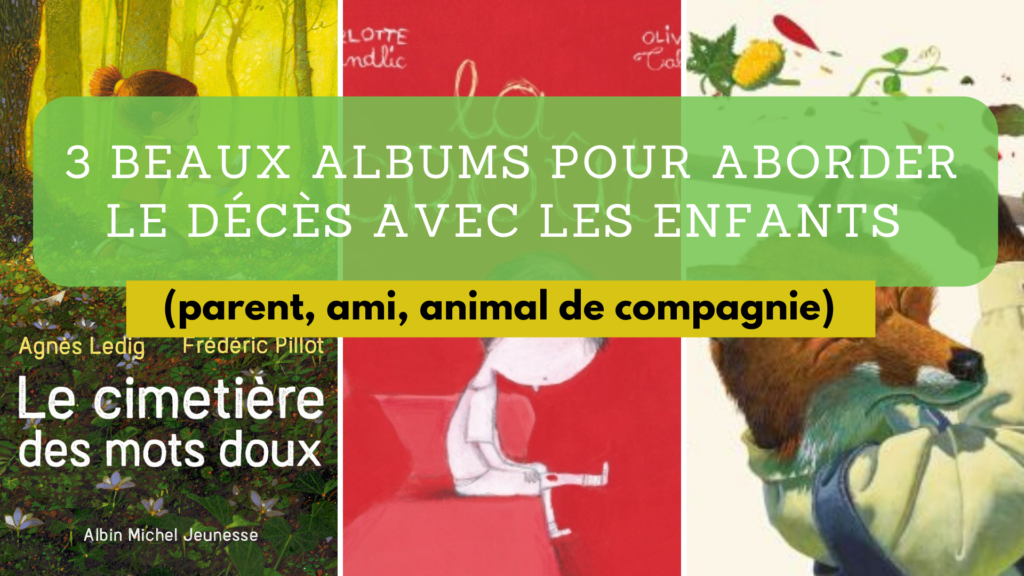
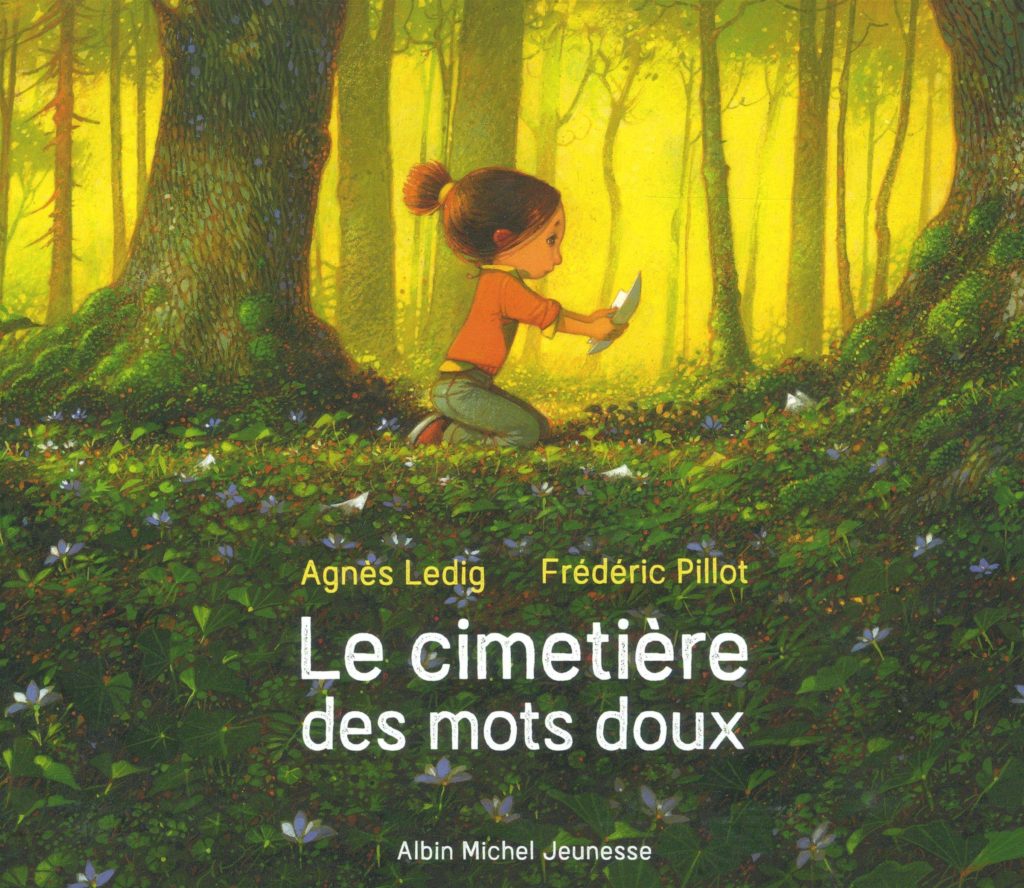
Le Cimetière des mots doux: an album about the death of a child friend (5+)
This is a beautiful book in both substance and form, despite its grave subject. The author has a gift for finding the right words, and her characters are endearing, moving between intense happiness and unbearable pain. We follow Annabelle and her sweetheart Simon, who has leukaemia, at school, at home, in hospital, in the cemetery and in the forest, so their story sits inside a daily life children recognise.
The book was written to give children facing a death a concrete tool for living through mourning. The "gentle words" are a symbolic gesture: first Simon offers them to Annabelle, then she writes them to comfort him and to feel they are still together despite the illness. Her feelings are described with their true intensity, because children can feel crushed, can love fiercely, and can carry a sense of missing someone for years.
Simon's older brother tells her that when sorrow is too heavy you have to throw it outside, and tears are there for that. A memo for adults follows the story, reminding us that hiding or silencing something does not make it disappear. Stories like this let children and adults rehearse a close death from a safe distance, and once again welcoming emotions and creating rituals are central.

| Book | Loss addressed | Suggested age |
|---|---|---|
| La croûte | A parent | 7 and up |
| Le Cimetière des mots doux | A child friend | 5 and up |
| Le jardin d'Evan | A pet | Younger children |
| All three | Emotions and rituals | Read together |
Le jardin d'Evan: an album about the death of a pet
This album is a fine allegory of the cycle of life. Evan the fox and his dog are inseparable and do everything together, above all tending their lush garden. Then the dog dies and Evan loses his taste for living. He is so overwhelmed that the garden, once his joy, begins to fade with him.
Reading a pet's death with a child is often their first encounter with loss, and the gentle parallel between the garden and Evan's inner state gives them a vocabulary for it. Children who are attached to an animal may find this easier to sit with than a story about a person, and it opens the conversation naturally.
If your child is drawn to animals, you can pair the story with everyday play that keeps the theme light, such as the German Shepherd toys or a simple cardboard box turned into a garden. For younger siblings, the open ended toys you already own can become props for retelling the story at their own pace.
How to read these books with a grieving child
Read slowly and let your child stop you. If they ask to close the book, close it; the story will keep. Naming your own feelings out loud, without flooding them, shows that sadness is allowed and survivable.
Keep the language concrete and honest, and answer only what is asked. A calm, familiar routine helps children feel safe while big feelings surface; even small care rituals, like the postpartum care habits that keep a household steady, remind us how much comfort lives in predictability. If a child is struggling to settle at night, a soft, low-lit corner and a quiet story can help, much as the lighting kits suggest how light shapes a room's mood.
Rituals matter: a drawing, a letter, a stone in the garden. Creative play is one of the best outlets for grief, and simple music activities or a calm board game can give a child a break from heavy talk. Let them lead the pace.

Choosing the right book for your child's age
Match the book to the loss, not only the age. A five-year-old facing a friend's death may cope with the gentle cemetery story but not the longer parent story, which suits seven and up. The pet story works well for younger children and for first conversations about death.
Preview each book yourself first. You know which images and words your child can hold. If you are choosing books for a baby or toddler in the same household, the guidance on toys for newborns and toys for one year old can help you keep the youngest occupied while you read with an older sibling.



My hands-on take
I have read these books more than once with children in my care, and the thing I learned is to stop treating the ending as the goal. The first time, I rushed to finish so we could talk about it, and the child shut down. The second time, we paused on a single page for ten minutes and simply looked at the pictures.
What helped most was making something afterwards: a drawing, a letter, a small ritual object kept on a shelf. It gave the feelings somewhere to go. I also learned to say "I don't know" when asked what happens after death, rather than filling the silence. Honesty, even an uncertain one, kept the conversation open far longer than any tidy answer.
Frequently asked questions
At what age can I read these books with my child?
The friend and pet stories suit children from around five, while the parent story is better for seven and up. Trust your child's reactions more than the label.
What if my child cries while we read?
Crying is a healthy release, and one of the books explicitly says tears are there for that. Stay close, name the feeling, and continue only if they want to.
Should I read the book before or after a death?
Either can work. Reading beforehand gives vocabulary; reading afterwards offers comfort and a way to revisit memories together.
Product Reviews
 Best Toys for Dogs With High Prey Drive |
Best Outdoor Toys for 3-4 Year Olds |
Best Outdoor Toys for 6 Year Olds |
Best Harness for Poodle |
Best LEGO Sets for Adults |
Best Travel Toys for 4 Year Olds on Airplane |
Best Toy Stores in Washington DC |
Best Potty Training Toys |
Best Toys for Tripod Dogs |
Maillot equipe de france







