


School punishment remains a massive, everyday practice even though legal guidelines discourage it and research shows it simply does not work. Many adults still believe that a firm response, a detention or a line to copy is what keeps a classroom calm.
Yet the evidence tells a different story. Repressive discipline treats the symptom while leaving the cause untouched, and it often makes fragile students more likely to drop out. This article looks at why punishment persists, what the numbers actually say, and which relational and pedagogical strategies can build a virtuous circle instead.

Quick takeaways
- Punishment is still frequent in schools despite official guidelines discouraging it.
- Short-term relief hides the fact that only the symptom is treated.
- Punishment is cheap; training in relational and cooperative pedagogy is not.
- Exclusion worsens dropout for the most fragile pupils.
- Repair, cooperation and pupil-centred teaching build lasting order.
- Connection before correction works at school and at home.
The myth of widespread laxism
Critics often claim that schools have become lax, and that this supposed softness explains every problem with young people and poor test results. This argument is easy to sell on television and in political debate, but it rests on nostalgia rather than evidence. Any idea that questions repression, or that puts the pupil rather than the teacher at the centre, is treated as an abandonment of knowledge.
As if acquiring knowledge and treating children well were incompatible. In reality, the debate is framed as a choice between tradition and chaos, when the real question is simply which approach helps children learn. Parents who want to support this shift at home can start by understanding starting nursery transitions and how reassurance, not threat, helps a child settle.
Why the story persists
The laxism narrative is convenient because it explains complex problems with a single cause. It also avoids the harder work of questioning institutional habits and investing in teacher training.
What the numbers actually show
Quantitative surveys and field interventions in France paint a picture far removed from the legend of lax schools. In primary school, around six pupils in ten report having been punished, and more than one in four of those were punished three times or more. Punishment is not rare; it is frequent and repeated from the earliest years.
At secondary level the picture is even starker: two thirds of pupils say they have been punished, and more than a quarter more than four times. Boys are three times more likely than girls to report being punished more than four times. Nearly half of pupils have had a detention at least once, one in five has had lines or copying, and a small but real share has been temporarily excluded.
These figures do not describe a permissive system. They describe a system that reaches for punishment constantly, even when the adults involved would rather not. The same instinct shows up at home, for example when parents worry about starting high school and tighten rules out of fear rather than strategy.

| Aspect | Punitive approach | Relational approach |
|---|---|---|
| Focus | The symptom | The cause |
| Cost | Low for the institution | Investment in training |
| Effect on fragile pupils | Higher dropout risk | Stronger sense of belonging |
| Relationship with adult | Fear and distance | Trust and cooperation |
| Long-term result | Apparent order only | Durable self-discipline |
Rules that exist but are ignored
Official texts have long discouraged repressive discipline. A circular from 1890 already described punitive discipline as bad, clumsy and narrow-minded, arguing that it sacrifices the whole future for the safety of the present moment. It satisfies itself with apparent order while ignoring the deeper disorder it tolerates, and even the disorder it creates.
This principle has been reaffirmed many times by law and by ministry directives, yet it is routinely ignored in most schools. Temporary exclusion, officially meant to be exceptional, is a daily experience in many secondary schools. Researchers have even described a "ghost school": the number of excluded pupils, projected across a group of schools, can equal an entire school left at the gate.
Research has widely contested the effectiveness of exclusion, with several studies showing it worsens school and social dropout for the most fragile pupils. It is a strange situation for a country that insists on compulsory education. The same logic appears in family life, where a parent facing a child afraid may push too hard instead of adapting the approach.
Why punishment keeps coming back
If punishment is discouraged and ineffective, why does it remain so widespread among teachers, counsellors, heads of school and even non-teaching staff? The first reason is short-term effectiveness: the problem seems to disappear, even though only the symptom has been treated and the source of the trouble remains.
The second reason is low cost. Training staff in relationships, benevolent communication, positive discipline and cooperative pedagogy would require real investment of time and money. Punishment costs nothing and requires no new skill.
The third reason is the wish to protect the symbolic order of an institution that feels weakened. Questioning punishment can feel like questioning authority itself. Adults often carry the same reflex at home, which is why a parent preparing a story for dad or planning holidays to Ireland may still fall back on threats when tired.
What the alternative requires
Changing course means accepting that authority can be firm without being punitive, and that cooperation and reparation build more durable order than fear.
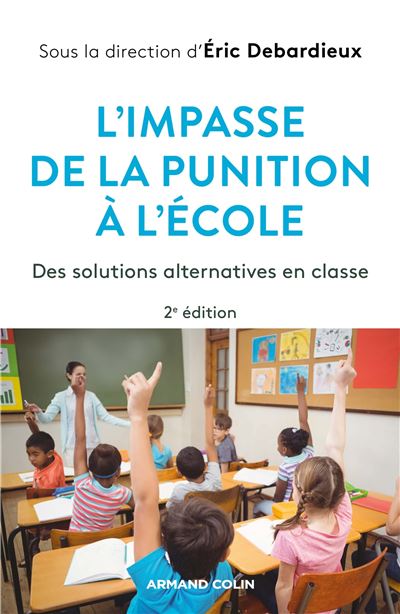
Building a virtuous circle instead
The alternative is not permissiveness. It is a set of relational and pedagogical strategies that reduce violence by treating pupils as people. Repairing rather than punishing, cooperating rather than competing, and putting the pupil at the centre all aim at the same goal: a classroom where children want to participate.
In practice this means naming the behaviour rather than labelling the child, offering a chance to make amends, and keeping the relationship intact after a conflict. It also means giving children meaningful responsibility and choice, which builds the sense of competence that punishment erodes.
Play is part of this too. Open-ended and STEM toys encourage persistence and problem-solving without fear of failure, and a simple cause and effect toy teaches that actions have consequences in a safe, playful way. These small experiences of agency are the foundation of self-discipline.
What parents and teachers can do
Adults can start by noticing their own reflex to punish. When a child misbehaves, the useful question is what skill is missing, not what penalty fits. A calm conversation about what happened, followed by a concrete repair, teaches far more than a copied line.
Consistency matters more than severity. Clear, few rules explained in advance, applied calmly, give children the predictability they need. When a rule is broken, involve the child in deciding how to put things right.
Finally, protect the relationship. A child who feels respected is far more likely to cooperate than one who feels humiliated. Whether you are choosing party favour toys for a class celebration or managing a difficult afternoon, the same principle holds: connection before correction.

My hands-on take
I used to reach for the quick fix. A warning, then a consequence, then the same problem again the next day. What changed things for me was slowing down and asking what my child actually needed in that moment, usually attention or a sense of control.
Now I try to name what happened without labelling the child, and I ask how we can put it right. It takes longer, and some days I fail at it. But the arguments are shorter, the repairs are real, and the relationship stays intact, which is the part I care about most.
Frequently asked questions
Is positive discipline the same as being permissive?
No. Positive discipline keeps clear rules and firm expectations, but it addresses the behaviour and repairs the harm instead of humiliating the child. Authority and kindness are not opposites.
Why do teachers still use punishment if it does not work?
It offers quick relief, costs little, and protects a traditional sense of order. Changing practice requires training and time that institutions rarely provide.
Does exclusion ever help?
Research has widely contested its effectiveness and links it to worse school and social dropout for vulnerable pupils. Official texts already call for it to be exceptional.
What can I do at home instead of punishing?
Name the behaviour, ask what happened, and involve your child in repairing it. Keep rules few and clear, and protect the relationship above all.
Product Reviews
 Best Toys for Dogs With High Prey Drive |
Best Outdoor Toys for 3-4 Year Olds |
Best Outdoor Toys for 6 Year Olds |
Best Harness for Poodle |
Best LEGO Sets for Adults |
Best Travel Toys for 4 Year Olds on Airplane |
Best Toy Stores in Washington DC |
Best Potty Training Toys |
Best Toys for Tripod Dogs |
Maillot equipe de france







