


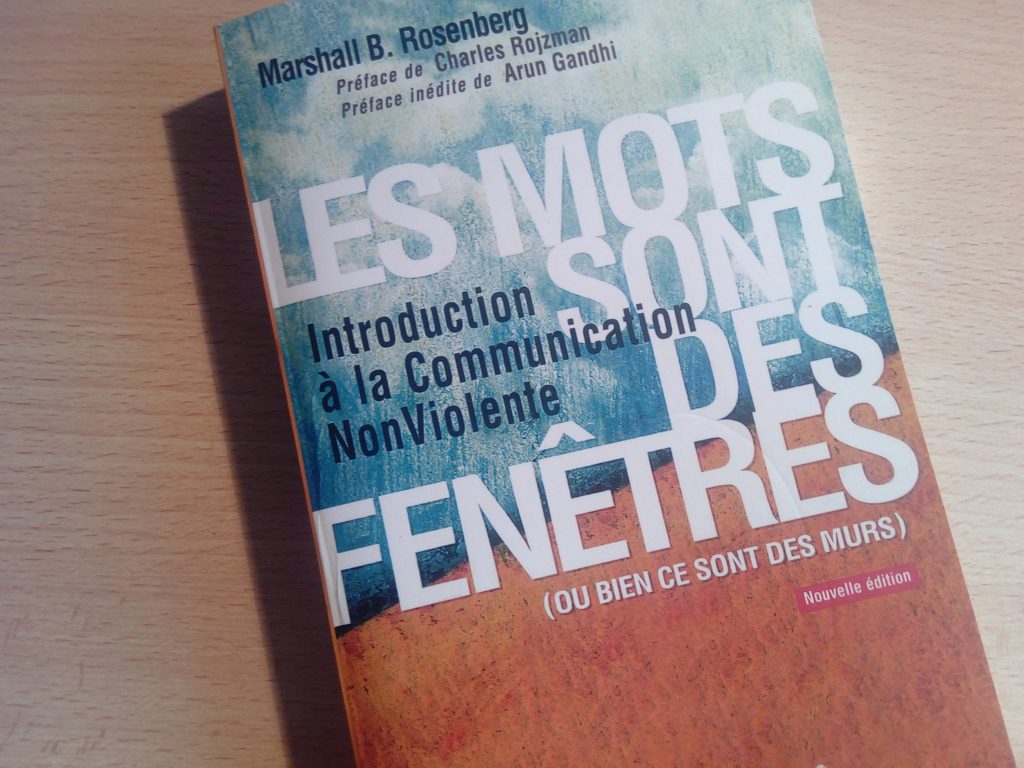
Nonviolent Communication is a way of speaking and listening that replaces judgment with observation, blame with needs, and demands with requests. Marshall Rosenberg's foundational book, whose title translates as "Words Are Windows (or They Are Walls)," sets out a simple process that is easy to grasp in principle and surprisingly powerful in practice.
Most of us grew up surrounded by competition, judgment and constant sorting of what counts as "good" or "bad." At best that conditioning leads to misunderstanding; at worst it feeds resentment and violence. The book argues that malice and tyranny are learned, which means the learning can be undone.

This edition adds a chapter on mediation and conflict resolution, and it pairs the philosophy with concrete tools, examples and exercises. Here is what you will find inside, and how the ideas translate into daily family life.
Quick takeaways
- Nonviolent Communication rests on four steps: observe, feel, need, request.
- Malice and violence are learned, so the learning can be interrupted.
- Philosophy and tools must travel together; either one alone fails.
- Anger is not violence but a signal pointing to unmet needs.
- Empathy for yourself and others is the foundation of the whole approach.
- The added chapter turns the method toward mediation and conflict resolution.
Why the Book Pairs Philosophy With Practice
Rosenberg's central question is methodical: how do we step out of violence, or at least live together with a little less of it and a little more sociability? He answers with exercises, worked examples and situations to rehearse, rather than with theory alone.
The book rests on an ethic of care for oneself AND for others. Philosophy without tools stays a lovely idea, while tools without philosophy slide into manipulation or get abandoned because nothing sustains them. Keeping the two together is what makes the approach hold up on a difficult afternoon, much like choosing safe cosmetics requires both knowledge and practical care.
Chapters draw on the author's professional and personal experience, so the process is shown rather than just described. Readers who like learning through stories will find plenty to work with, much as a parent browsing introducing children to reading looks for books that demonstrate rather than lecture, or families making homemade Christmas sweets learn by doing together.
The Four-Step Process, Explained
The process has four points: observe without judging, express emotions, name the needs behind them, and make a positive request. Each step is broken down in detail, with examples of how easily observation turns into evaluation and how to notice the difference.
Observation Before Interpretation
Describing what actually happened, without adding a verdict, changes the temperature of a conversation immediately. It is the same discipline a caregiver needs when checking tympanic drains on a squirming toddler: describe what you see, stay calm, act on facts rather than assumptions. Patience like this also helps when reading about sciatica in pregnancy.
Once feelings and needs are named, the request comes last and comes clearly. A request is not a demand, and the book is careful about that distinction, because a demand invites resistance while a request invites cooperation. The same patience applies to tracking Insider points worth over time.
| Step | What you do | What to avoid |
|---|---|---|
| Observe | Describe what happened factually | Adding a verdict or label |
| Feel | Name the emotion you experience | Confusing feeling with thought |
| Need | Identify the unmet need behind it | Blaming the other person |
| Request | Ask clearly and positively | Turning the request into a demand |
| Listen | Reflect the other's feelings and needs | Jumping straight to advice |
| Repair | Return to the conversation after a rupture | Letting resentment accumulate |
Anger and Empathy at the Heart of the Approach
Anger is treated in all its complexity. It is not an emotion to discharge but one to welcome, because every anger has a vital function. Its energy can help you identify which unmet needs are pushing you toward the edge of violence.
Anger is not violence, and Nonviolent Communication teaches how to use it constructively. That reframing is genuinely useful at home, where frustration often arrives before anyone has worked out what is actually missing.
Empathy sits at the centre: offering it to yourself and to others is the first step toward a less violent world. As Rosenberg puts it, when we hear the other person's feelings and needs, we reconnect with the humanity we share. Hearing a child's need behind a meltdown works the same way as hearing a partner's need behind a sharp remark.
Using the Tools With Children
The four steps scale down surprisingly well. Naming your own feeling out loud models the vocabulary children lack, and asking "what do you need?" instead of "why did you do that?" shifts the whole conversation.
Practical training matters more than reading, so the exercises in the book are worth doing with a partner or a friend. Parents who rehearse difficult sentences in advance tend to stay calmer when the real moment arrives, whether the topic is bedtime, understanding Down Syndrome, or something as mundane as hydroalcoholic gel on small hands. The same calm approach helps when choosing fun Christmas pajamas together.
Mediation, covered in the added chapter, is especially relevant for siblings. Instead of appointing a judge, you help each child state an observation, a feeling, a need and a request, and the argument becomes something you can actually work through together.

Where the Approach Meets Everyday Family Life
None of this happens in a vacuum. A tired parent, a crowded schedule and a child who will not cooperate are the real testing ground, and the book is honest that progress is gradual rather than dramatic.
Small rituals help: a pause before responding, a habit of checking what you actually observed, and a willingness to repair after a bad exchange. The same patience you would apply to bath products for little ones, reading labels and choosing carefully, applies to the words you choose in a tense moment.

My hands-on take
I started using the four steps in the least dramatic place possible: the moment before answering a question I did not like. Instead of reacting, I tried to say what I had observed and what I felt, and the difference in the room was noticeable. It felt slower and slightly awkward at first, and I did not always manage it.
What surprised me most was the anger chapter. I had always treated my own irritation as something to swallow and hide, and treating it instead as information about a need I had not named changed how I handled ordinary friction. I still lose my temper, but I now know what to look for afterwards, and repair comes faster than it used to.
Frequently asked questions
Is this book suitable for parents with no background in psychology?
Yes. It is written as an introduction, with examples and practical exercises rather than academic theory, and the four steps are explained in detail step by step.
Does the book say anger should be suppressed?
No. Anger is presented as a vital signal to welcome and understand, not an emotion to discharge or bury. Its energy helps you locate the unmet need behind it.
What does the added chapter cover?
It focuses on mediation and conflict resolution, showing how the same four-step process can be used between two people in dispute.
Can the method be used with young children?
The vocabulary can be simplified, and modelling the steps out loud gives children language for their own feelings. It works best as a daily habit rather than a technique reserved for crises.
Product Reviews
 Best Toys for Dogs With High Prey Drive |
Best Outdoor Toys for 3-4 Year Olds |
Best Outdoor Toys for 6 Year Olds |
Best Harness for Poodle |
Best LEGO Sets for Adults |
Best Travel Toys for 4 Year Olds on Airplane |
Best Toy Stores in Washington DC |
Best Potty Training Toys |
Best Toys for Tripod Dogs |
Maillot equipe de france







