


Nonviolent Communication is often described as a way of speaking, but a good pocket workbook shows it is really a way of living. This small companion is built to be carried in a bag or a suitcase, so the practice travels with you.
The author, a trainer with more than twenty years of experience, condenses the heart of the approach without losing its spirit. Plenty of concrete examples carry the ideas, and the airy, colourful layout keeps the tool easy to read.

Above all, the book insists on one point: this is not a soft technique for making other people give in. It is an art of living, a philosophy in service of life, and a path rather than a method you acquire once and for all.
Quick takeaways
- The pocket format keeps the practice within reach during real conversations.
- The four-step process is a tool for personal clarity before it is a script.
- Surface needs often hide a request aimed at other people.
- Asking “what would this allow me?” leads to deeper needs.
- Intention matters more than perfect wording.
- Suggestions should serve authenticity, never replace it.
Why a pocket format makes the practice stick
Format matters more than it looks. A compact workbook slips into a handbag or a suitcase, which means you can open it in the ten minutes before a difficult conversation instead of leaving it on a shelf. The generous spacing and colour make it easy to read even when you are tired.
The content earns its place too. The trainer synthesises the essentials of Nonviolent Communication without flattening them, and the many examples are the real strength of the book. If you are building a small shelf of practical guides at home, this sits naturally beside books to learn colours and shapes for younger children, because both teach a skill through repetition.
Not a technique for bending others
The author repeats that this approach is not a gentle trick to make people comply. It is a philosophy at the service of life, and a path you walk rather than a box you tick.

Preparing to say something difficult
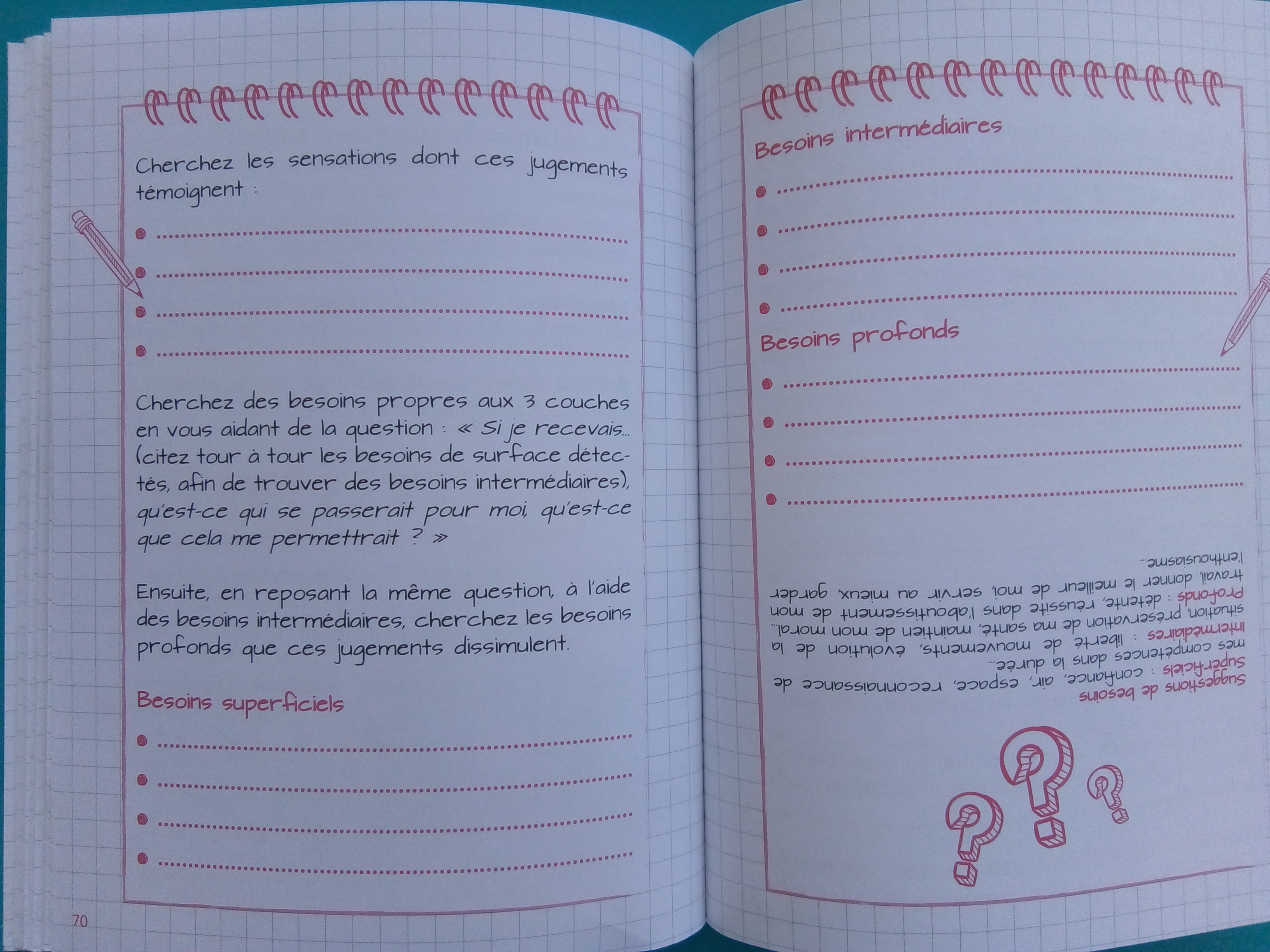
One of the most useful chapters offers a route for saying something hard while preserving the relationship. The author suggests preparatory steps done alone and preferably in writing, before anything is spoken aloud. Writing slows you down and separates what you feel from what you want to say.
She walks through a workplace example in detail. My manager walks past my desk ten times to check my work; I am exasperated and stressed; I cannot concentrate; I need trust and working conditions that support concentration and creativity. Notice how the last line is a need, not an accusation.
This is the same patience we need when family life changes shape overnight. When a toddler suddenly discovers climbing, the calm response starts with preparing our own words rather than reacting on the spot, as explored in my baby now knows. The same steady, prepared approach helps when you hold the baby or take up Kangatraining.
| Level | What it sounds like | What it does |
|---|---|---|
| Surface need | “I need respect or silence” | Points at a lack, can sound like blame |
| Intermediate need | “If I were heard, I would feel I count” | Builds self-knowledge, stays linked to others |
| Deep need | “I aspire to give my best” | No reference to others, feeds the intention |
| Key question | “If I received this, what would it allow?” | Moves you one level deeper |
| Use as request | “It helps me to receive attention” | Nourishes the deep need without demanding |
The four-step process is for you first
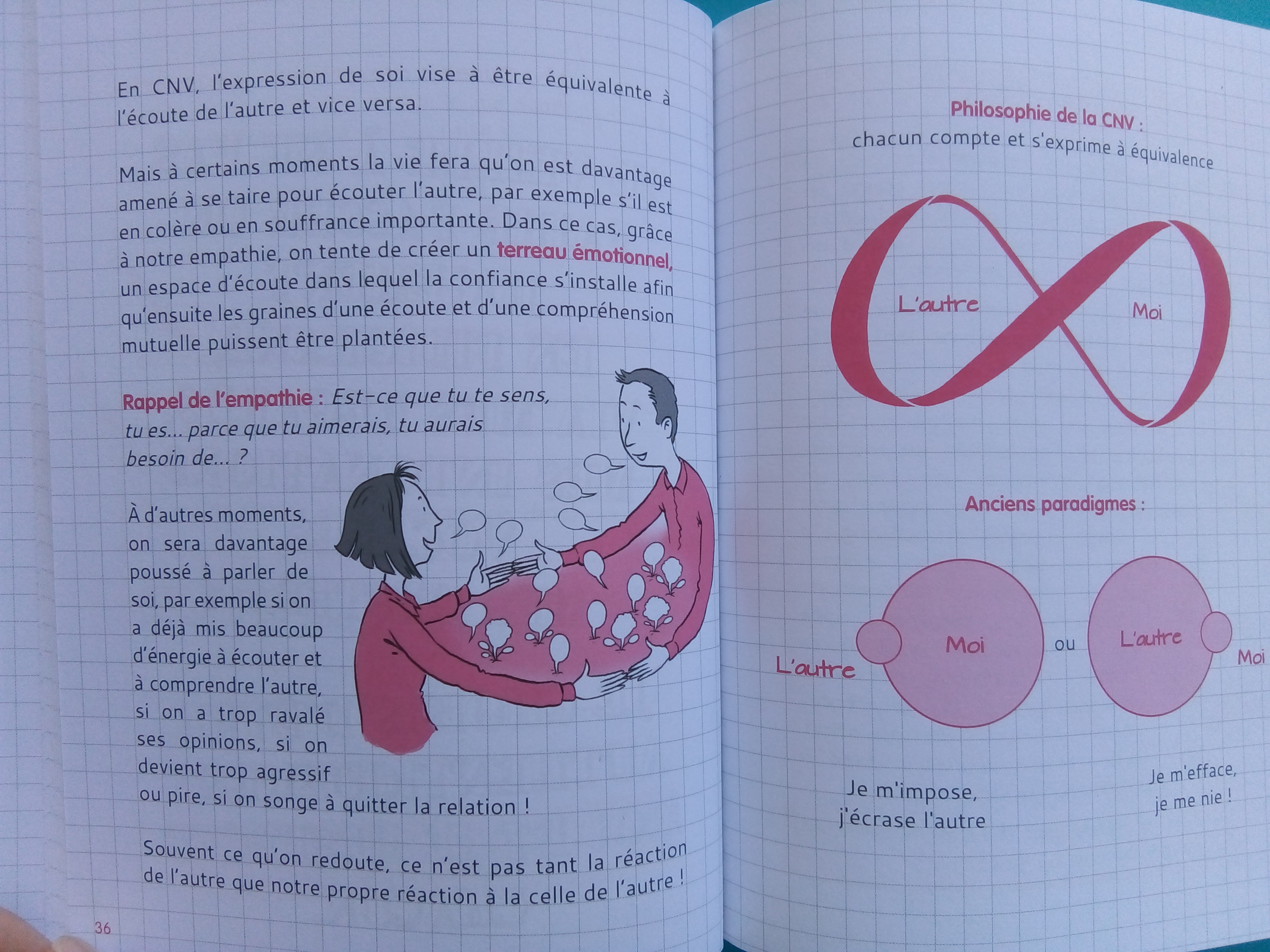
Many people take years to understand one subtle point: the four-step process of observation, feeling, need and request is above all a tool for personal clarity. It is not a script to be delivered word for word to the other person. That reframing alone changes how you use it.
The author goes further. Work on needs, the third step, is fundamental and demands depth, well beyond saying “I need silence” or “I need respect”. Our needs express the very essence of what is alive in us, and their level depends on what they carry: a lack, or a deep aspiration.
This is why the practice pairs so well with any slow, hands-on learning you do alongside your children, the kind of shared attention described in learn from children. Both ask you to observe before you act.
Three levels of needs, explained simply
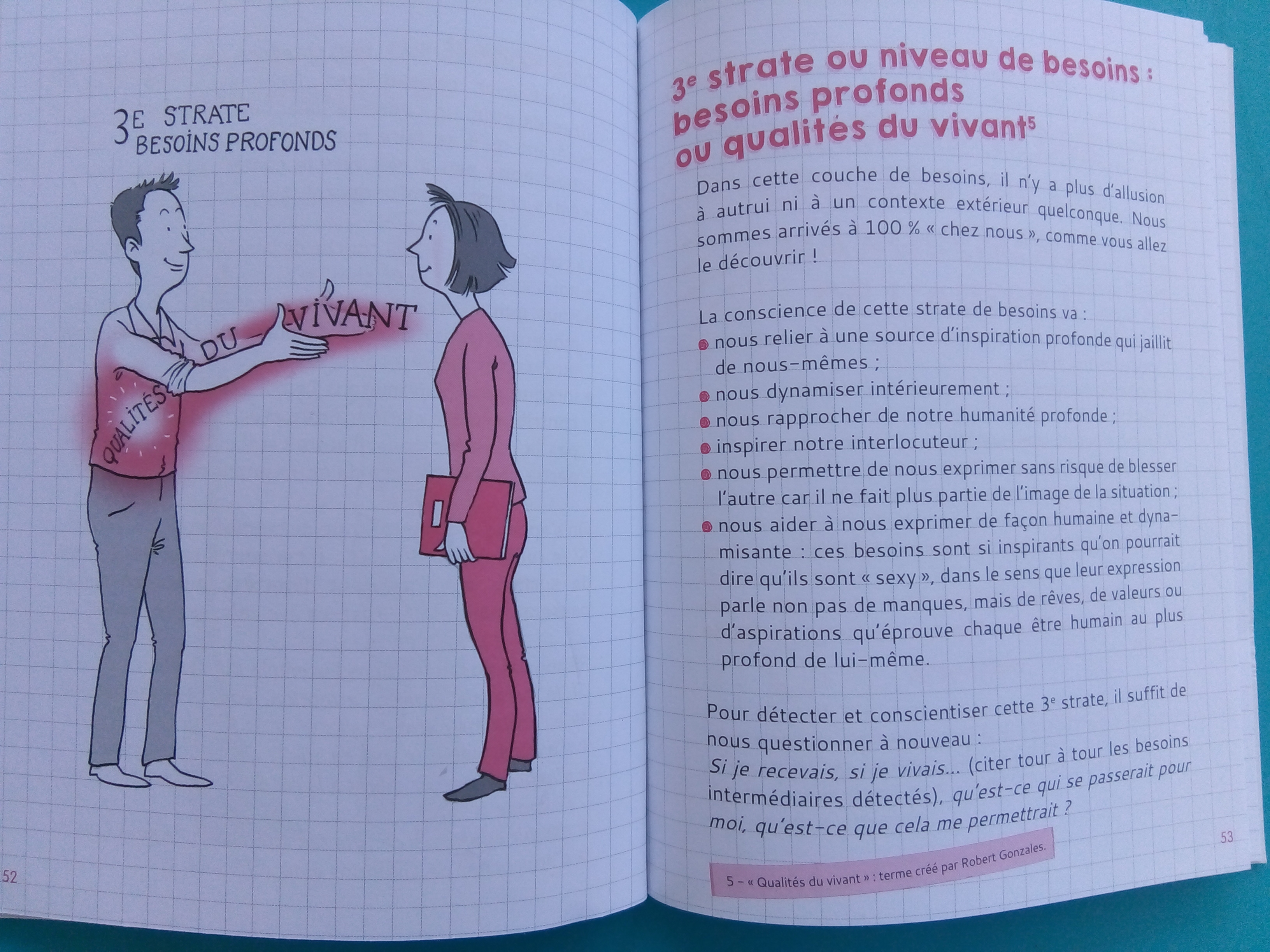
First-level needs are surface needs, close to a lack. Saying “I need respect, listening or silence” is weak for empathic communication because it implies a deficit, or even a disguised accusation. It points at what others should do rather than opening a real connection.
Intermediate needs
The second level moves a step closer to self-knowledge. The key question is: if I received this, what would happen for me, what would it allow? If I received listening and consideration, it would let me feel that what I say is interesting, that I can hope for a solution, that I count for the other person.
Deep needs
The third level is what the author calls being at home in yourself, with no reference to anyone else or to an outside context. Ask the same question again to go deeper. You can then use first and second level needs as requests that feed the deep one: I aspire to give my best, and I get there more easily when I feel confident that I count, and for that it helps to receive attention or listening.
This exercise is hard, and the author is honest about it. What carries you through is intention, sculpting the intention that drives you so that it is kind to everyone. She also insists her suggestions are only suggestions: they must never bridle authenticity but serve it, along with vulnerability. Useful paths, never followed mechanically or reluctantly. As with encouraging creativity, the aim is to support genuine growth rather than impose a method.
Where this fits in family life
Parents often meet this approach at a moment when everything feels loud. Preparing your words in writing before a conversation about screen time or homework is the same discipline as preparing a calm answer when a child tests a boundary. The tone you choose shapes whether a request lands as an invitation or as a verdict.
It also helps to remember that children copy what they hear. The phrases adults repeat unconsciously travel down the generations, as these familiar phrases mother used show, so choosing your words deliberately is a gift to the next generation. The same care applies when weighing big decisions, such as understanding the risks of a cesarean.
None of this requires special equipment or a course. A notebook, a pen and a few quiet minutes do the work, which makes it a very different kind of investment from the toys we usually compare in STEM toys five roundups.

My hands-on take
I tried the written preparation on a small, ordinary conflict: a repeated mess in the hallway that had been irritating me for weeks. Instead of opening with the complaint, I wrote the four steps down first. My observation was factual, my feeling was tiredness, and the need underneath turned out to be something closer to wanting a home that feels calm rather than a demand for tidiness.
What surprised me was how much shorter the actual conversation became. Because I had already done the digging on paper, I did not need to explain my whole reasoning out loud. I asked for one small thing and left the rest alone, and the tone stayed friendly. I still forget to prepare most of the time, but when I do, the difference is obvious.
Frequently asked questions
Is Nonviolent Communication a way to get others to agree with me?
No. The author is explicit that it is not a gentle technique for making people give in. It is a philosophy and an art of living, a path rather than a method you master once.
Do I have to say the four steps out loud?
Not necessarily. The observation, feeling, need and request sequence works first as internal clarification. What you say aloud can be much shorter and more natural.
What if I cannot identify my deep need?
Keep asking the key question: if I received this, what would it allow me? Repeat it on each answer until the wording no longer refers to anyone else.
Is this only for parents?
No, the examples include workplace situations. Parents simply find many occasions to practise, because family life produces difficult conversations regularly.
Product Reviews
 Best Toys for Dogs With High Prey Drive |
Best Outdoor Toys for 3-4 Year Olds |
Best Outdoor Toys for 6 Year Olds |
Best Harness for Poodle |
Best LEGO Sets for Adults |
Best Travel Toys for 4 Year Olds on Airplane |
Best Toy Stores in Washington DC |
Best Potty Training Toys |
Best Toys for Tripod Dogs |
Maillot equipe de france







