


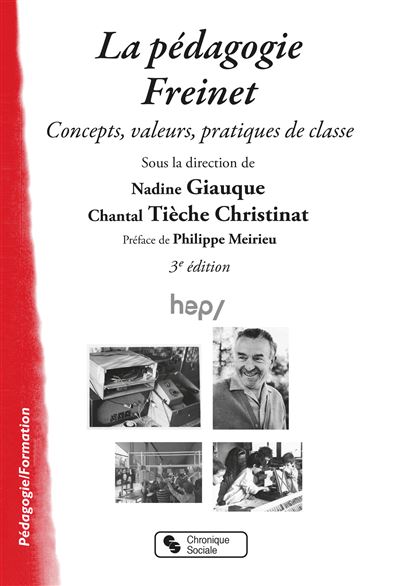
Freinet pedagogy is a child-centred approach built on five pillars: free expression, cooperation, democratic participation, educational techniques and experimental trial and error. Rather than a fixed method, it is a set of values that shape how a classroom works day to day.
It invites teachers to step back so that pupils take more responsibility for their own learning. The result is a class where children write, make things, help each other and decide together on the rules they live by.

Quick takeaways
- Free expression gives children permission to create and be recognised as authors.
- Cooperation includes pupils teaching peers, not only receiving information.
- The class council lets children decide rules and sanctions democratically.
- Validation certificates and work plans build autonomy without grades.
- Trial and error treats mistakes as a normal step in learning.
- Projects rooted in real life give learning meaning and motivation.
Free expression: letting children become authors
Free expression means giving children permission to become authors of words, drawings, texts, gestures, music or sculptures. The space must genuinely authorise creation and value what is produced, rather than only rewarding what matches an adult model.
This pillar connects naturally to how reading and writing grow in children: a child who is invited to produce something real has a reason to write and to refine what they write. The teacher's role shifts from correcting to welcoming and displaying. This same trust in the body matters during birth, as explored in our guide to a vaginal tear.
What it looks like in practice
A corner of the room can hold finished pieces, and children can choose the medium that suits them. Because the work is shown and discussed, effort becomes visible and children learn to take pride in their own output.
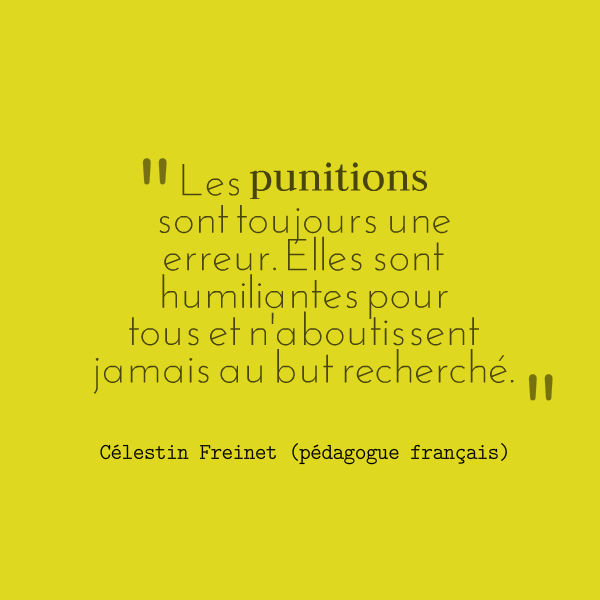
Cooperation: learning by helping others
Cooperation is the offer made to pupils to learn by interacting with their peers, both as receivers of information and, crucially, by adopting the teaching posture themselves. Explaining something to a classmate is one of the most effective ways to consolidate your own understanding.
This can be organised simply through a help-request board, where a child who is stuck writes down what they need and another pupil responds. The teacher is no longer the only source of answers.
Cooperative habits also support the everyday skills families work on at home, such as the patience needed when removing the diaper or the shared routines of tidying up. The same principle applies: children learn by doing with others, not by being done for. As César Bona reminds us, teaching is also about making ourselves better, and creative group activities like making tie dye t shirts let children practise helping one another.

| Pillar | What the adult does | What the child does |
|---|---|---|
| Free expression | Provides space and displays work | Creates, chooses a medium, shares |
| Cooperation | Sets up a help-request board | Explains to peers, asks for help |
| Democratic participation | Sets a few fundamental laws | Debates, decides rules and sanctions |
| Educational techniques | Prepares certificates and work plans | Works at own pace, plans tasks |
| Trial and error | Offers real, meaningful situations | Tries, errs, adjusts, succeeds |
Democratic participation in the life of the class
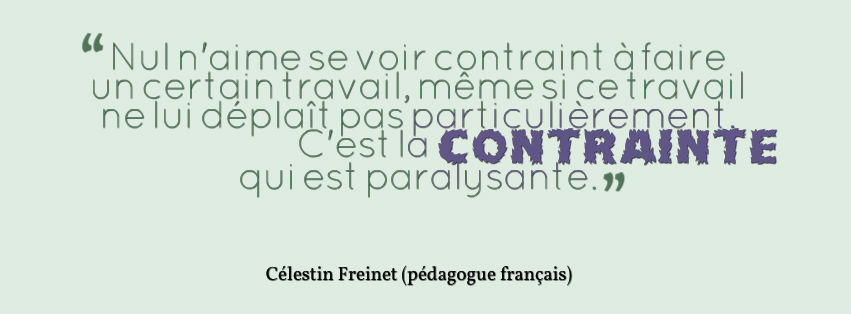
In Freinet pedagogy, children's democratic participation is a right. The adult's authority is questioned: rules of life are reflected on and decided collectively, and the class becomes a space for learning citizenship.
Pupils are involved in collective decisions through institutions and responsibilities entrusted to them. They manage their own relationships within the group, and authority comes not from the teacher but from the pupils, who decide on sanctions themselves when rules are broken. This shared responsibility also helps prevent spoiled children from developing an inflated sense of entitlement.
How the class council works
The teacher does establish a few fundamental laws at the start of the year, such as the ban on violence. Beyond that, collective rules and sanctions are decided by the children in a council gathering the whole class, usually once a week.
The agenda is built from questions and remarks posted by pupils or the teacher in a dedicated class letterbox. One pupil presides, distributing the floor with a talking stick and reformulating ideas; another acts as secretary, presenting the agenda, recalling the last meeting's decisions and noting new ones.
Sanctions can take the form of repairs, such as apologies or restoring a damaged object, or a loss of rights, such as moving around alone, making a photocopy or working independently on the computer, and these rights can be regained later. Rules and sanctions alike can be revised as the year goes on, much like choosing the best LEGO sets requires careful collective judgment.
Educational techniques and the tools that carry the values
Teaching tools are paired with the educational values that led to their creation, particularly those aiming at the teacher's withdrawal so that pupils engage more. Two well-known tools illustrate this.
Validation certificates let each pupil move forward at their own pace: successes are valued and are not graded. Personal work plans give each child a set of tasks to complete independently, which builds planning and autonomy.
The same logic of guided independence applies at home, whether you are choosing toys for 3 year olds that invite open-ended play or setting up a calm space for books about fear of the dark. The child is trusted to act, with support nearby rather than on top.
Experimental trial and error: learning by doing
Experimental trial and error describes the learning process itself: acting, and through acting, making mistakes and succeeding, gradually building knowledge and skills through interaction with one's environment.
Célestin Freinet believed a child's motivation comes from the will to act on the world, the wish to answer questions they pose themselves, and the need to communicate, which is why correspondence, printing and the school newspaper feature so prominently.
Freinet classes therefore base their work on children's interests and on carrying out projects, with learning developed in real situations that make sense in pupils' daily lives. A child who is genuinely curious will happily practise the same skill repeatedly, much as they return again and again to stimulation games for babies or to a favourite construction set.

Bringing the five pillars together
The pillars are not separate boxes. Free expression feeds the school newspaper, cooperation makes the council work, and the council protects the right to try, fail and try again.
For a teacher or parent starting out, the practical entry point is small: introduce one tool, such as a help board or a weekly council, and let it settle before adding another. The values do the rest of the work.
Adults who want to explore further can read, exchange and observe classrooms that already work this way, then adapt what they see to their own group rather than copying it wholesale.
My hands-on take
When I first tried a weekly class meeting, I made the mistake of running it myself. The children answered me, not each other, and the whole thing felt like a slightly longer question-and-answer session. The change came when I handed over a simple object to mark who could speak and sat slightly outside the circle.
Since then I have kept the ritual small and regular: a letterbox for remarks during the week, a short agenda, and one pupil noting decisions in a notebook we reread the following week. What surprised me most was how seriously children take the job of deciding a fair repair after an incident. My advice is to start with one tool, protect the time for it, and resist the urge to step back in the moment things get slow.
Frequently asked questions
Does the teacher lose all authority in a Freinet class?
No. The teacher still establishes a few fundamental laws at the start of the year, such as the ban on violence. Beyond those, collective rules and sanctions are decided by the children in the class council.
What is a talking stick used for?
It is used in the class council to distribute the floor: only the pupil holding it may speak. The pupil presiding over the council hands it out and reformulates the ideas expressed.
Are pupils graded in Freinet classes?
Validation certificates value successes without grading them, so each pupil advances at their own pace. The emphasis is on progress and on completed work rather than on marks.
Why do Freinet classes use projects?
Projects place learning in real situations that make sense in pupils' daily lives. This connects schoolwork to children's interests and to their need to act on the world and communicate.
Product Reviews
 Best Toys for Dogs With High Prey Drive |
Best Outdoor Toys for 3-4 Year Olds |
Best Outdoor Toys for 6 Year Olds |
Best Harness for Poodle |
Best LEGO Sets for Adults |
Best Travel Toys for 4 Year Olds on Airplane |
Best Toy Stores in Washington DC |
Best Potty Training Toys |
Best Toys for Tripod Dogs |
Maillot equipe de france







