


An emotions activity book for young children can turn abstract feelings into something a four- to seven-year-old can actually touch, draw and name. This one invites kids to explore the funny little life that emotions lead inside their bodies, learning to welcome and tame joy, anger, fear and sadness.
The author is a parental and family coach, author, speaker and trainer who founded an association supporting families, activity organisers and local authorities toward gentle, respectful education. Her experience with young children runs through every page.

Quick takeaways
- Designed for children aged 4 to 7, with matched vocabulary and difficulty.
- Activities were tested in school settings by an experienced family coach.
- Three parts: what an emotion is, what happens in body and head, and tools to live with feelings.
- Pages can be used in any order, following the child's real-life situations.
- A pocket of detachable games includes a chatterbox, a face memory game and finger puppets.
- Adults get a short refresher on the principles of emotional education.
What Makes This Emotions Book Stand Out
You can feel the author's hands-on experience with young children throughout this activity and game book. She tested these activities in school settings, and the games, exercises and tools are matched to children aged 4 to 7 in vocabulary, pencil work and difficulty level.
The real advantage is how open the structure is. Parents can use it as a support depending on the emotions that come up and on the child's own lived experience. The order of the activities does not matter, so the book suits discovering emotions according to what the child is actually going through, whether sadness, anger, joy or fear. Adults may well learn a thing or two themselves about emotions, their messages and their mechanisms, much like the practical lessons in values from stories.
Children are designed to be the actors of their own discoveries, using familiar activities: drawings, crosswords, mazes and more. A short opening section reminds adults of the principles and pillars of emotional education before the child dives in.

A Little Sibling to the Book for Older Children
This volume is the little sibling of the same author's book for children aged 7 and up. It keeps the same three-part structure, simply adapted to younger readers. If you are building a small home library, it sits comfortably beside other gentle reads, such as the reading to babies habit that starts long before words make sense.
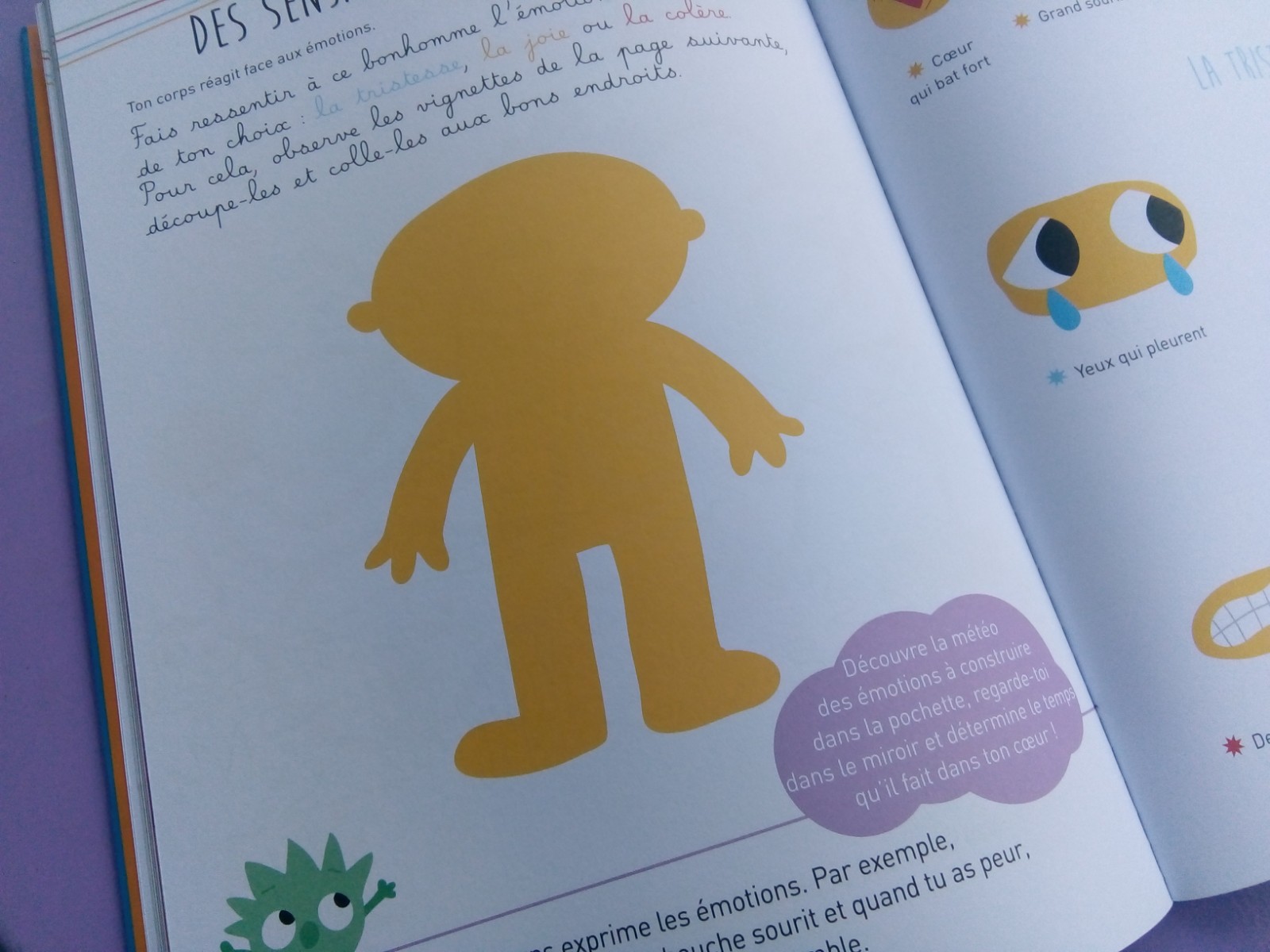
Part one offers many everyday situations to introduce the basic emotions, the words to name them and the moments in which they emerge. Part two moves into the body: facial expressions, sensations, postures and the physical signs of each emotion. Through little presentations and games, the author helps children realise they have some power over their emotions, once they can recognise the bodily signs, listen to them, name the right feeling and open the door to ways of expressing it.
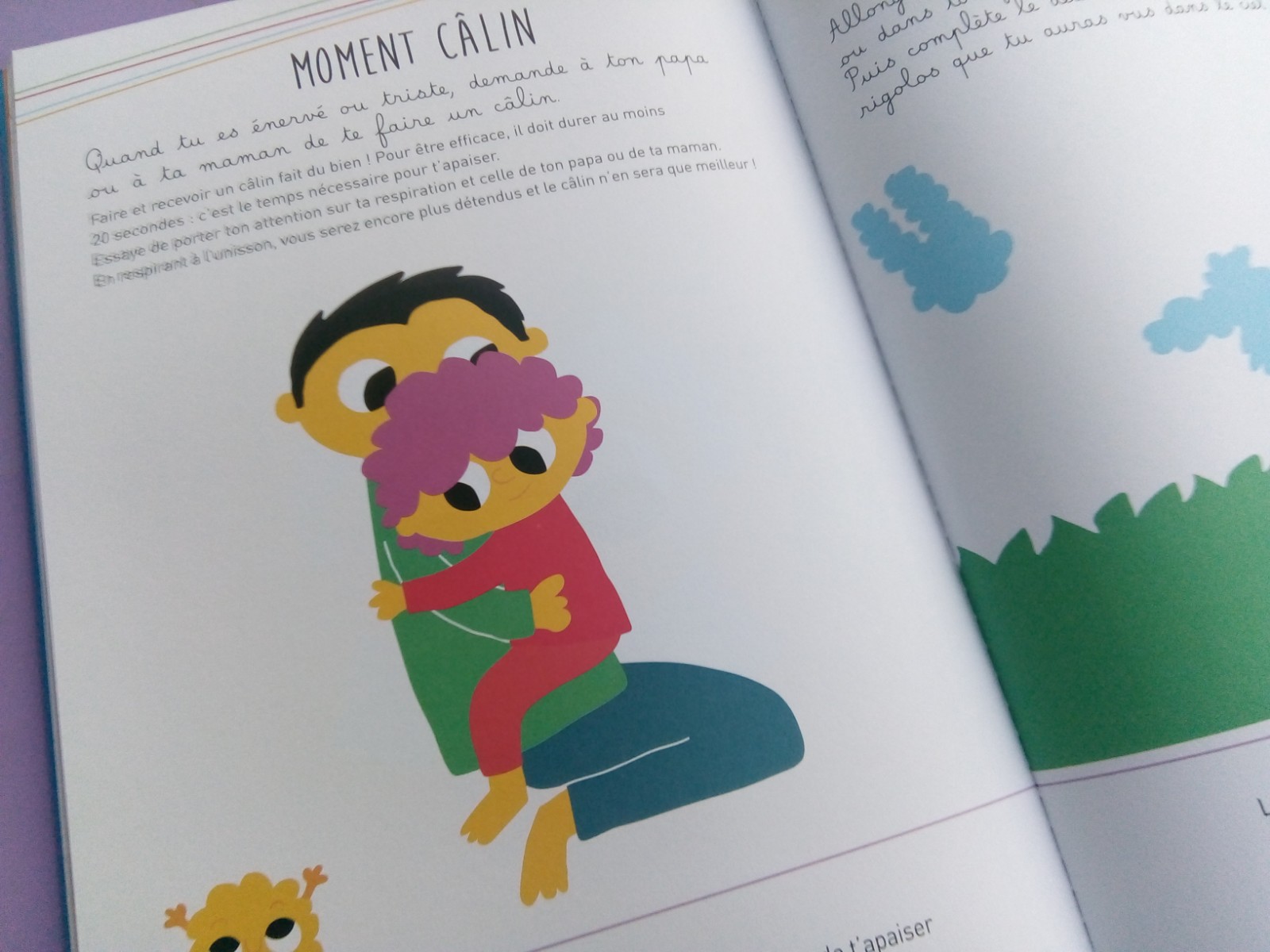
Part three gives tools to tame the different emotions and use them to live better, with small breathing exercises, confidence-building, calming-down and massage activities.
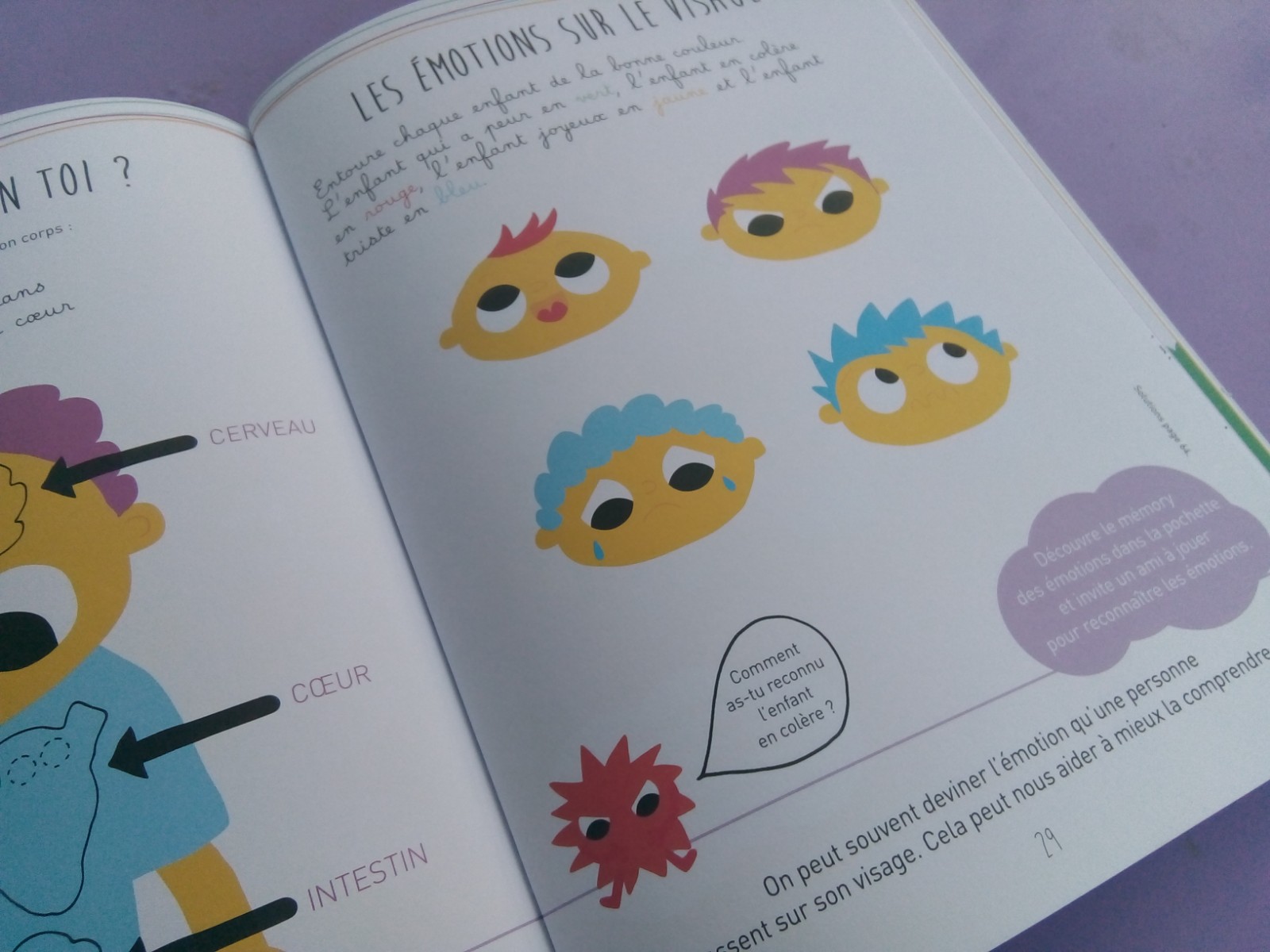
| Part | What it covers | What the child does |
|---|---|---|
| Part 1 | Basic emotions, naming words, everyday situations | Matches feelings to moments and learns vocabulary |
| Part 2 | Facial expressions, sensations, postures, body signs | Plays games to spot and name what the body feels |
| Part 3 | Breathing, confidence, calming down, massage | Practises small tools to live with each emotion |
| Bonus pocket | Chatterbox, face memory game, finger puppets | Builds and plays with detachable games |
| Adult intro | Principles and pillars of emotional education | Reads a short refresher before starting |
Bonus Detachable Games in a Pocket
Alongside the book, detachable tools come in a pocket so children can use them on the move. There is a chatterbox game for recognising emotions, a memory game of faces, and finger puppets for telling stories built around feelings.
These extras matter because young children learn through repetition and play, not through explanation alone. A memory game of faces, for instance, lets a child practise reading expressions again and again without it ever feeling like a lesson. Finger puppets invite a shy child to speak through a character rather than about themselves, which often unlocks more honest talk.
Building the games together is part of the fun, and it echoes the pleasure children take in assembling things with their own hands, the same appeal that explains why LEGO. A calm, shared craft moment is also a good way to prepare for quieter routines, much like the tips in baby sleep for keeping little ones settled.
How to Use the Book at Home
You do not need to work through the book from cover to cover. Keep it on a shelf within reach and pull it out when something happens: a meltdown after nursery, a fright at bedtime, a burst of joy worth naming. Let the child choose the page that matches the day.
Sit alongside rather than in front of the child. Ask open questions, wonder aloud, and let silence do some of the work. If a child is not ready to talk about a big feeling, the drawing or maze gives them a safe detour. The adult reminders at the start are worth reading first, so you can model the calm you are hoping to teach.
Pair the book with everyday rituals: naming feelings at dinner, a breathing break before homework, a massage at bath time. For families who like seasonal activities, the shared-craft spirit here works well alongside ideas like a Christmas centerpiece craft. And if you are choosing toys to support this kind of play, a quick look at toys for two year olds or Christmas gifts helps you match the tool to the child.
Who This Book Suits, and Who It Does Not
This is a strong fit for parents, carers and teachers of children roughly four to seven who want a light, playful entry point into emotional learning. It also suits adults who feel unsure how to talk about feelings and want a structure to lean on.
It is not a therapy workbook, and it is not designed for older children, who have their own companion volume. Nor is it a script to follow rigidly: its value comes from being dipped into, not completed. Families who prefer open-ended play over printed pages may find it a useful bridge rather than a daily habit.
If you are stocking a playroom or a classroom corner, it pairs naturally with other hands-on resources; browsing a Fort Worth toy store or a Houston toy store in person can help you feel the quality of similar activity kits before buying.



My hands-on take
I tried this kind of page-by-page approach with a child who was going through a loud, messy phase of big feelings. What worked was not sitting down to "do emotions" but leaving the book out and letting them pick a page when something had happened. The face memory game got far more conversation out of them than any direct question ever did.
My advice: read the adult section first, then step back. Resist the urge to finish a page or to explain the "right" answer. The detachable games are the real hook, so build them together on a quiet afternoon and keep them somewhere visible. And if a child shuts down, that is information, not failure. Come back another day.
Frequently asked questions
What age is this emotions book for?
It is aimed at children aged 4 to 7, with vocabulary, pencil work and activity difficulty chosen for that range. Older children have a companion volume from the same author.
Do we have to follow the pages in order?
No. The book is deliberately open so you can pick the emotion and activity that match what your child is living through. That flexibility is one of its main strengths.
What is included besides the activities?
A pocket of detachable tools: a chatterbox for recognising emotions, a memory game of faces and finger puppets for telling stories. Children can build and use them on the move.
Can adults learn from it too?
Yes. A short opening section covers the principles and pillars of emotional education for adults, and the body-focused pages often help parents notice their own reactions.
Product Reviews
 Best Toys for Dogs With High Prey Drive |
Best Outdoor Toys for 3-4 Year Olds |
Best Outdoor Toys for 6 Year Olds |
Best Harness for Poodle |
Best LEGO Sets for Adults |
Best Travel Toys for 4 Year Olds on Airplane |
Best Toy Stores in Washington DC |
Best Potty Training Toys |
Best Toys for Tripod Dogs |
Maillot equipe de france







