


Conflict resolution for kids is one of those skills no one teaches formally, yet children need it every single day. This workbook takes the subject seriously and makes it playful at the same time, inviting children from around seven years old to draw, colour, cut out and imagine their way toward better relationships.
Rather than telling children that arguing is bad, it starts from a different premise: disagreements are normal, anger is allowed, and there are ways to move through a fight without hurting anyone. Along the way, a friendly cat explains the vocabulary that adults often blur together.

Quick takeaways
- Aimed at children from around six or seven years old
- Separates conflict, dispute, violence, anger, assertiveness and aggression
- Uses drawings, stickers, mazes and word searches to carry the message
- Focuses on win-win solutions and finding people who can mediate
- Includes a short parent section on turning disputes into constructive conflict
- Honest about limits: it offers resources, not a cure for every argument
Telling conflict, dispute and violence apart
Before children can solve anything, they need words for what is actually happening. The workbook spends time separating four ideas that adults often use interchangeably: conflict, dispute, violence and anger. It also distinguishes assertiveness from aggression, which matters enormously when a child is told to "stand up for themselves" without any guidance on how.
This vocabulary work is done through drawing, colouring and matching games rather than definitions to memorise. A cat character walks children through the differences, explaining for instance why feeling furious is not the same as hitting someone, and why a disagreement is not automatically a fight. That distinction alone can change how a child reads a bad afternoon, much like the gentle lessons in these short Christmas stories.
If your child is still building the vocabulary for feelings in general, the same patience applies to early writing skills, which you can support with these tips on helping children write. The same steady approach helps with everyday care too, such as knowing why after sun matters.

Understanding what is really behind a fight
Once the words are clear, the workbook moves to causes. Children are invited to look at everyday scenarios, squabbles with brothers and sisters, tensions with friends, trouble at school, rumours and arguments with parents, and to work out what sparked each one. Often the visible trigger is not the real reason.
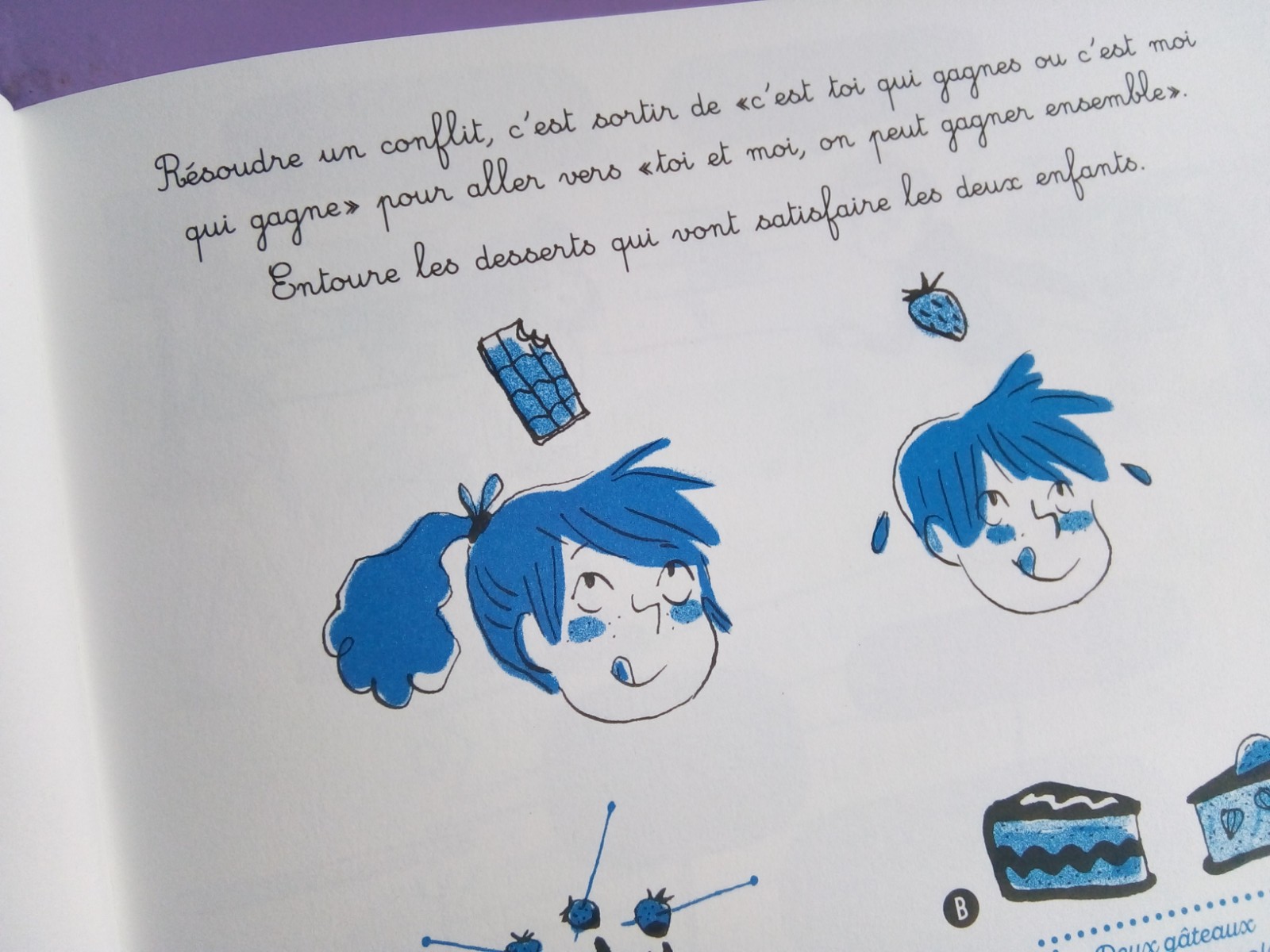
This is where the playful format earns its keep: rebuses, dot-to-dot colouring, stickers, word searches, drawings and mazes carry the message without turning it into a lecture. Children complete scenarios, imagine what the other person might be feeling, and suggest alternatives. The reflection is genuinely theirs, not handed down.
Group activities like an online escape room can reinforce the same lesson at home: everyone has a different idea, and the puzzle only gets solved when people listen to each other. Real-life mix-ups, such as the school late arrival rule, can spark the same conversations, and small back to school rewards can help children practise calm, respectful ways to sort things out.

| Term | What it means for a child | What it is not |
|---|---|---|
| Conflict | A disagreement where both sides have needs | Automatically a fight |
| Dispute | A heated exchange that can still be talked through | The same as violence |
| Anger | A feeling that is allowed and can be named | Permission to hurt someone |
| Assertiveness | Saying what you need clearly | Aggression |
| Violence | Hurting someone physically or verbally | A valid way to win |
Learning win-win strategies
The heart of the book is strategy. Children practise looking for solutions where both sides gain something, instead of the familiar winner-and-loser ending. They are asked to invent new options, use their creativity, and identify trusted people who could act as mediators when a disagreement stalls.
Living well together does not require identical tastes or identical wishes, and the workbook says so plainly. The goal is a constructive conflict, where each person gets to speak and where the outcome is invented rather than imposed. That is a demanding idea, and it is presented as something to practise rather than master.
The honest framing is refreshing: the book is not magic, and it will not stop every argument. What it can do is show children that a dispute does not have to end in a scuffle, and give them a few resources for the times they manage to do it differently.

A guide for parents at the back
The final section is written for adults. It revisits what children can learn from conflict when it is handled with emotional intelligence, and offers keys for helping a child turn a quarrel into a constructive conversation. It is short, practical and meant to be read before you need it.
Parents are also reminded that modelling matters more than explaining. Staying calm, naming your own frustration, and apologising after losing your temper all teach the same lesson the workbook is trying to deliver on paper. Children learn far more from what they watch than from what they are told.
The recommended age is around six or seven and up, though younger children can join with help. For siblings close in age, pairing this with toys that invite turn-taking, such as the ones in this guide to toys for one-year-olds, helps the lessons spill into daily play.

How to use the workbook at home
There is no need to work through it in one sitting. A few pages at a time, ideally when everyone is calm rather than right after a fight, gives children space to think without feeling accused. Let your child lead: some pages invite drawing, others ask for opinions, and the conversation that follows is often more valuable than the exercise.
Keep the vocabulary alive afterwards. Asking "was that a conflict or a fight?" or "what would a win-win look like here?" turns a workbook page into a family habit. It also gives you neutral language to use in the middle of a real dispute, when nobody wants a lecture, and supports children who want to be popular at school.
For families who like structured routines, the same principle of a predictable rhythm applies to rest, as explained in this guide to naps by age. Cozy moments like fun Christmas pajamas can make these calm routines feel special.


My hands-on take
I tried the "conflict or fight?" question at home after a noisy afternoon over a shared toy, and the effect surprised me. Instead of defending himself, my son paused and said it was a conflict, then suggested taking turns. It did not solve everything, and ten minutes later there was shouting again, but that pause was new.
What I appreciate most is that the book never pretends children will stop arguing. It treats conflict as ordinary and even useful, which takes the pressure off parents to stamp it out. I keep it on the shelf and pull it out when things have calmed down, not in the heat of the moment.
Frequently asked questions
What age is this workbook for?
It is recommended for children from around six or seven years old. Younger children can take part with an adult reading and explaining the pages, while older children can work more independently.
Does it stop siblings from arguing?
No, and it does not claim to. It gives children vocabulary and strategies so that some disputes can end differently, and it helps parents respond more calmly when they do not.
Do we need to do the pages in order?
The book is progressive, so working through it in sequence makes sense. That said, picking a page that matches a recent argument can be more effective than following the order strictly.
Product Reviews
 Best Toys for Dogs With High Prey Drive |
Best Outdoor Toys for 3-4 Year Olds |
Best Outdoor Toys for 6 Year Olds |
Best Harness for Poodle |
Best LEGO Sets for Adults |
Best Travel Toys for 4 Year Olds on Airplane |
Best Toy Stores in Washington DC |
Best Potty Training Toys |
Best Toys for Tripod Dogs |
Maillot equipe de france







