


Why do some adults believe they deserved the spankings and punishments they received as children? This question sits at the heart of ordinary educational violence, a quiet force that shapes families and whole societies. Many people keep the memory of humiliation filed away as a necessary measure taken for their own good.
They remain attached to the idea that they were loved by parents who, at the same time, hurt them, whether through physical acts or emotional pressure such as shaming, blackmail and withdrawal of affection. Understanding this mechanism is the first step toward breaking the cycle.

Quick takeaways
- Many adults reframe childhood punishment as deserved because admitting harm threatens their bond with their parents.
- Repressed anger, fear and sadness from childhood can stay active for a lifetime if never acknowledged.
- Excusing a parent's behaviour often silences the child you once were all over again.
- Anger at injustice is healthy and has a repairing value; it deserves space, not shame.
- Recognising the mechanism of repression is the key to stopping violence from passing to the next generation.
- Repair after a harsh moment teaches children more than punishment ever will.
The loyalty that protects the parent
Adults who were hit or humiliated often describe those moments as proof of care. The memory of the punishment survives, but it is stored as a necessary measure taken with kind intentions, not as harm. This is how ordinary educational violence colonises an entire society: it hides inside the language of love and good intentions.
When a mother or father can truly feel the wound they inflict, they often meet the wounds they once suffered themselves. That meeting is what frees a parent from the compulsion to repeat. Until then, the child inside stays silent, and the pattern passes quietly to the next generation.
Why the story feels so convincing
Education and religion have long taught children, even grown ones, that they must not feel what happened to them. The result is a training in repetition, carried out with a clear conscience. It is worth asking how parental love and discipline become tangled in these early messages.
Repression and traumatic memory
The key to ending the transmission of violence lies in understanding repression and traumatic memory. Many highly intelligent people, including scientists, economists and writers, keep the awareness of their own true knowledge locked away. They know, intellectually, that they were afraid or wanted to rebel, yet the feeling never reaches the surface.
Legitimate childhood emotions such as anger, fear and sadness get covered by a veil and labelled bad. Moral lessons do the rest: a spanking is always deserved, the child carries responsibility for the relationship, the punishing parent always means well, and children would end up badly without harsh treatment. These beliefs are absorbed early, much like the values we pass on in teaching values without ever questioning them.
Death anxiety behind the silence
Reproaches toward parents often stir death anxiety, not only because of real threats. For a small child, losing the love of the closest caregivers feels like a mortal risk. That old repressed fear can stay active for a lifetime.

| Signal | What it looks like | What it protects |
|---|---|---|
| Self-blame | "I deserved those slaps" | Loyalty to the parent |
| Excuses | "She was stressed, he had it hard" | The image of a loving home |
| Intellectual criticism | Analysing parents without feeling | Distance from old pain |
| Body-level anger | Feeling the old revolt | The child's integrity |
| Repair after conflict | Naming your own frustration | Trust with your child |
| Play without correction | Letting the child lead | Emotional expression |
Reconnecting with childhood anger
Some people manage to criticise their parents, but the criticism rarely moves beyond the intellect. Few manage to feel, in the body, the vivid emotions that would pierce the shield of self-blame, of responsibility-taking, or of excuses such as a stressed mother or a father with a hard childhood.
As long as the child you were is betrayed by these tricks, there can be no liberation and no reconnection to yourself. Finding excuses for the parent of then is like scolding the child of then and silencing their emotions once more. The adult of today simply abandons the child of today's memory.
Anger has a repairing value
It is normal and healthy to feel anger at injustice, disrespect and attacks on physical or moral integrity. Anger carries a repairing value. The child had the right to feel and express these emotions, to revolt and to defend their integrity, and adults had the duty to listen and rethink the relationship. That is the same respectful stance we need when we educating children with patience rather than force.
A culture that looks away
The refusal to recognise the damage done in early childhood runs beneath the whole of society. Survey figures from 2007 showed that a large majority of French parents and grandparents admitted to having given a spanking. Such numbers reveal how ordinary the practice remains, and how easily it is defended as tradition rather than examined as harm.
Children who were once tormented go on to torment their own children, insisting that the torment is not torment, because their loving parents did the same. Recognising this sentence for what it is takes courage, and it helps to see how influencer mothers and other public voices now model gentler approaches.
Small shifts that interrupt repetition
Interrupting the cycle does not require a dramatic confrontation. It starts with naming what happened, allowing the old anger to exist without judgement, and choosing a different response in the present moment. Parents who practise this often find that everyday routines become calmer, from eating out to bedtime, because the pressure to control has loosened.
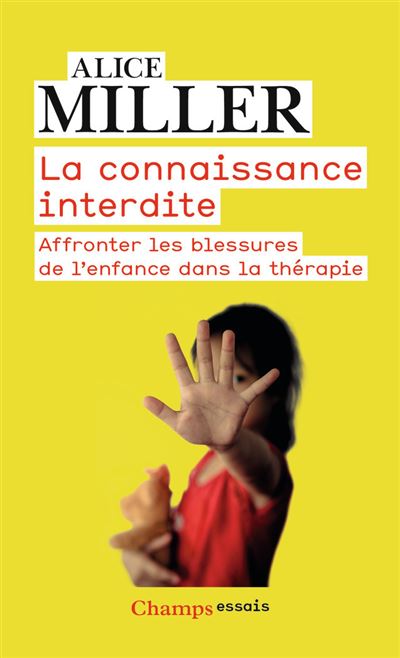
Rebuilding trust in your own feelings
Reconnection does not mean blaming your parents endlessly. It means giving the child you were back their voice and confirming that their emotions were true. From that ground, you can decide what kind of parent you want to be, and what kind of environment you want to build at home.
Play is one of the simplest places to start, because it lets children express feelings without words. Choosing open-ended materials, from foam block toys to simple puzzles, gives a child room to lead. Even a familiar object like the Rubik's cube can teach patience and frustration tolerance when an adult stays calm beside it.
Modelling repair, not perfection
No parent gets this right every day. What matters is repairing after a harsh word, naming your own frustration, and showing that anger can be expressed without hurting anyone. Children learn far more from that repair than from any punishment, and the same principle guides how we music activities or everyday games when we let children explore without fear of correction.

My hands-on take
I remember sitting with a friend who kept insisting her childhood spankings were fine because her parents loved her. Every time I gently asked what the little girl in that memory felt, she changed the subject. It took months before she admitted she had been afraid, and that admission changed how she spoke to her own son.
In my own home, the most useful habit has been naming my frustration out loud instead of letting it harden into punishment. When I say I am angry and need a moment, my child learns that anger can exist without anyone being hurt. That small repair, repeated often, does more than any lecture about respect.
Frequently asked questions
Does believing I deserved punishment mean something is wrong with me?
No. It is a common protective mechanism that preserves your bond with your parents. Recognising it is a sign of awareness, not weakness.
Do I have to confront my parents to heal?
Not necessarily. The essential work is internal: allowing the child you were to feel what happened and to have their emotions validated.
Is anger toward my parents dangerous?
Anger itself is not dangerous; it has a repairing value. What matters is how you express it and whether you let yourself feel it safely.
Can this cycle really be stopped?
Yes, awareness of repression and traumatic memory is the key. Parents who feel their own wounds are less driven to repeat them.
Product Reviews
 Best Toys for Dogs With High Prey Drive |
Best Outdoor Toys for 3-4 Year Olds |
Best Outdoor Toys for 6 Year Olds |
Best Harness for Poodle |
Best LEGO Sets for Adults |
Best Travel Toys for 4 Year Olds on Airplane |
Best Toy Stores in Washington DC |
Best Potty Training Toys |
Best Toys for Tripod Dogs |
Maillot equipe de france







