


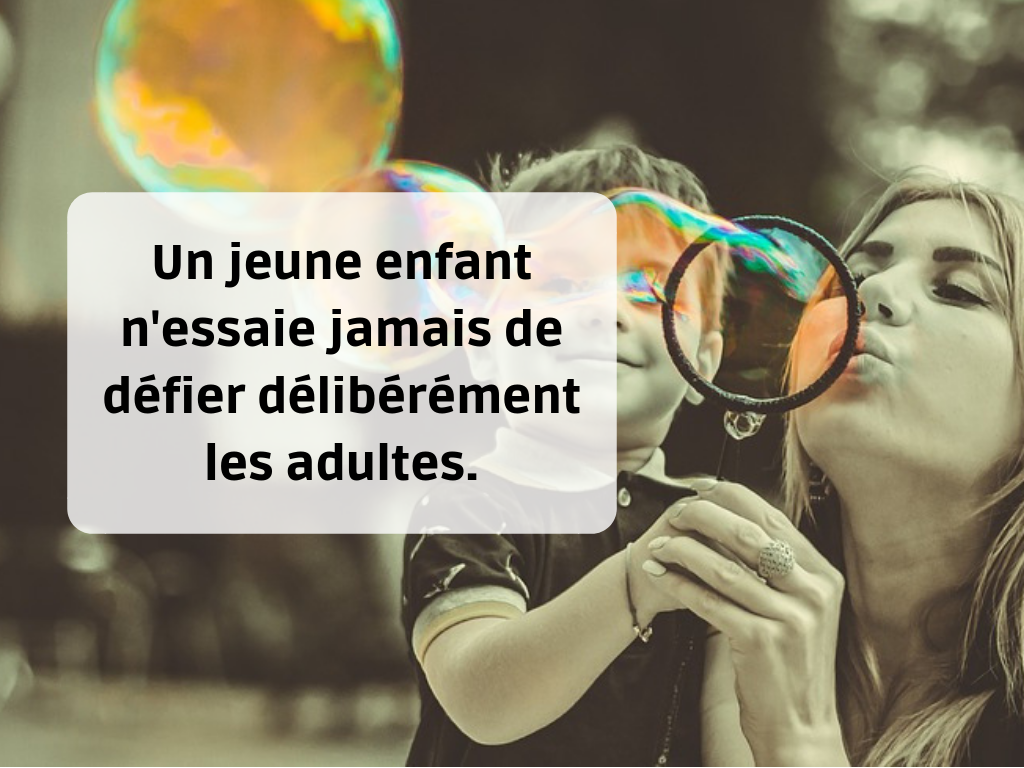
Toddler defiance is one of the most misunderstood behaviors in early childhood, and it rarely means what tired parents think it means. Between the ages of two and four, a child may nod at a rule, repeat it out loud, then turn around and do exactly what was forbidden. It looks like a challenge, but it is not a deliberate one.
Before five or six, children simply do not yet have the inner dialogue that makes self-regulation possible. Understanding this changes how we react, and it makes daily life with a young child far less of a power struggle.

Quick takeaways
- A young child who breaks a rule is not deliberately defying you.
- Inner dialogue, which drives self-regulation, develops gradually before age five or six.
- The wide-mesh net metaphor explains why impulses slip through despite repeated reminders.
- Shouting and fear can slow self-regulation and strain attachment.
- Empathy, humor and calm redirection work better than confrontation.
- Clear, predictable limits help a child do what is expected.
Why young children ignore rules they clearly know
A young child can agree to a rule, repeat it back to you, and still break it minutes later. This gap between knowing and doing is not disrespect; it is a developmental stage. Children before five or six have not yet built the inner dialogue that supports self-regulation, so they solve problems out loud instead of silently.
That is why you hear a young child narrating play: "Now the car goes here, now it parks." They are literally constructing their inner voice. If you are preparing for the school years ahead, the same principle applies to primary school notebooks and early learning habits, where repetition matters more than instruction.
Dr Coulter explains that the brain cells responsible for inner dialogue are the same ones that regulate impulses. Until roughly age four, their language capacity cannot yet override the urgent motor needs those same cells express.
The pond and the neurological net metaphor
Kim John Payne offers a helpful image in his book on benevolent authority. Picture a pond full of fish: large red fish darting about, and tiny blue fish swimming calmly. The red fish represent unregulated impulses; the blue fish help a child think and regulate behavior.
Young children carry a neurological net with very wide mesh. They can catch the big red fish, but the small blue ones slip through the holes. This is why a child throws food on the floor even after you have repeated the rule several times.
Knowing a rule is not the same as following it
Knowing a rule does not give a young child the ability to translate it into action. As the child grows, the mesh becomes finer and the net catches more. Meanwhile, choose toys that support calm focus, such as quiet toys for a three-year-old, rather than constant stimulation. If you are weighing controversial parenting issues, remember that development, not willpower, explains much of this behavior.
| What you see | What is developing | Helpful response |
|---|---|---|
| Child repeats a rule then breaks it | Inner dialogue not yet built | Restate briefly, redirect |
| Food thrown on the floor | Impulse outruns language control | Remove the plate calmly |
| Child talks aloud during play | Self-regulation being constructed | Let the narration continue |
| Meltdown after a request | Immature brain under stress | Lower your voice, stay close |
| Rule forgotten the next day | Memory and impulse still maturing | Repeat routines predictably |
Fear blocks the immature brain
Our shouting and anger, born of frustration when the food lands on the floor again, do not build self-regulation. Payne points out that frightening or shocking a young child may actually slow the development of their inner dialogue.
Fear and stress interfere with the growing attachment between you and your child. The little one can also feel confused watching an adult shout impulsively while being told to stop their own impulsive behavior.
This is worth remembering during hard weeks, whether you are dealing with childhood fever or simply a run of difficult bedtimes. A calm adult is the regulating presence a child borrows from.
Choose example and empathy over confrontation
Young children need to hear us think out loud and see us respond with understanding, redirecting behavior without violence. They need clear, kind signals that help them do what is expected in the family.
Payne invites us to tell ourselves: "It is frustrating for me when my child does this, but I know why, and I know it is not against me." Understanding, empathy, creativity and humor guide the way.
For example: "I see the food is on the floor again. We all know it belongs on the plate. I think that cheeky little hand put it there. What could we do? I know, this plate stays in my hands for now."
Redirection works far better than confrontation, whether the issue is mealtime or choosing martial arts for an older sibling. The same calm approach applies when you pick reward toys or support language development. Keep instructions short, physical and calm.

Practical responses that respect the developing brain
Name the behavior without labeling the child. "The blocks are flying" is easier to act on than "you are being naughty." Then offer a replacement: throw a soft ball, not the blocks.
Reduce the audience and the noise. A child mid-meltdown cannot process a lecture, but a quiet voice and a hand on the shoulder can help. If you are juggling a newborn and a toddler, budgeting patience matters as much as money, which is why family budget planning often includes childcare and time.
Prepare transitions in advance and keep routines predictable. Predictability lowers the load on an immature brain, and it gives you fewer moments where you feel tested.
What to expect as the net grows finer
The neurological net tightens with age, and the mesh weaves itself as the child grows. Skills that seem absent at three often appear quietly at five or six, without any dramatic intervention on your part.
Your job is to keep the environment safe, the limits clear and the relationship warm. That is also why simple, open-ended play matters so much; a few good STEM toys can occupy a child's hands while their brain does the quiet work of growing.
When you feel the frustration rising, step back and remember the pond. The red fish are not attacking you. They are simply swimming, and your child is still learning how to hold the net.

My hands-on take
I remember standing in the kitchen, staring at a plate on the floor for the third time in one meal, convinced my child was making a point. Reading about the wide-mesh net changed the way I saw that moment. The next evening I simply said, "The plate stays in my hands for now," and kept my voice low. There was no dramatic breakthrough, but the meal ended without tears from either of us.
What helped most was rehearsing my own inner script before difficult moments: this is frustrating, I know why it happens, and it is not against me. That sentence bought me a few seconds of calm, and those seconds were usually enough to redirect instead of react.
Frequently asked questions
Is my toddler testing my authority on purpose?
No. Before five or six, children lack the inner dialogue needed to regulate impulses, so they cannot deliberately challenge you in the way adults imagine.
Why does my child follow a rule one day and ignore it the next?
The ability to translate knowledge into action is still forming. Knowing a rule and being able to act on it are two different skills.
Does shouting make a child behave better?
It may stop the behavior briefly, but fear and stress can slow the development of self-regulation and strain the attachment between you.
When will my child start regulating their own behavior?
The capacity grows gradually as the child matures and language develops, with noticeable progress often appearing around four to six years old.
Product Reviews
 Best Toys for Dogs With High Prey Drive |
Best Outdoor Toys for 3-4 Year Olds |
Best Outdoor Toys for 6 Year Olds |
Best Harness for Poodle |
Best LEGO Sets for Adults |
Best Travel Toys for 4 Year Olds on Airplane |
Best Toy Stores in Washington DC |
Best Potty Training Toys |
Best Toys for Tripod Dogs |
Maillot equipe de france







