


A tidy home with kids is less about perfection and more about systems that actually work for small hands. When toys pile up and Lego scatters across the floor, most parents eventually give up rather than fight the same battle every evening.
The good news is that a few simple changes to how you store and tidy things can restore a livable balance. Children often enjoy the process more than you would expect, as long as the setup makes sense to them.

Quick takeaways
- Make storage a one-step action so children can tidy quickly
- Use open baskets and low shelves instead of complicated containers
- Share tasks with a simple chart and avoid redoing children's work
- Define three priority zones and let the rest of the house vary
- Build short daily tidy routines rather than one big weekly clean
- Review and adapt the system as your children grow
Keep it simple: if it is hard to put away, it will stay out
The golden rule of a functional home is that storage must be accessible. If every toy needs three separate steps before it lands back in its place, nobody will bother. A child should be able to tidy their things in one quick, simple action.
For daily floor care, a cleaning product suited to your surfaces makes a real difference. Choose a concentrated formula you dilute yourself according to how dirty things are, and pair it with a mop so the chore becomes a fast, almost automatic gesture. Fringe or microfibre models pick up dust without much effort.
Look at the spots where clutter builds up most often in your home. A living-room corner constantly invaded by soft toys and books deserves its own solution: a simple basket on the floor, with no lid or complicated closing system, does the job. Your child can toss toys in as they run past.
Cleaning as a family: stop being the only one picking up
Turning tidying into a shared activity changes the family dynamic. A three-year-old can already put toys away with an adult beside them, and a teenager can vacuum their bedroom without it feeling like a punishment. The idea is to weave these gestures into the normal rhythm of the day, the same way you handle routines like children sleep Twelfth Night.
A simple task chart helps everyone visualize responsibilities. Each family member knows what is expected and when it should be done, which removes a lot of nagging from your day.
Do not redo their work
Avoid going back over what your children have just done. Nothing is more demotivating than a job supposedly finished but judged insufficient by a parent. If you want to raise kids who pitch in, patience matters as much as consistency.
Some children need extra encouragement to join in, especially when they are tired or worried. If yours seems anxious or withdrawn, it can help to understand why easy things sometimes feel so hard for them. A child who does not want may also be signaling discomfort worth noticing.
| Age group | Can do alone | Needs an adult nearby |
|---|---|---|
| Toddler | Drop toys in an open basket | Sorting and putting away books |
| Preschooler | Return soft toys to a low bin | Folding or organizing small pieces |
| School age | Sort bricks into labelled boxes | Vacuuming under furniture |
| Teenager | Vacuum their bedroom, do laundry | Deep cleaning shared spaces |
Let go of perfection to protect your mental health
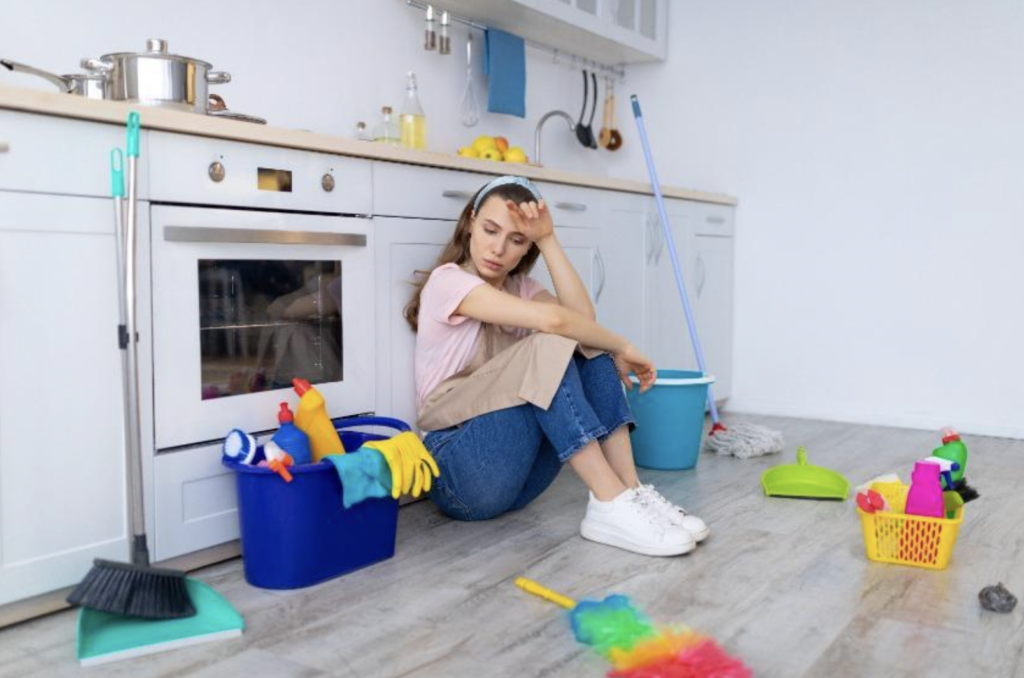
The ideal home you see on social media does not exist in the reality of busy families. Chasing such an unreachable goal exhausts parents without any real benefit to anyone. A clean floor littered with Lego during nap time is not a tidying failure; it simply shows that children live here and life has taken over.
Try defining three priority zones that must stay presentable at all times. The rest of the house can go through variations in order without it becoming a problem, and ranking your efforts this way stops you from trying to control everything constantly.
Evenings when you are exhausted deserve special treatment. Tidying can wait until the next morning without the world stopping. Your mental health matters far more than an impeccable living room at bedtime, so give yourself those breaks without guilt.
Make storage child-sized and category-based
Low shelves, open bins and labelled boxes let children reach and return toys independently. Keep categories broad rather than fussy, so bricks go in one container and soft toys in another, instead of a dozen tiny compartments nobody maintains.
Rotating toys is another quiet trick: store part of the collection out of reach and swap it every few weeks. The novelty returns, the floor stays clearer, and tidying feels manageable. If your child is drawn to building sets, browsing upcoming LEGO sets together can also become a fun way to plan what stays out and what gets stored. Reading about people who overcame barriers can also inspire a can-do attitude toward keeping things tidy.
Some children attach deep meaning to certain objects and even invent companions for them. Understanding an imaginary friend can help you decide which toys deserve a special, always-accessible spot rather than the general rotation. Stories like how bricks helped one child show how much a favourite set can matter.
Build small routines instead of big clean-ups
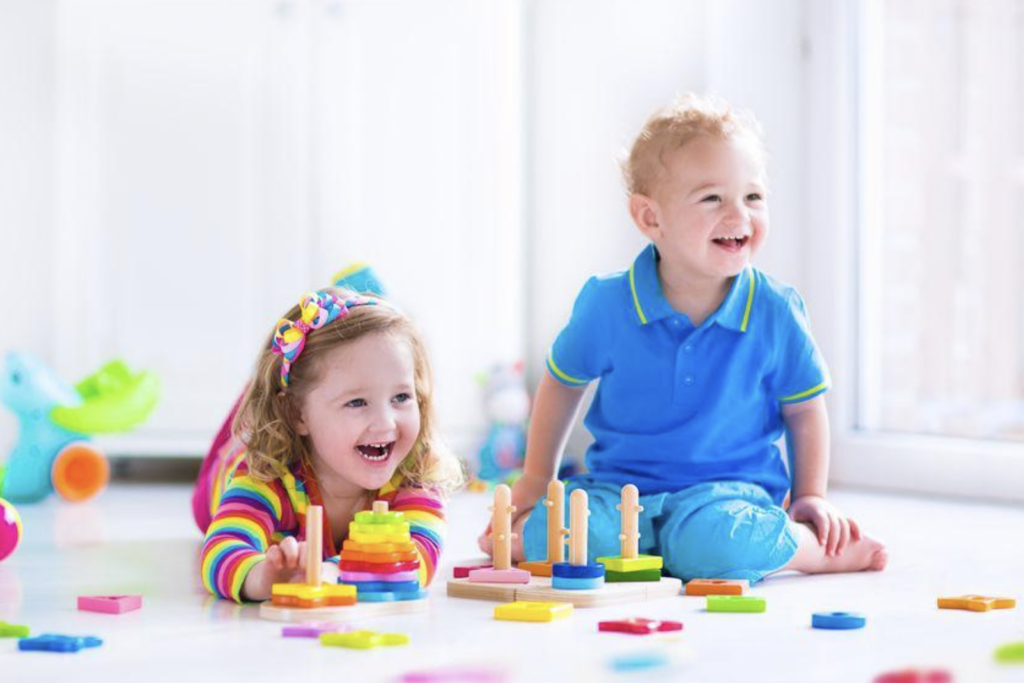
A five-minute tidy before dinner or before bath time works better than a marathon session on Sunday. Short, predictable routines fit a child's attention span and quickly become automatic, much like the rituals that help little ones settle at night.
Keep a small basket or tray for the items that migrate around the house, and empty it once a day. This single habit prevents the slow creep of clutter that makes a room feel chaotic even when it is technically clean.
Celebrating progress matters too. Acknowledging effort, not perfection, keeps everyone motivated. And if tidying regularly turns into a battle, it may be worth checking whether something else is going on, since behaviour often speaks before words do.
Adapt the system as your children grow
A storage setup that suits a toddler will not work for a school-age child with smaller pieces and bigger collections. Review your bins, labels and rules once or twice a year, and let your children have a say in how their space is arranged. Understanding parent child dynamics can make these conversations easier.
Older kids can take on real responsibilities, from sorting laundry to vacuuming, and they respond well when the task is clearly theirs rather than an improvised order. Keep instructions short and specific so there is no room for interpretation. Sharing Benji Davies books together can also spark useful chats about teamwork.
Finally, remember that a home is a living space, not a showroom. A little disorder at the end of a busy day is normal, and the goal is a house that works for the people in it, not one that photographs well.

My hands-on take
In our house, the turning point was buying a few wide, open baskets and putting them exactly where the mess happened, not where they looked nice. The corner of the living room that was always covered in plush toys finally had a home, and my youngest could throw everything in without slowing down.
I also stopped redoing what my children had tidied, even when it looked messy to me. It felt wrong at first, but they gradually took more ownership, and the evening tidy-up became a five-minute family routine instead of an hour of nagging. Some nights we simply skip it and deal with it in the morning, and honestly, nobody has suffered for it.
Frequently asked questions
How do I stop toys from taking over the living room?
Place a simple open basket in the corner where clutter builds up most, and empty it once a day. Keeping storage low and lid-free means children can tidy in one quick action.
At what age can a child start tidying up?
A three-year-old can already put toys away with an adult beside them. Responsibilities can grow gradually, and a simple task chart helps everyone see what is expected.
Should I redo the tidying my child has just done?
It is better to avoid it. Redoing their work is demotivating, and a job judged insufficient by a parent quickly discourages children from helping again.
Is it realistic to keep a perfectly tidy home with children?
No, and chasing that goal mainly exhausts parents. Choose three priority zones that stay presentable and accept that the rest of the house will vary from day to day.
Product Reviews
 Best Toys for Dogs With High Prey Drive |
Best Outdoor Toys for 3-4 Year Olds |
Best Outdoor Toys for 6 Year Olds |
Best Harness for Poodle |
Best LEGO Sets for Adults |
Best Travel Toys for 4 Year Olds on Airplane |
Best Toy Stores in Washington DC |
Best Potty Training Toys |
Best Toys for Tripod Dogs |
Maillot equipe de france







