


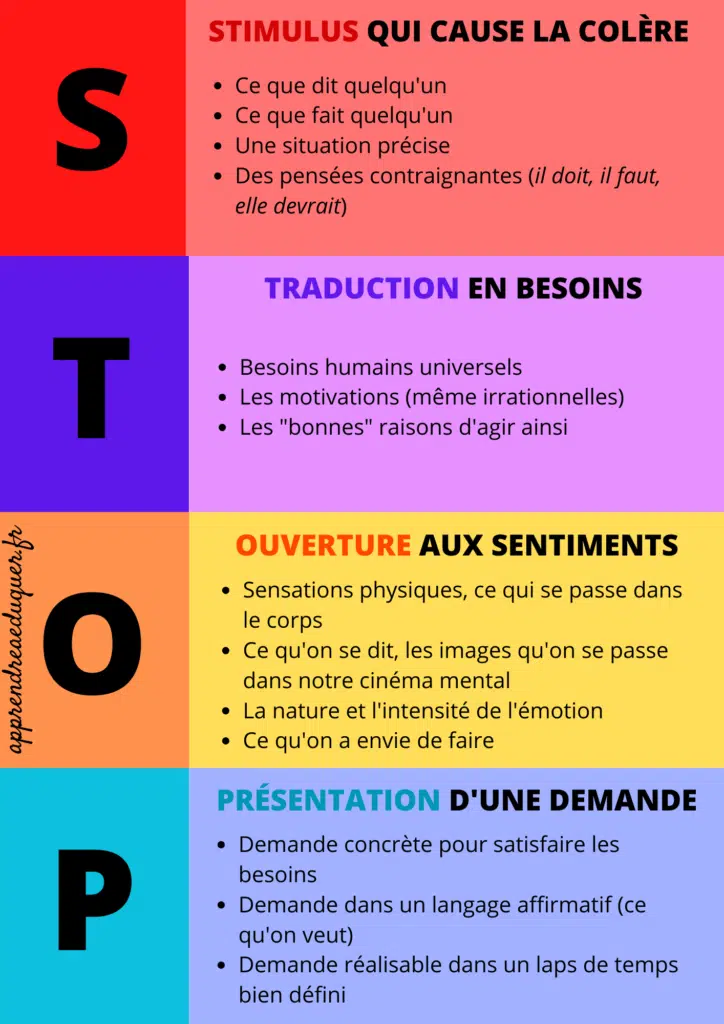
STOP Anger is a simple four-step tool that helps you use the energy of anger to serve your needs instead of attacking the people around you. Reasoning in terms of emotions and needs can turn a heated moment into a message that serves life.
The acronym was designed by Lucy Leu, a trainer in Nonviolent Communication, to help people remember the process that transforms anger into a clear, life-serving message. Pausing and listening to what the emotion carries keeps it from speaking in your place and spilling over into verbal or physical violence.

This process invites you to refocus on the needs and feelings behind the anger so you can find outcomes that satisfy everyone involved.
Quick takeaways
- STOP Anger is a four-step process for turning anger into a life-serving message.
- Name the stimulus, including rigid “should” thoughts, before reacting.
- Translate anger into universal needs and the reasons behind behavior.
- Notice body sensations, inner images, and the urge to act.
- Make a concrete, affirmative request within a defined timeframe.
- Keep a poster visible to prevent anger from becoming violence.
Why Pausing Before Reacting Matters
Anger often arrives fast, and the first impulse is to speak or act before we understand what is happening. Taking a pause lets you listen to the message the emotion carries rather than letting it speak for you. Without that pause, anger easily overflows into words or gestures you later regret.
The STOP Anger approach does not ask you to suppress the feeling. It asks you to slow down long enough to notice what triggered it and what it is pointing toward. This small gap between stimulus and response is where real choice becomes possible.
Parents juggling daily routines know how quickly a small frustration can escalate. Having a simple visual reminder nearby, much like the practical tips in eating out baby, can make a big difference in the heat of the moment.
Step One: Name the Stimulus
The first step is to identify the stimulus causing the anger. This might be what someone said, what someone did, or a specific situation you are facing. It can also be a constraining thought, such as “he must,” “it is necessary,” or “she should.”
Naming the trigger separates the event from your interpretation of it. Instead of “you are being selfish,” you notice the concrete action and the rigid thought attached to it. This clarity is the foundation for everything that follows.
When a child melts down over a toy, the stimulus may be a shared object or a tired afternoon. Observing calmly, the way you might compare best toys, helps you see the actual moment rather than the story you are telling yourself. The same patient eye applies to everyday treats like industrial ice creams.
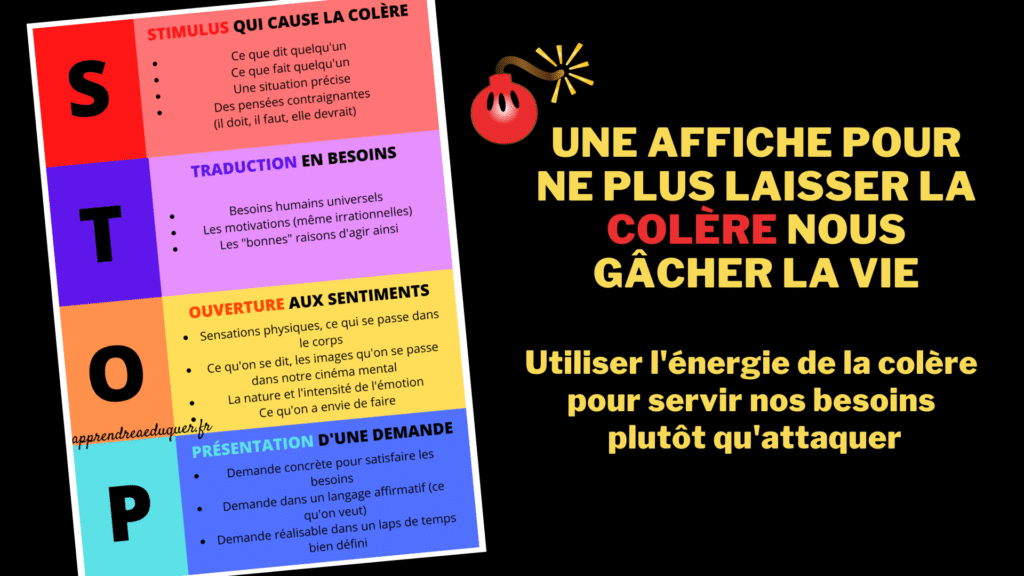
| Step | What to Notice | What to Do |
|---|---|---|
| Stimulus | Words, actions, situations, rigid thoughts | Name the trigger without judgment |
| Translation | Universal needs and motivations | Ask what need is being met |
| Openness | Body sensations, inner images, emotion | Notice feelings without acting |
| Request | Concrete, affirmative, achievable | Ask clearly for what you want |
| Poster | Visible reminder at home | Review the steps together |
Step Two: Translate Into Needs
Next, translate the anger into needs. Behind every reaction sit universal human needs, along with motivations, even irrational ones, and the “good” reasons a person acted that way. Looking for those reasons softens judgment and opens understanding.
This step does not excuse harmful behavior. It simply asks what need was trying to be met, such as safety, respect, rest, or connection. Once you name the need, the anger has somewhere useful to go.
Recognizing needs applies to children too, whether they are upset over a game or struggling with something physical, much like the gentle attention described in fragile baby lungs. The need is often simpler than the behavior suggests.
Step Three: Open Up to Feelings
The third step is opening to feelings. Notice the physical sensations and what is happening in your body. Pay attention to what you tell yourself and the images playing in your mental cinema, then name the nature and intensity of the emotion and what you feel like doing.
Feelings are information, not instructions. Noticing the urge to shout or slam a door without acting on it gives you room to respond thoughtfully. This body awareness is a skill children can learn early.
Simple, hands-on activities support this emotional learning at home, similar to the ideas in Montessori crafts. Naming sensations out loud also models self-awareness for the whole family.
Step Four: Make a Clear Request
The final step is presenting a request. Make a concrete request that would satisfy the needs you identified. Use affirmative language that states what you want rather than what you do not want, and keep it achievable within a clearly defined timeframe.
A clear request sounds like “Could you put your shoes on in the next five minutes?” rather than “Stop being so slow.” This turns anger into a message that serves life and gives the other person something doable to respond to.
Clear requests also help in adult relationships, where small misunderstandings can grow quietly, much like the topics covered in sexual attraction couple. Speaking plainly prevents resentment from building.
Using the Poster at Home
A poster summarizing these four steps keeps the process visible for the whole family. Placing it where conflicts tend to happen, such as the kitchen or hallway, makes it easy to glance at during a tense moment. The goal is to keep anger from exploding into violence.
You can walk through the steps together after a calm moment, not only during a conflict, so the language becomes familiar. Children often respond well when adults name their own needs and feelings honestly. Keeping wipes handy for quick cleanups, like these homemade disinfecting wipes, can make everyday routines smoother too.
For families managing screen rules or daily routines, the same calm approach pairs well with tools like a mobile phone contract. Consistency matters more than perfection, and small rewards such as party favor toys can reinforce positive behavior.


My hands-on take
I started using the STOP Anger steps after one too many evenings that ended in raised voices over homework and bedtime. At first it felt awkward to pause and name what I was actually feeling, but the simple act of asking “what need is under this?” changed the tone of our house. My anger still shows up, but it no longer runs the conversation.
What helped most was printing the four steps and sticking it on the fridge, where I could see it mid-frustration. I also began naming my needs out loud in front of my kids, and they slowly started doing the same. It is not a magic fix, but it is a practice that gets a little easier each time.
Frequently asked questions
What does the STOP Anger acronym stand for?
It stands for four steps: naming the Stimulus, Translating it into needs, Opening up to feelings, and Presenting a request. Together they turn anger into a clearer message.
Is this approach about suppressing anger?
No, it invites you to pause and listen to what the emotion carries. The goal is to use its energy to meet needs rather than attack.
Can children use these steps too?
Yes, with adult modeling and simple language, children can learn to name triggers, needs, and feelings. Practicing during calm moments helps.
Where does the method come from?
The acronym was designed by Lucy Leu, a trainer in Nonviolent Communication, and appears in her exercise manual on the topic.
Product Reviews
 Best Toys for Dogs With High Prey Drive |
Best Outdoor Toys for 3-4 Year Olds |
Best Outdoor Toys for 6 Year Olds |
Best Harness for Poodle |
Best LEGO Sets for Adults |
Best Travel Toys for 4 Year Olds on Airplane |
Best Toy Stores in Washington DC |
Best Potty Training Toys |
Best Toys for Tripod Dogs |
Maillot equipe de france







