


Positive discipline asks a simple but demanding question: do we want children to follow rules because they fear punishment, or because they understand why the rules matter? Fear of consequences produces obedience only while someone is watching. The old saying captures it well: when the cat is away, the mice will play.
Psychologist Isabelle Filliozat argues that traditional upbringing teaches fear of punishment rather than genuine respect for rules. She points to the 1995 amnesty on Paris parking fines: once drivers knew they would not be fined, many parked in bus lanes and blocked emergency routes, with avoidable deaths as a result. Fear had taught nothing about why the rules existed.

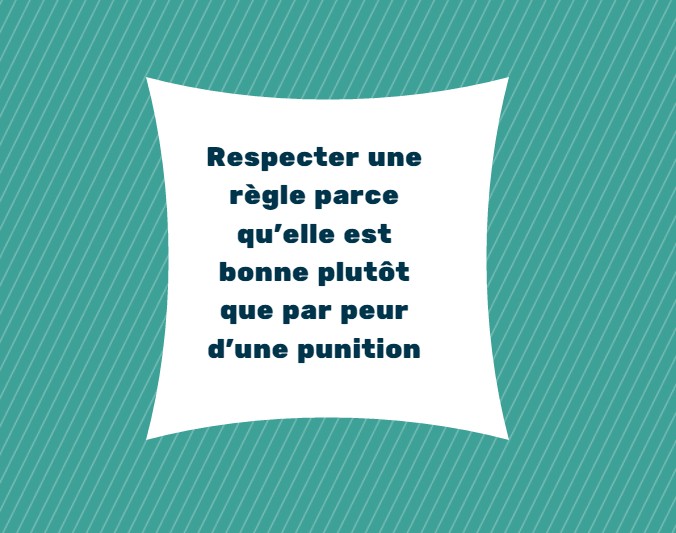
The goal of positive discipline is to help children respect rules because they are good for the group and for the child, and to involve them in building and repairing those rules.
Quick takeaways
- Fear of punishment produces obedience only while someone is watching.
- Positive discipline teaches rules because they are good for the child and the group.
- Children should help shape rules, carry out repairs and find preventive solutions.
- Listening to a child's objection does not mean giving in to it.
- Adults must explain, teach empathy and offer tools for reflection.
- Solving problems with the child is more effective and less humiliating than punishing.
Why Fear of Punishment Fails
Fear of punishment, sometimes called fear of the policeman, relies on avoiding unpleasant consequences rather than understanding a rule. It produces a "not seen, not caught" attitude, where behavior depends entirely on whether an adult is present. Filliozat's parking-amnesty example shows the cost: without fines, many drivers ignored spaces reserved for emergency vehicles.
Positive discipline aims instead at three things: living together better, staying safe, and growing into fulfilled, autonomous and responsible people. The child learns that respecting a rule serves their own interest and the interest of others, not just the authority figure's mood. This matters most in adulthood, when no one is watching and choices must be made alone.
That inner compass is built slowly, through daily conversations and small decisions, much like the patience parents need when children's bicycle skills are learned one wobble at a time.
Let Children Help Build the Rules
Ideally, children take part in three things: shaping the rules so they agree with them and cooperate, carrying out repairs after a mistake, and searching for preventive rather than punitive solutions when a rule is broken. Repairs can be material, compensatory or symbolic, and each type teaches something different about responsibility.
The natural consequence is that children should be able to discuss a rule they find unfair or poorly adapted. A parent can listen to the child's remarks and then decide whether to take them into account, depending on how relevant they are and on the parent's own standards, beliefs and limits.
Listening Is Not Caving In
Listening does not mean giving way, and answering does not mean letting children write their own rules. It means re-explaining the foundation of a rule, confirming why it is relevant, and sometimes admitting that it is exaggerated or open to challenge. This is also why it is vital to preserve adult authority while still hearing the child out.
This kind of back-and-forth builds real thinking skills, the same curiosity that makes simple Montessori crafts so engaging for young children, and it lays a foundation that serves them well later, from understanding fertility to raising their own families.
| Punitive response | Solution-focused response | What the child learns |
|---|---|---|
| "You are a thief, you will be punished" | "Leave something as a pledge until it is returned" | Responsibility and repair |
| Rule imposed without explanation | Rule explained and discussed | Understanding and cooperation |
| Child excluded from decisions | Child helps shape the rule | Ownership and commitment |
| Punishment after a mistake | Search for a preventive solution | Problem-solving skills |
| Obedience through fear | Respect through reason | Inner compass for adulthood |
What Positive Discipline Actually Requires
This approach demands strong investment from parents, teachers and even policymakers. Adults need to be able to explain why a rule is good, hear children's protests and respond to them, teach empathy, and offer tools for reflection that mobilize the child's intelligence.
They also need to judge the child capable of following a reasoning, invite the child into co-constructing rules, and search with the child for solutions when a conflict or a broken rule occurs. Giving children real opportunities to make choices is part of the same work.
None of this happens overnight. It grows through everyday moments, whether you are encouraging independent play or negotiating bedtime, and it rewards the adult who stays calm and consistent.
Punishment Versus Problem-Solving
Consider a child who borrows other people's things without returning them. One response is: "You are a thief and you will be punished." Another is: "To help you remember to return what you borrow, you will leave something of yours as a pledge until it comes back." Which is more effective and less humiliating for making the rule understood and applied?
The second response treats the child as capable of repairing a mistake rather than as a label to be shamed. It keeps the relationship intact while still holding a clear boundary. That balance is the heart of positive discipline, echoing the plea in a parent's letter against reducing a child to a label.
For deeper reading, Jane Nelsen's book Positive Discipline explores the four R's of punishment, repair, consequences and problem-solving in detail. The same problem-solving spirit shows up in family activities like fun online escape rooms, where everyone contributes to a shared solution. Even everyday choices, such as affordable communion dresses, can be handled together rather than imposed.

Raising Children Who Can Think for Themselves
In this framework, we raise children who can tell right from wrong, argue their point of view, and understand rather than obey blindly. They learn to cooperate instead of fearing punishment, and to question rules or punishments they consider unjust, unjustified or unreasonable.
They also learn to recognize when a rule protects them, which is why safety habits matter from the earliest years, from undescended testicle care to everyday hygiene routines. Understanding the reason behind a rule is what makes it stick when no adult is nearby. Just as imagining life after the story helps children see consequences beyond the happy ending, reflecting on outcomes builds lasting judgment.
The long game is a young person who chooses honesty, care and fairness because those values belong to them, not because a fine or a sanction waits around the corner.

My hands-on take
I remember the first time I tried this with my own child after a borrowed toy never came back. Instead of launching into a lecture, I asked what we could do so the toy would return next time. The answer surprised me: my child suggested leaving a favorite book with the friend until the toy came home. That was a repair I had not thought of, and it worked because the idea came from the child, not from me.
It is not always that smooth. Some days I fall back on sharp words, and I have to go back and explain what I actually wanted the rule to protect. What has helped most is slowing down and asking, "What should we do about this?" rather than "What should I do to you?" That small shift changes the whole conversation, and it has made our house calmer than any punishment ever did.
Frequently asked questions
What is fear of punishment in parenting?
It is an approach where children obey only to avoid unpleasant consequences, such as sanctions or reprimands. Behavior then depends on whether an adult is watching, rather than on understanding why the rule matters.
Does listening to my child mean giving in?
No. Listening and responding means re-explaining the foundation of a rule, confirming its relevance, and sometimes admitting it is exaggerated. You can hear a protest without accepting that your child writes the rules.
How can children take part in making rules?
Invite them to discuss rules they find unfair, explain your reasoning, and let them help find solutions after a conflict. They can also take part in repairs, whether material, compensatory or symbolic.
Where can I learn more about positive discipline?
Jane Nelsen's book Positive Discipline covers punishment, repair, consequences and problem-solving in depth. It is a practical starting point for parents who want to move beyond rewards and sanctions.
Product Reviews
 Best Toys for Dogs With High Prey Drive |
Best Outdoor Toys for 3-4 Year Olds |
Best Outdoor Toys for 6 Year Olds |
Best Harness for Poodle |
Best LEGO Sets for Adults |
Best Travel Toys for 4 Year Olds on Airplane |
Best Toy Stores in Washington DC |
Best Potty Training Toys |
Best Toys for Tripod Dogs |
Maillot equipe de france







