


Nonviolent Communication for kids is a gentle way to help children slow down and make sense of what is happening inside them during a conflict or a big feeling. Rather than rushing to fix a dispute, the approach invites everyone to pause and move through a short, clear sequence of steps.
A trainer and former teacher once turned this process into large cut-out symbols placed on the floor, so children could physically walk from one step to the next. The idea is simple: Nonviolent Communication is an invitation to slowness, and giving children a dedicated space to clarify their emotions and needs lets them formulate clear requests instead of lashing out.

Quick takeaways
- Nonviolent Communication asks children to slow down before reacting.
- Four floor markers guide the child through facts, feelings, needs, and requests.
- Move to the next step only when the current one feels clear.
- Name emotions and locate them in the body before discussing solutions.
- Frame requests in positive, concrete, realistic language.
- Two children can walk parallel paths to reach a shared solution.
Why Slowness Matters in Nonviolent Communication
Children often experience strong emotions as a jumble that arrives all at once. Before they can talk about a problem, they need time to untangle what happened, what they felt, and what they actually want. Placing the steps of Nonviolent Communication on the floor turns an abstract inner process into something visible and physical.
This works best when adults have already done some groundwork around feelings. If you are starting from scratch, our rewarding good actions discussion and the ideas on gentle discipline approach can help you think about how to respond when things go wrong without blame. The floor markers then become a calm place to go when emotions feel too big, for adults as much as for children.
The rule is straightforward: you move to the next step only once the current one feels clear. Rushing defeats the purpose.
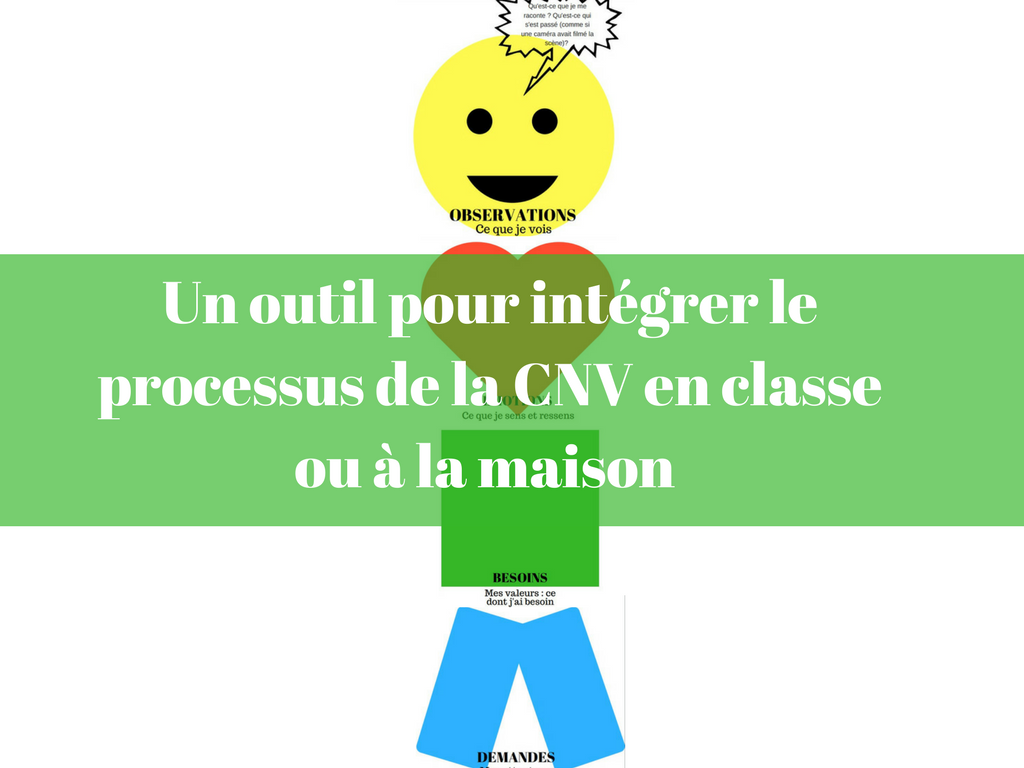
Step One: Clarify What Happened
Standing on the first marker, the child describes what took place as if a camera had filmed the scene. What actually happened, without interpretation? What story am I telling myself about it? Separating the facts from the commentary is often the hardest part, and it deserves unhurried attention.
Younger children may need you to model this out loud first, describing an everyday moment in plain, factual language. A useful classroom habit is to keep this step purely observational, so nobody starts defending themselves before the facts are even on the table. Teachers who want to build this kind of trust with families may find our teacher family relationship guide helpful, since consistency between home and school makes the process far smoother.

| Step | Guiding question | What the child does |
|---|---|---|
| One | What actually happened? | Describes the facts as a camera would film them |
| Two | What am I feeling? | Names emotions and notices where they sit in the body |
| Three | What is not being nourished? | Identifies the unmet need behind the feeling |
| Four | What do I want? | Makes a clear, positive, realistic request |
| Setup | Where do we go? | Uses four floor markers in a quiet, familiar spot |
Step Two: Name the Emotions
On the second marker, the focus shifts to feelings. What am I feeling right now? How does it show up in my body? Do several emotions arrive at once, and where do I sense them? Naming an emotion and locating it physically helps children move from overwhelm toward something they can describe.
This step assumes some emotional vocabulary, so it is worth building that beforehand through play and everyday conversation. Simple games and toys can carry a lot of this work; even a few minutes with a learning toys toddlers set or the activities in our tummy time toys collection can spark early talk about sensations and moods. Keep the questions open and let the child find their own words rather than supplying them.

Step Three: Identify the Unmet Need
The third marker is about needs. What do I value here? What is not being nourished in me right now? Children rarely use the word "need," but they can usually recognize when something is missing, whether that is rest, fairness, attention, or a sense of safety.
Helping a child connect a feeling to an underlying need is the heart of the whole process, because it shifts the conversation away from blame. A child who realizes they are upset because they feel excluded can say so, instead of pushing a classmate. Our classroom prize box ideas and the reflections in inclusive walking harness both touch on how small adjustments to a child's environment can meet needs before frustration builds up.

Step Four: Make a Clear Request
On the final marker, the child formulates a request in positive, concrete language that could realistically happen soon. What do I want, rather than what do I not want? What am I asking of the other person, and what would a good outcome look like? Can I ask this without aggression?
Requests are not demands: the other person can say no, and that is part of the learning. When two children are involved, they can each walk the path in turn, sharing emotions, needs, and requests until they reach a shared solution. This heart-to-heart exchange is where the process pays off, and it echoes the respectful dialogue we describe in our individual breastfeeding journeys piece, where listening without judgment changes everything.

Setting Up a Calm Corner at Home or in Class
Choose a quiet spot and lay out four markers in a line, one per step, using simple pictograms children can recognize. Explain that anyone can visit when feelings get too big and a pause is needed. Practise the walk-through during calm moments, not only during conflicts, so the routine feels familiar.
For mediation between two children, add two figures on the floor so each child follows their own path at the same time. This lets them speak to one another, taking turns with needs and requests until a common solution emerges. A calm, well-organized space supports this: our six month old toys guide and the wooden playhouse dreams story both show how the right setting quietly shapes children's behaviour.
My hands-on take
I first tried this on our kitchen floor with four sheets of paper and a marker pen, fully expecting my eldest to ignore it. What surprised me was how quickly the physical movement changed the tone: walking from one sheet to the next gave her something to do with her body while she found the words. The facts step was the hardest, because she wanted to jump straight to who was to blame, so I started modelling it myself after small frustrations, describing what happened in plain language.
The request step took the longest to feel natural, and I learned to accept a "no" without turning it into a lecture. Some days the markers stay untouched; other days both children walk their own paths and end up laughing before they reach the last sheet. It is not a magic fix, but it has made our conflicts shorter and far less loud.
Frequently asked questions
What age is this approach suitable for?
It works best once a child has some basic emotional vocabulary, which usually develops through everyday conversation and play. Younger children can join in if an adult models each step out loud and keeps the language simple.
Do we need special materials?
No. Four sheets of paper or cardboard with simple pictograms are enough. What matters is having a consistent, quiet spot and practising the sequence during calm moments, not only during conflicts.
Can it be used for two children at once?
Yes. Place two sets of markers or two figures on the floor so each child follows their own path. They take turns sharing feelings, needs, and requests until they agree on a solution.
What if a child refuses to walk the steps?
Offer it as an invitation rather than a punishment, and try again later. Children are more likely to use the space when they have seen adults use it themselves.
Product Reviews
 Best Toys for Dogs With High Prey Drive |
Best Outdoor Toys for 3-4 Year Olds |
Best Outdoor Toys for 6 Year Olds |
Best Harness for Poodle |
Best LEGO Sets for Adults |
Best Travel Toys for 4 Year Olds on Airplane |
Best Toy Stores in Washington DC |
Best Potty Training Toys |
Best Toys for Tripod Dogs |
Maillot equipe de france







