


Nonviolent Communication books give you a simple but demanding skill: hearing the feelings and needs behind what people say, and saying what you want without starting a fight. This selection of six titles covers the founding method and its use in couples, friendship, family, school and work.
Most of us grew up around competition, judgement and ideas about what is "good" or "bad". At best that conditioning muddles how we understand others; at worst it feeds anger and frustration. The books below offer a way out, one conversation at a time.

Quick takeaways
- Start with Rosenberg's founding book before adding the others
- Learn the four steps: observation, feeling, need, request
- Separate what you observe from the judgement you add
- Treat anger as information about unmet needs
- Practise on small daily moments, not major arguments
- Keep a short note of recurring feelings and needs
1. The founding book: words as windows or walls
Marshall Rosenberg's foundational work is built on a four-point process: observation, feeling, need and request. The principle is simple, the practice is not, and the book is powerful precisely because it stays concrete. Through stories, examples and dialogues, it shows how to receive any message with respectful understanding.
It also teaches how to break the thought patterns that lead to resentment, and how to say what you want without provoking hostility. Empathy is presented as a healing power rather than a technique. Plenty of practical exercises let you train these new communication habits instead of just reading about them.
Why start here
This is the method explained in detail: observing without judging, naming emotions and needs, then making a positive request. If you read only one book on this list, make it this one. Parents juggling daily logistics will recognise the same skills at work when children's bedtime routines go sideways.

2. Conflict resolution and what anger is telling you
This two-part volume follows Rosenberg's approach to resolving conflict peacefully and effectively. The goal is not a compromise that leaves everyone half-satisfied, but real respect and quality of relationship between the parties. Nonviolent Communication is described as a process that creates a relationship in which everyone's needs can be met.
It helps you loosen the grip of past experience and cultural conditioning, break the patterns behind arguments, anger and depression, and build relationships based on mutual respect, empathy and cooperation. The second part offers ten steps for connecting with what anger has to teach us, using its energy to serve our needs instead of attacking others.
Anger as a signal
Rosenberg's warning is blunt: we are not educated to look at things through human needs, so we label and judge each other, and even a small conflict becomes hard to solve. Practising this at home pays off when the school day leaves everyone tired and short-tempered. The same calm approach helps when you leave your baby in daycare and emotions run high.

| Book focus | Best for | Main tool |
|---|---|---|
| Founding method | Complete beginners | Four-step process |
| Conflict and anger | Heated arguments | Ten steps on anger |
| Couple and friendship | Intimate relationships | Four questions on love |
| Family and school | Parents and teachers | Observation vs judgement |
| Daily practice | Routines with children | Naming feelings aloud |
3. Being fully yourself, loving the other fully
Many of us assume love is a strong emotion, a passion, something fairly passive that happens to us. Rosenberg invites a completely different vision: love is something you do, something you give freely with your heart. The work is learning to express what you feel and need to your partner, friend or family member, honestly and without a mask.
The aim is to reveal what is essential and alive in us, to share our needs and welcome the other's with kindness, and to give and receive with joy. The book offers four questions for living this benevolence in couple relationships, friendship, family and at work.
Love as a practice
This is the gentlest entry point for anyone who finds the word "conflict" off-putting. The same patient attention applies to small children, whose signals are easy to misread, as with early parental bonding.

4. Taking the method into family, school and work
The same four steps travel well. At home, they change how you phrase a request to a teenager. In a classroom, they help a teacher name what is happening without blaming a pupil. At work, they turn a tense meeting into a conversation about needs rather than positions.
The key discipline is separating observation from evaluation. "You never listen" is a judgement; "when I spoke, you were looking at your phone" is an observation. The second version leaves room for a response, and the response is where the relationship actually moves.
Everyday settings
Start with low-stakes moments rather than a major argument. A calm exchange about screen time, homework or chores is good training ground, much like the small daily negotiations described in mealtime television habits.

5. Practising with children and in daily routines
Children give you dozens of practice opportunities a day, and they are honest feedback on your tone. Naming your own feeling out loud ("I'm frustrated because I need a little quiet") models the process better than any explanation. Then make a clear, doable request.
Empathy does not mean agreeing. You can hear a child's disappointment about a cancelled outing and still hold the limit. What changes is the wording: no blame, no lecture, just what you observe, feel and need.
Small moments count
Bedtime, the school run and meals are where the habits form. The same steady, low-key approach helps with practical challenges such as managing children's jet lag after a trip.

6. Building a reading and practice plan
Reading six books at once is not the point. Begin with the founding volume, work through its exercises slowly, then add the conflict book when you feel ready to look at anger. The couple and friendship title works well as a second or third read, once the vocabulary feels natural.
Keep one page of notes: your most frequent feelings, your recurring needs, and two requests you keep postponing. Review it monthly. Progress in this method is measured in fewer regrets after difficult conversations, not in perfect sentences.
Make it stick
Pair the reading with one deliberate practice per week and one honest debrief. Parents who carve out study time know this rhythm well, as described in mothers who study for exams. If you are also weighing sports and children, the same weekly rhythm applies, and a few children's apps can help you track it.
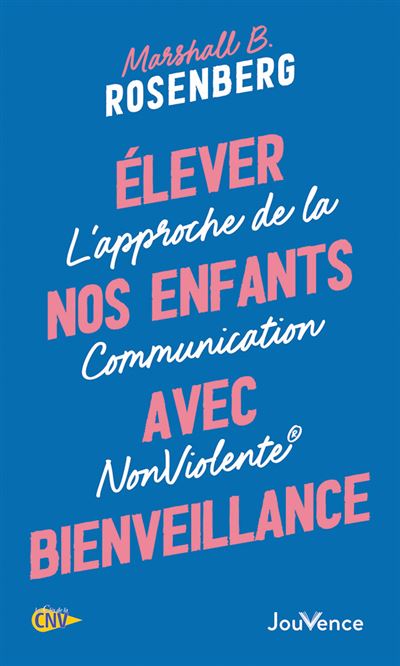


My hands-on take
I started with the founding book and made the classic mistake of trying to use it mid-argument. It went badly. What worked was practising when nothing was at stake: describing what I saw, saying what I felt, asking for one small thing. My requests got shorter and my tone got quieter.
My most useful habit is a single notebook page. I list the feelings that come up most and the needs behind them, then pick one request I have been avoiding. Reviewing it monthly shows progress I would otherwise miss, because the change is mostly in what I no longer say.
Frequently asked questions
Do I need to read all six books?
No. The founding book gives you the whole method. Add the conflict volume when anger is your main difficulty, and the couple title if your close relationships need attention first.
Is Nonviolent Communication only about avoiding conflict?
No. It is about meeting needs, including your own. You still set limits and say no; the difference is that you do it without blame or labels.
How long before it feels natural?
Expect weeks of clumsy sentences. The vocabulary becomes easier with daily use, especially if you practise on small moments rather than saving it for arguments.
Can it work with young children?
Yes, in simplified form. Naming your own feelings and making one clear request is often enough, and it models the process for them.
Product Reviews
 Best Toys for Dogs With High Prey Drive |
Best Outdoor Toys for 3-4 Year Olds |
Best Outdoor Toys for 6 Year Olds |
Best Harness for Poodle |
Best LEGO Sets for Adults |
Best Travel Toys for 4 Year Olds on Airplane |
Best Toy Stores in Washington DC |
Best Potty Training Toys |
Best Toys for Tripod Dogs |
Maillot equipe de france







