


Creating the conditions where children's talents can flourish at school is one of the most important challenges facing parents and teachers today. Ken Robinson argued that education systems in Western countries often push children away from their natural gifts rather than helping them discover them.
He compared the education crisis to the ecological crisis: one concerns natural resources, the other concerns human resources. Just as we bury natural resources deep underground, he said, we bury human potential just as deeply — and then wonder why so many adults take no pleasure in what they do.

Quick takeaways
- Robinson compares the education crisis to the ecological crisis: human resources are buried as deep as natural ones
- Reforms patch a broken system; what is needed is a revolution, a transformation into something else
- Beliefs are the main resistance to change — we struggle to see what we treat as normal
- Life paths are not linear; people now hold several professions over a career
- Not every child needs university, or needs it immediately after secondary school
- Personalised learning, not standardised teaching, is what lets talents flourish
Why do so many people fail to find and live their talent?
According to Robinson, the education system itself is largely to blame. Schooling as designed in Western countries tends to distance people from their talents instead of revealing them. The task, then, is to create the circumstances that allow children's gifts — and those of adults — to surface.
School systems around the world are constantly being rebuilt, but reforms are no longer enough because they merely patch holes in a broken system. What is needed is not an evolution but a revolution of the school: a transformation into something else entirely. Parents who want to support this shift can start by paying close attention to what genuinely absorbs their child, much as you would notice which toys for babies hold their attention for hours.
Why does school reform meet so much resistance?
The main resistance to change comes from beliefs. A system is hard to break because people struggle to abandon what is considered "normal", acquired and obvious. Robinson quoted Abraham Lincoln: "The dogmas of the quiet past are inadequate to the stormy present. We must rise to the occasion. As our case is new, so we must think anew and act anew."
Our school systems are hypnotised by outdated ideas designed for the challenges of the 19th and 20th centuries, not the 21st. Robinson asked everyone over 25 in his audience whether they wore a watch; most said yes. Teenagers, he claimed, would answer very differently — they were born into a digital world and don't need a watch to know the time. That is how hard it is to see what we take for granted.
What are the main problems with traditional education systems?
Linear life paths
School teaches us that life trajectories are linear: start at a fixed point, follow a predefined track, and if you do everything correctly without deviating, you will be set for life. But life is not linear. People entering the job market today will hold several different professions over their careers, so preparing for a single track makes little sense.
The overvaluation of higher education
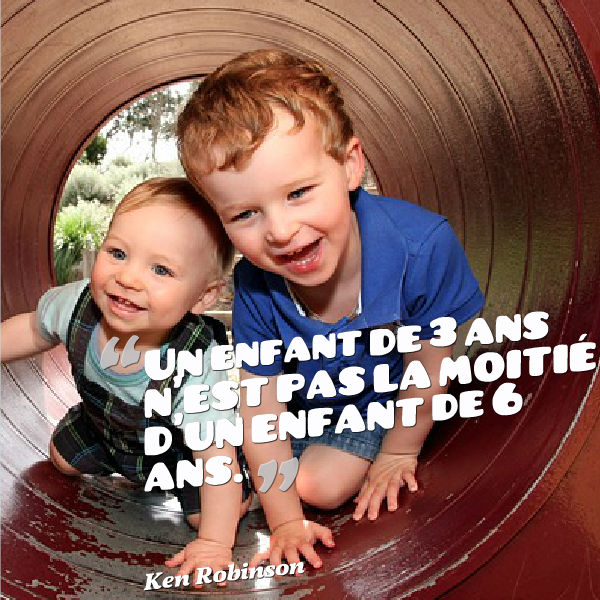
Robinson regretted our obsession with pushing as many pupils as possible into higher education. Not every pupil needs university, or a master's degree, or to go straight there after secondary school. One young man dreamed of being a firefighter, but a teacher told him he would waste his time and squander his potential instead of going to university. The teenager felt humiliated but held on to his dream — and later saved that teacher's and his wife's lives. Robinson also rejected the idea that university is prepared from nursery: in the United States, three-year-olds sit tests and interviews to enter the best kindergartens, almost as if a CV were required.
Why conformity and standardisation hold talent back
Robinson argued that we built our education systems on conformity and standardised teaching, when what children need is personalised learning. A child who is allowed to follow genuine curiosity — whether that means building, dancing or caring for animals — develops the confidence that talent requires.
This is why play matters so much in the early years. Open-ended toys and time outdoors give children room to test ideas, as any parent browsing outdoor toys for toddlers quickly realises. Choosing toys for 18 month olds with care supports this too. Even caring for a pet can teach responsibility and patience; families choosing toys for beagles often see how a child's attentiveness grows alongside the animal. And when a child is struggling — sleeping badly, eating poorly — it is much harder for any talent to emerge, a link explored in baby sleep and eating. A strong teacher family relationship helps ensure these needs are noticed early.
What parents can do to create the right conditions
The first step is observation. Watch what your child chooses when nobody assigns the activity, and notice the moments they lose track of time. Robinson's message is that talent is revealed through experience, not through tests, so children need a wide range of chances to try things.
Second, question the assumption that one path fits everyone. If a teenager wants a vocational route rather than an academic one, that is not a failure. Third, protect unstructured time: a child who is scheduled from morning to evening has no space to discover a passion. Even small rituals help — cooking together, as with homemade Christmas sweets, or simply letting a child choose how to spend a free afternoon, as in these ideas for Three Kings afternoon. Dancing along to the Masaka Kids Africana carol is another easy way to let children follow their own energy. Finally, model curiosity yourself; children learn more from what we do than from what we say.

| Dimension | Standardised approach | Talent-friendly approach |
|---|---|---|
| Pace | Same for everyone | Adapted to the child |
| Path | Single linear track | Several possible routes |
| Success | Grades and diplomas | Engagement and skill |
| Play | Seen as a break | Seen as exploration |
| Adult role | Transmit and test | Observe and encourage |
Rethinking what counts as success
Robinson's argument ultimately asks parents and teachers to widen their definition of success. A child who leaves school with a trade, a craft or a passion is not a lesser outcome than one who enters university. What matters is whether the child has had the chance to find what they are good at and enjoy.
That means resisting the pressure to compare children with a single yardstick. Every child arrives with a different mix of strengths, and the adult's job is to create the conditions — time, freedom, encouragement and honest attention — in which those strengths can grow.

My hands-on take
When my own child was small, I caught myself filling every afternoon with activities I thought were "useful". It took a while to notice that the happiest, most absorbed moments happened when I simply left materials out and stepped back. Since then I have tried to protect empty afternoons, and I pay attention to what gets chosen when nobody is assigning anything.
I have also had to unlearn the idea that one straight path is the safe one. Watching a child light up over something I would never have picked has been the best reminder that talent shows up through experience, not through a plan.
Frequently asked questions
What did Ken Robinson mean by a "revolution" of school?
He meant a full transformation into something different, not a series of small reforms. Reforms, in his view, only plug holes in a system designed for past centuries.
Does Robinson say university is useless?
No. He says not every pupil needs university, or a master's, or to go straight there after secondary school. The problem is treating one route as the only respectable one.
How can I spot my child's talent at home?
Watch what they choose freely and when they lose track of time. Give them varied experiences and unstructured time, then notice what they return to again and again.
Product Reviews
 Best Toys for Dogs With High Prey Drive |
Best Outdoor Toys for 3-4 Year Olds |
Best Outdoor Toys for 6 Year Olds |
Best Harness for Poodle |
Best LEGO Sets for Adults |
Best Travel Toys for 4 Year Olds on Airplane |
Best Toy Stores in Washington DC |
Best Potty Training Toys |
Best Toys for Tripod Dogs |
Maillot equipe de france







