


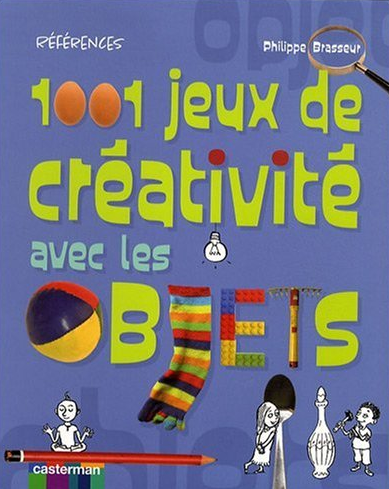
Creative play with everyday objects turns a spoon, a sock or an old boot into a genuine learning tool. Instead of buying new games, you invite children to explore, look, feel, talk, imagine, tell stories and create from what is already in the room.
The idea behind this approach is simple: objects are philosophers. A book is not only for reading, a sandal can argue with a boot, and a child can ask himself what he would be if he were a vacuum cleaner. The goal is not to turn children into artists but to mobilise their five senses, feed their curiosity, encourage hypotheses and experiments, and get them talking.

Those skills serve every kind of learning, at school and in life. Here are four creativity games you can set up in minutes, with no special equipment.
Quick takeaways
- Objects are starting points: a spoon, a boot or a key can carry a whole story.
- The duel trains argumentation, quick thinking and imagination.
- Introducing yourself through an object builds self-expression and vocabulary.
- "As if everything were possible" helps children name feelings and release tension.
- The dice story game gives shy children a clear frame to improvise inside.
- No equipment, no screen, no preparation: only what is already in the room.
The Duel: When Two Objects Fight for a Third
Two rival objects enter a duel, and each one uses all its ingenuity to win the heart of a coveted third object. One child might play a sandal, another a boot, and a third the much-desired foot. A felt-tip pen and a coloured pencil can bicker over a colouring page, and the real question becomes: who will the spaghetti choose, the knife or the spoon?
This is a strong exercise for argumentation and imagination, because each player has to invent reasons, defend a personality and react to the other's arguments. It also works well with a small audience of siblings who vote at the end. If your child enjoys wordplay and building arguments, these children with genius often thrive on this kind of verbal joust. For a quieter variation, try books about democracy that turn the same back-and-forth into a shared story.
How to run it
Pick three objects, hand them out, and give each player one minute to plead his case. Keep the tone playful: the winner is the object that gets the most applause, not the loudest voice. Families who like comparing play sets may also enjoy these foam block toy companies.
Introduce Yourself Through an Object
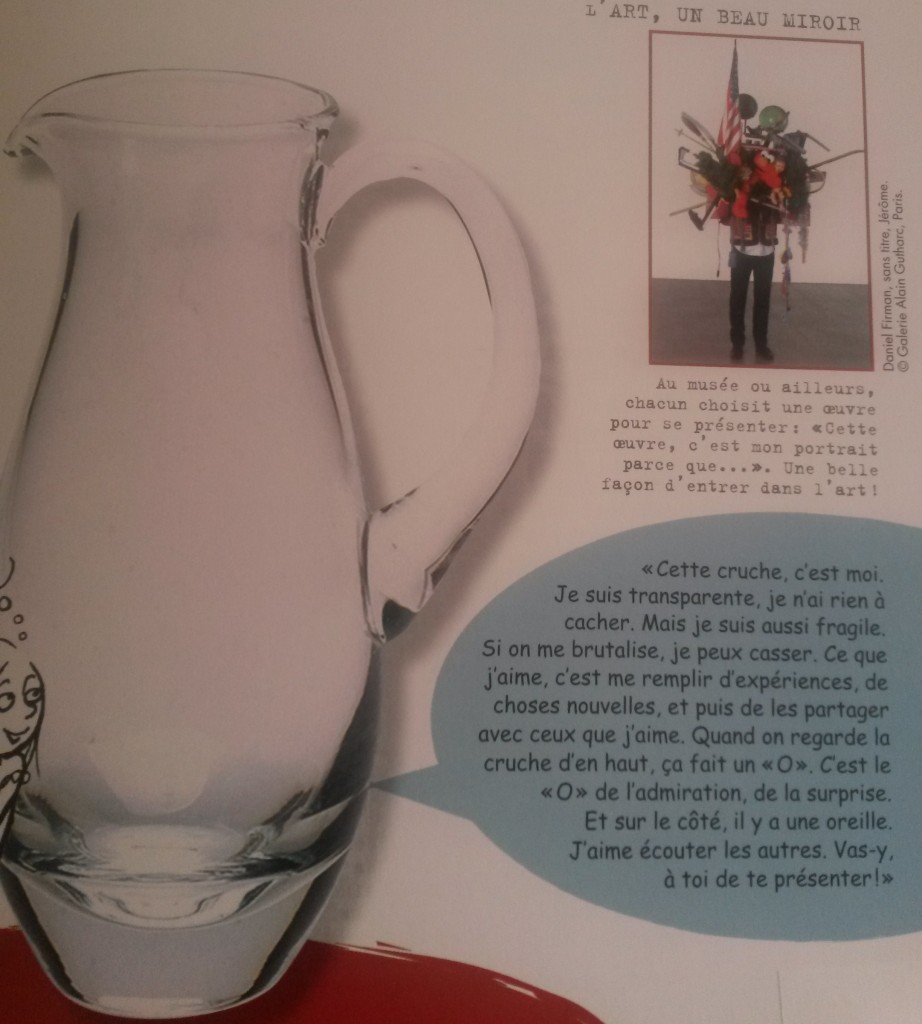
Each child introduces himself using an object he has chosen, or one that someone hands him at random, which is even harder. The starting questions are simple: what does this object say about me? What do I have in common with it, in shape, material, function, colour or the sound it makes?
The activity also works outside the house. In a museum, each child can pick a work of art and use it to present himself. It is a gentle way to get a shy child talking without putting him on the spot directly. If your child is more of a listener, pair the game with a quiet moment and a story, as in these stories to transmit a love of reading. For children who like to build as they talk, these best STEM toys offer another way in.
Keep a basket of odd objects handy so the random draw stays surprising: a whisk, a pebble, a ribbon, a key. A calm, unhurried setting helps too, so if your child takes hours, try the game earlier in the day.
| Game | What children practise | What you need |
|---|---|---|
| The duel | Argumentation, imagination | Three everyday objects |
| Present yourself | Self-expression, observation | One object per child |
| As if everything were possible | Invention, emotional expression | A notebook, optional blocks |
| Object story | Narration, turn-taking | Objects and one die |
| All four | Curiosity, communication | Nothing to buy |
As If Everything Were Possible
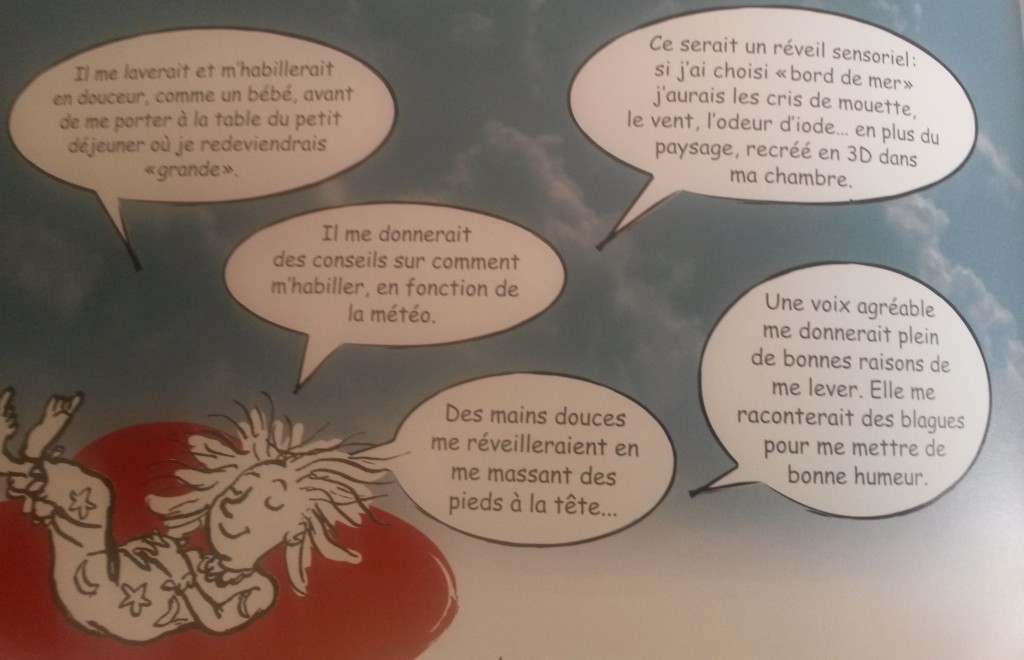
Here children imagine an invention as if everything were possible: the alarm clock of the year 3000, the robot that does everything we have no time for, the ideal means of transport. In a group, each child adds one sentence starting with "and on top of that…", which builds the idea step by step.
This is also a good way to defuse certain everyday situations. Inviting a child to invent the robot that would do everything he does not want to do gets him talking about his feelings, expressing emotions and releasing tension he may have built up. For a child who needs to move while thinking, a few foam block toys on the floor can become the prototype of the machine. For those who want to go further, umbilical cord puncture offers a method to obtain more accurate results.
Write the inventions down in a small notebook so the family can look back at them later.
Invent a Story Whose Characters Are Objects
Each player draws an object at random. The first object is the hero of the story, and the first player decides his name and character, including what he likes. The second object is what the hero lacks, and the second player explains why he needs it.
The third player draws another object and rolls a die: an even number means the object helps the hero, an odd number means it is an obstacle. You can add more steps, with one object as the place the hero travels to and another as the means of transport, until the last player or until the objects run out.
This structure gives shy storytellers a frame to lean on. Children who love building worlds often enjoy extending it afterwards with LEGO pieces or a drawn map of the journey.

Why These Games Matter for Learning
None of these games requires a screen, a purchase or preparation. They ask children to observe closely, form hypotheses, test them and communicate results, which is exactly what learning demands later on. The intelligence is exercised through play rather than through a worksheet.
They also fit naturally into family routines: a duel while waiting for dinner, an object presentation on a rainy afternoon, an invention notebook on a long car trip. For families who like to plan creative afternoons, a few party favor toys or a box of mixed craft supplies can feed the same spirit. And when the game is over, the tidying up becomes part of the ritual.
Keep the sessions short, follow the child's energy and let him lead. The adult's role is to ask questions, not to give the right answer.
My hands-on take
I have tried the duel at home more times than I can count, and it never goes the way I expect. The first time, my youngest insisted that the fork would win the heart of the plate because "it is the only one who can pick things up", and the argument was so solid that nobody could contradict him.
What I like most is that these games need no preparation. I keep a small basket of odd objects near the kitchen table, and when the mood turns restless I pull one out and ask a single question. Sometimes it lasts two minutes, sometimes half an hour. The object story with a die has become our favourite on rainy afternoons, and I have learned to write the inventions down, because the children love reading them again months later.
Frequently asked questions
What age are these games suitable for?
They work from the moment a child can hold a simple conversation, and they scale up easily for older children who add more elaborate arguments. Younger children can take part with a single sentence each.
Do we need to buy anything?
No. The whole point is to use objects already in the house: kitchen utensils, clothes, toys, stationery. A die is the only extra item for the story game.
What if my child does not want to play?
Start with the object presentation, which is the least demanding, and let him choose the object himself. Resistance usually drops once he sees that there is no right answer.
Can these games be played in a group?
Yes, they are designed for groups, and the duel and the story game work best with three or more players. In a classroom or at a party, split into small teams so everyone gets a turn.
Product Reviews
 Best Toys for Dogs With High Prey Drive |
Best Outdoor Toys for 3-4 Year Olds |
Best Outdoor Toys for 6 Year Olds |
Best Harness for Poodle |
Best LEGO Sets for Adults |
Best Travel Toys for 4 Year Olds on Airplane |
Best Toy Stores in Washington DC |
Best Potty Training Toys |
Best Toys for Tripod Dogs |
Maillot equipe de france







