


The Chinese portrait of emotions is a simple game that invites children aged six and up to reflect on what joy, anger, sadness and fear mean to them. By answering playful prompts, children become familiar with what they feel instead of being surprised by it.
When emotions are tamed the way you tame an animal, they can become friends and allies that help children understand themselves and the people around them. The game takes only a few minutes and needs nothing more than a conversation.

Quick takeaways
- The game uses eight prompts repeated for joy, anger, sadness and fear
- There are no right answers; the goal is naming, not scoring
- Keep sessions to ten or fifteen minutes with children aged six to ten
- Adults should model naming and regulating their own emotions aloud
- Pair the portrait with mime, stories and a visual emotions thermometer
- Revisit the game regularly and compare how answers change over time
How the Chinese Portrait of Emotions Works
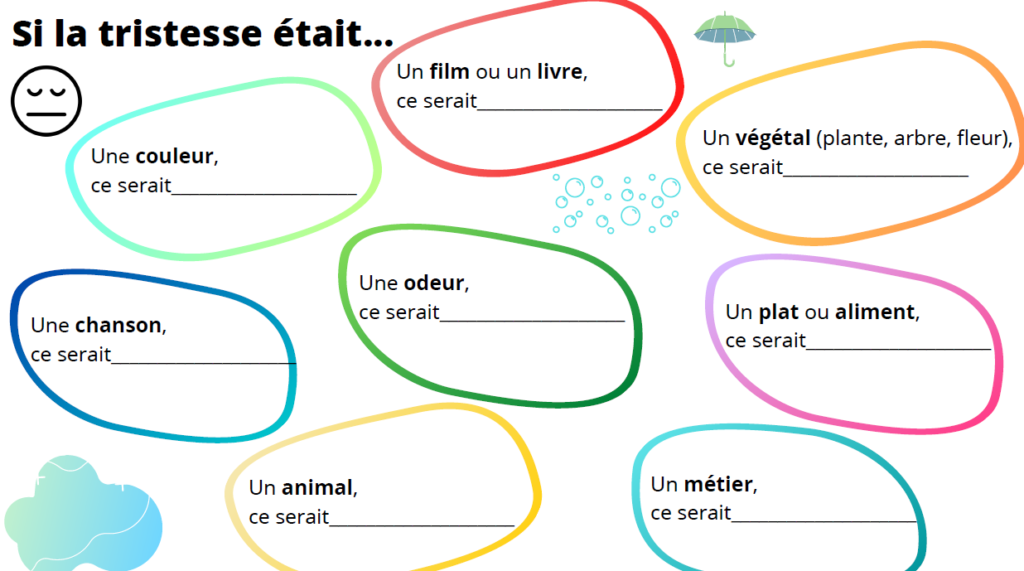
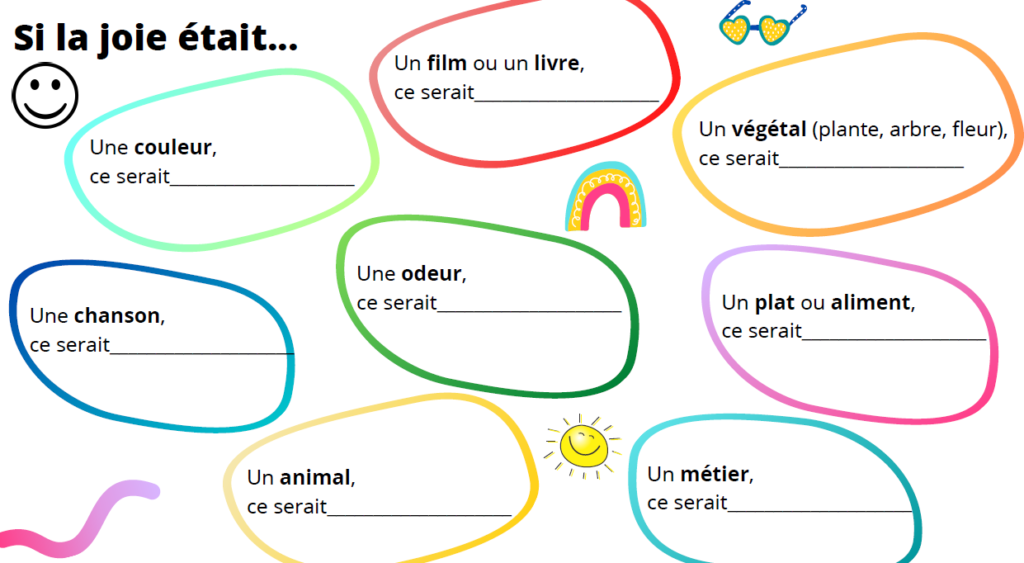
The idea is simple: you offer a series of prompts such as "If joy were a colour…" and the child completes the sentence with whatever comes to mind. You then repeat the same prompts for anger, sadness and fear, so each emotion gets its own little portrait.
The prompts stay the same across all four emotions, which makes the game easy to remember and lets children compare their answers. There are no right or wrong replies, and a child who says joy is "the smell of pancakes" is doing exactly what the game asks.
The Eight Prompts
Each emotion is explored through the same eight openings: a colour, a film or a book, a plant, a song, a smell, a dish or food, an animal, and a job. You can print a sheet with these prompts or simply ask them out loud during a calm moment.
If you want to extend the session afterwards, a short break with a breathing video or a couple of slow-breath exercises fits naturally, much like the quiet routines described in postpartum care where rest and calm are treated as essentials. Curious questions about birth can come up too, such as an orgasm during childbirth.

Why This Game Helps Children Name Their Feelings
Emotional education activities play a key role in developing psychosocial skills in children aged six to eight, a period when they begin to interact more intensely with their social environment: school, friends and group rules. Naming a feeling is the first step towards regulating it.
Vocabulary comes first. A child who can say "I am frustrated" rather than "I am angry" has more room to choose what to do next. Games of mime, where one person acts out an emotion and the others guess it, build that vocabulary quickly and with a lot of laughter.
Interactive stories work in a similar way: asking "What does the character feel?" trains empathy and perspective-taking. A visual emotions thermometer, where a child points to where they are on a scale, supports self-observation without pressure. These small tools echo the patient, attentive approach behind greeting without kisses, which respects a child's signals rather than forcing contact. The same respectful listening carries over into questions about sports and everyday choices like wanting a pet.
| Activity | What the child does | Skill developed |
|---|---|---|
| Chinese portrait of emotions | Completes prompts for four emotions | Emotional vocabulary |
| Mime games | Acts out and guesses an emotion | Naming and recognition |
| Interactive stories | Answers "What does the character feel?" | Empathy and perspective |
| Emotions thermometer | Points to a level on a visual scale | Self-observation |
| Breathing exercises | Follows a short guided calm moment | Regulation |
Setting Up the Game at Home or in Class
Keep it short. Between six and ten years old, activities should be concrete, using games, drawings and movement, and should last around ten to fifteen minutes. A longer session usually loses the room.
Adults model the behaviour. Saying out loud "Right now I am frustrated, so I am taking a big breath" shows children what regulation looks like far better than any explanation. You can also offer your own answers to the portrait first, which makes the game feel like a shared conversation rather than a test.
Regularity matters more than intensity. Slip the game into an existing routine, for example a calm time after recess, alongside one or two breathing exercises. The same principle of a predictable, gentle rhythm appears in stronger sibling bonds, where small repeated rituals do more than grand gestures.
Adapting the Portrait to Different Ages and Moods
With younger children, stick to two emotions per session and use drawings instead of words. Ask them to pick a colour for joy and scribble it on paper, then talk about what they drew. With older children, add a "because" after each answer and let them explain their choice.
Some children freeze when asked direct questions about feelings. Offering the portrait as a guessing game, where the adult answers and the child judges, lowers the pressure. Others prefer movement, so acting out the animal they chose for anger can release energy that words alone do not reach.
You can also connect the game to daily life by asking which emotion visited them at school that day. Pairing this with a story at bedtime works well, and the tips in choosing a book help you pick titles that give children characters to identify with. For parents navigating their own challenges, being a mother after endometriosis brings its own perspective on patience and empathy.

Building a Small Emotional Toolkit
The portrait is one piece of a wider set. Mime games build vocabulary, interactive stories build empathy, and a thermometer builds self-awareness. Used together over weeks, they give a child several ways to express what is going on inside.
Keep the tone light. The moment the game feels like an evaluation, children close up. A parent who shares their own answers, including the uncomfortable ones, keeps the exchange honest and shows that every emotion is allowed to exist.
Finally, remember that this is not a one-off. Revisit the portrait every few months and compare answers; children often notice themselves how their idea of fear or joy has shifted. That quiet observation is where real emotional learning happens.

My hands-on take
I have played this game at the kitchen table more than once, usually without any preparation. The first time, my child answered "a grey cat" for sadness and then wanted to explain why, which turned into a conversation I would never have started on my own.
What surprised me most was how much easier it was to talk about anger through an animal than directly. Since then, I keep the prompts in mind and use one or two whenever a feeling seems to be hanging in the air. It takes a minute, costs nothing, and often clears the mood faster than a lecture.
Frequently asked questions
What age is the Chinese portrait of emotions for?
It is designed for children aged six and up, and works well up to around ten. With younger children, use drawings and limit the session to two emotions.
How long should a session last?
Around ten to fifteen minutes is enough. Short, concrete activities hold attention better than long discussions, especially after a school day.
Do I need to print anything?
No. You can ask the eight prompts out loud. A printed sheet is simply convenient if you want to keep the answers and compare them later.
What if my child refuses to answer?
Let the adult answer first and invite the child to judge or guess. Turning it into a game rather than a question-and-answer session usually removes the pressure.
Product Reviews
 Best Toys for Dogs With High Prey Drive |
Best Outdoor Toys for 3-4 Year Olds |
Best Outdoor Toys for 6 Year Olds |
Best Harness for Poodle |
Best LEGO Sets for Adults |
Best Travel Toys for 4 Year Olds on Airplane |
Best Toy Stores in Washington DC |
Best Potty Training Toys |
Best Toys for Tripod Dogs |
Maillot equipe de france







