


Balthazar and How Babies Are Made is the book I wish I had owned the day my daughter asked the famous question at five years old. My answer back then satisfied neither of us, so I went looking for a children's book that would talk about conception and birth without false modesty.
Written by Marie-Hélène Place and published by Hatier, this title belongs to the Balthazar collection, and it turned out to be exactly the tool our family needed.

Quick takeaways
- Written by Marie-Hélène Place and published by Hatier
- Divided into chapters following conception, growth, birth and childhood
- Uses accurate vocabulary without confusing metaphors
- Includes famous artworks such as Rodin's The Kiss
- Interactive flaps and tabs keep children engaged
- Author invites parents to go deeper at the child's pace
The Author's Own Invitation
Before the story even starts, the author addresses parents directly. She explains that the book is the adventure of life told through children's voices, with their sensitivity and their questions, and she reminds us that children have a gift for asking the right questions so they receive only the answers they are ready to hear.
She also makes clear that the book does not say everything. Every family has its own words for describing the act of love, and parents are left free to go deeper at the child's own pace. That framing is genuinely reassuring if you feel nervous about the topic, and it pairs well with broader guidance on forms of aggression that adults sometimes normalize without noticing. For younger children, toys for tummy time can also support early bonding and sensory exploration.
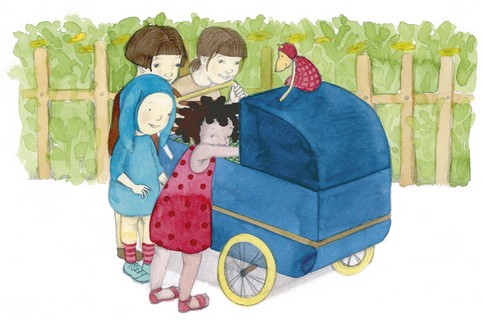
The book opens with children's questions gathered around a pram, which immediately puts the young reader on familiar ground.

A Story Told in Chapters
Rather than one continuous narrative, the book is divided into short chapters that follow the chronology of conception and life. The first is the love story: a man and a woman meet, love each other, and hold each other so tightly that their bodies seem to merge.
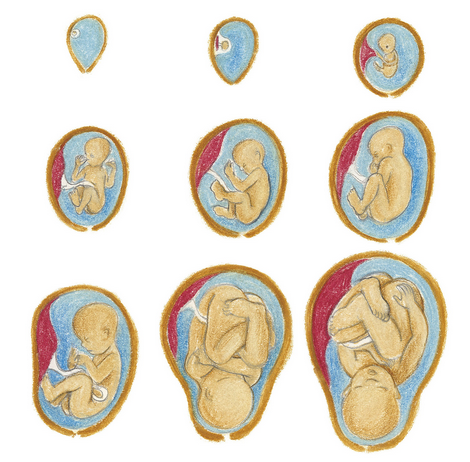
The second chapter covers where the baby is created. The man sends millions of spermatozoa into the woman's belly, and if an ovum is waiting there, they can make a baby together. The third follows the nine months of growth inside the mother, ending when the baby is ready to be born.
Twins get their own detailed treatment, which is more than many books of this kind offer. The final chapters cover birth itself and then growing up: the baby becomes a child, an adolescent, then an adult who may one day make a baby with their own partner. If your child is curious about what happens even earlier, mother's womb sensations make a lovely companion topic. Families expecting twins may also find sciatica in pregnancy worth reading, and doing the Indian thing can support everyone's wellbeing along the way.
| Chapter | What it covers | Good moment to read it |
|---|---|---|
| The love story | A man and a woman meet and love each other | When affection questions arise |
| Where the baby is created | Spermatozoa, ovum and conception | First "how are babies made" question |
| Growth in the mother | Nine months of development | During a pregnancy in the family |
| Twins | A more detailed explanation | If twins are expected or asked about |
| Birth | How the baby is born | Preparing for a sibling |
| Growing up | Baby to child to adult | Ongoing family conversations |
Clear Words, Gentle Modesty
What makes this book work is its refusal of confusing metaphors. It explains how things happen with appropriate vocabulary while keeping a certain modesty, so children get accurate information rather than riddles they have to decode later.
The illustrations do a lot of the teaching. Reproductions of famous artworks, such as Auguste Rodin's The Kiss to symbolise love, support comprehension of new vocabulary and of each stage of procreation. This is a gentle first step into introduce children to art through picture books, and it works beautifully here.
Children also love the interactive elements: they can lift the flaps and pull the tabs, which keeps little hands busy while big ideas are being absorbed.

How to Share It With Your Child
You do not have to read the whole book in one sitting. Follow your child's curiosity, pause on the pages that spark questions, and skip the ones they are not ready for yet. The chapter structure makes this easy, and it respects the author's invitation to let yourself be guided.
Keep the tone matter-of-fact. If a question catches you off guard, it is fine to say you will look at it together later. Books like this one exist precisely so you do not have to improvise every answer alone.
Families expecting a second baby often find the growth and birth chapters especially useful for preparing an older sibling. If you are pregnant yourself and dealing with physical discomfort, practical reads such as heartburn during pregnancy can sit alongside the children's book on your nightstand.

Where It Fits in a Home Library
This title sits comfortably next to the other Balthazar books, which many families already know for their Montessori-inspired approach to numbers, time and early learning. Together they accompany children in understanding the world around them, one question at a time.
It is also a good bridge to other difficult conversations. Once a child understands how a baby begins, questions about pregnancy, birth and family relationships tend to follow naturally, and picture books remain one of the calmest ways to answer them.
For families who like learning through play as well as reading, pairing book time with hands-on activities works well, whether that means building toys or simple pretend play toys that let children act out what they have understood.
A Book Worth Passing On
Overall, this is a beautiful addition to the collection and a genuinely useful tool for parents who want honesty without awkwardness. It respects the child's pace, gives accurate vocabulary, and leaves room for the family's own values and words. Much like the familiar family phrases we pass down, the right words can stay with a child for years.
My advice is simple: keep it on a low shelf where your child can reach it, and let them come back to it whenever a new question surfaces. That is exactly how it was designed to be used, with the same patience shown in raising a child.



My hands-on take
I still remember my daughter's face when she asked me the question and I fumbled my way through an answer that clearly did not convince her. Buying this book was my way of admitting that I needed help, and it turned a slightly awkward moment into a shared ritual: we would sit down together, open a chapter, and follow her curiosity rather than my nerves.
What I appreciated most in practice was the freedom the author gives parents. I did not have to use words that felt unnatural to me, and I could stop when my daughter's attention drifted. If you are expecting another baby and want to prepare an older sibling, this is a calm, honest place to start.
Frequently asked questions
At what age is this book suitable?
It is generally aimed at children from around five years old, the age at which the classic question tends to appear. Because the chapters are short, you can adapt the reading to your child's own curiosity and skip what they are not ready for.
Does the book explain everything explicitly?
No, and that is deliberate. The author explains that each family has its own words for the act of love, and parents are invited to go deeper at the child's pace. The vocabulary is accurate but modest.
Is it only about conception?
Not at all. It follows the whole arc, from the love story and conception through the nine months of growth, birth, and childhood into adulthood.
Are the illustrations suitable for young children?
Yes. They combine clear explanatory drawings with reproductions of famous artworks, and the flaps and tabs make the pages engaging rather than intimidating.
Product Reviews
 Best Toys for Dogs With High Prey Drive |
Best Outdoor Toys for 3-4 Year Olds |
Best Outdoor Toys for 6 Year Olds |
Best Harness for Poodle |
Best LEGO Sets for Adults |
Best Travel Toys for 4 Year Olds on Airplane |
Best Toy Stores in Washington DC |
Best Potty Training Toys |
Best Toys for Tripod Dogs |
Maillot equipe de france







