


Talking to kids about mistakes works best when the message is simple and repeated: there is no failure, only experience. Many children hear the opposite, though, because adults ask them to always have the right answer and to never get things wrong.
Yet ticking the correct box on a multiple-choice test is not really learning. A culture of the single right answer does not prepare young people for the challenges of tomorrow. What helps is a steady, calm conversation about errors, effort and reflection.

Below are ten messages you can use with children and teenagers, with a short explanation of why each one matters and how to say it in everyday language.
Quick takeaways
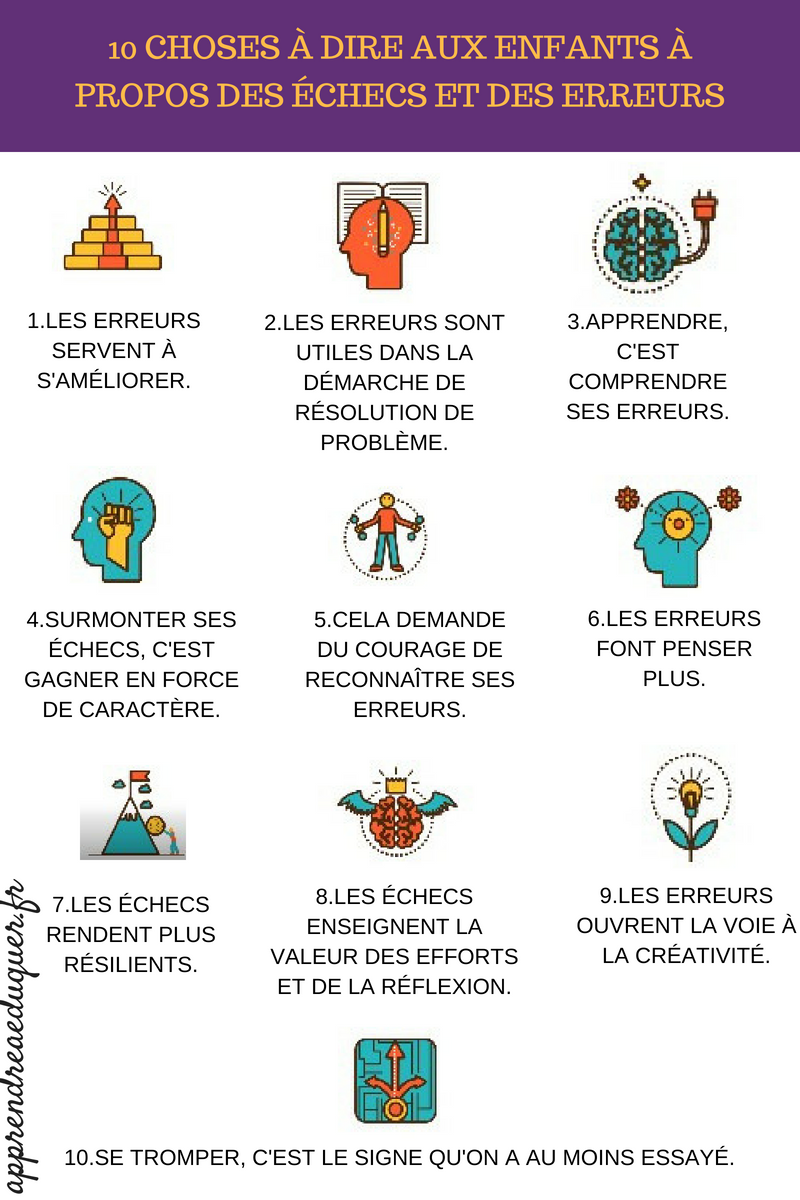
- There is no failure, only experience to learn from
- Errors are part of solving problems, not a verdict on ability
- Say "not yet" instead of "I can't"
- Praise honesty and courage when a child admits a mistake
- Getting it wrong means they tried, and trying is the first step
- Reflection and effort matter more than the single right answer
Mistakes help children improve
Start with the most reassuring idea: errors are useful. Tell your child plainly, "You can learn from your mistakes and get better." This reframes a bad moment as a step forward rather than a verdict on their ability.
Errors also sit at the heart of problem-solving. It is by trying again and again that a skill is acquired and intelligence develops. A child who is allowed to struggle a little is a child who keeps practising, much like the persistence needed to solve Rubik's cube puzzles.
Learning means understanding the error
When a child says "I can't do it", answer with "not yet". Explain that not understanding today does not close the door: they have the power to do what it takes to understand soon. Learning is not memorising the answer, it is understanding why the first attempt went wrong.
This is also why a single correct answer is a poor teacher. Real understanding grows when a child has to explain their reasoning, compare methods and see where the thinking slipped.
Failure builds character and courage
Overcoming setbacks builds strength of character. A useful phrase for children is: "You never lose: either you win, or you learn." It keeps the focus on progress instead of on a score or a grade.
It also takes courage to admit a mistake. Accepting that you are imperfect is hard for children and adults alike, so praise the honesty rather than the result. A child who can say "I got that wrong" is already practising the kind of openness described in educating children with respect for their own pace. Stories can reinforce this too: movies about real motherhood show how patience and honesty shape a child's resilience.
Errors make us think more
When something fails, the brain has to look for another way. Tell your child: "You failed, so now you need to find a different way of doing it." That sentence turns a dead end into a small investigation.
Reflection matters as much as answers here. Thinking means asking yourself questions at least as much as producing solutions, and that habit serves children far beyond the classroom. Knowing how to handle small skin issues calmly, such as molluscum contagiosum, also teaches children that problems can be faced step by step.
| Situation | What to say | Why it helps |
|---|---|---|
| Child gets a low grade | You can learn from this and improve | Reframes the result as a step |
| Child says "I can't" | You don't understand yet, and you can | Keeps hope and effort alive |
| Child hides a mistake | It takes courage to admit it | Rewards honesty, not perfection |
| Child gives up quickly | You failed, so find another way | Turns a dead end into a search |
| Child asks for the answer | What questions do you have? | Builds reflection over compliance |
Resilience, effort and the value of reflection
Repeated failure makes children more resilient, provided an adult helps them make sense of it. Keep returning to the same idea: there is no failure, only experience. That sentence alone can soften a hard evening after a bad day at school.
Setbacks also teach the value of effort and thought. A child who has worked for something understands that results are not magic. The same logic applies to daily routines, such as the patience needed when grandparents follow the same rules and families build habits around homework and chores.
Praise the effort, not just the outcome
Be careful with rewards, too. Using food to punish or reward is counterproductive, as unhealthy food rewards explain, because it teaches children to work for the treat rather than for the learning. The same care applies to language, as children learn step by step through patient encouragement.
Instead, name what you saw: "You tried three different methods before you found one that worked." That kind of comment is specific, honest and repeatable, and it tells the child exactly what to do next time.
Mistakes open the door to creativity
Errors feed creativity because they push children out of the single-answer mindset. There is rarely just one answer to a question, but there are several ways to find a solution rather than the solution. Encourage your child to test two or three routes before deciding.
Getting it wrong is also proof that they tried at least once. You cannot improve until you have taken a first step, and the fortieth attempt will be better than the first. Improvement comes from habit, experience and feedback from the people around them, much like the first LEGO set evolved into today's designs.
Make trying normal at home
Model this yourself. Say out loud when you get something wrong, and show how you fix it. Children learn far more from what they see than from a lecture about perseverance.
Keep the tone light and practical. A short debrief after a mistake, asking "what would you change next time?", does more than a long speech about attitude. Even a store policy like price matching rewards asking again after a setback.

What to say, and what to avoid
The worst thing to tell a child is that they must never get things wrong. Asking for the right answer every time blocks learning and quietly teaches them to hide their mistakes. A child who fears being wrong stops experimenting.
Instead, aim for short phrases that can be repeated until they become a family habit. Keep them concrete, keep them kind, and use them when the emotion has settled rather than in the middle of a frustration.
Match the message to the age
Younger children need simple wording and a hug; teenagers need respect for their autonomy and a conversation rather than a lesson. The principle stays the same, but the delivery changes with the child.
You can also make the messages visible. Writing a few of them on a card for the desk or the fridge helps everyone, parents included, remember them on difficult days.

My hands-on take
I started using these phrases at home almost by accident, after a homework session ended in tears over a maths exercise. Instead of correcting the answer straight away, I asked what she had tried and where it had gone wrong. The shift was small but real: she stopped hiding her rough work and started showing me her attempts.
What surprised me most was how much I needed the messages myself. I now say "not yet" out loud when I am the one struggling, and I try to let my children see me fix my own mistakes rather than quietly covering them up. It is not always graceful, but it is honest, and honesty seems to be what makes the conversation stick.
Frequently asked questions
Is it wrong to tell a child they must never make mistakes?
Yes, it works against learning. A child who is told to always be right learns to hide errors instead of examining them, and that habit limits progress over time.
How do I react in the moment when my child fails?
Stay calm and keep it short. Acknowledge the frustration, then ask one practical question about what they would change next time, and save the longer conversation for later.
Does this approach mean results don't matter?
Not at all. Results matter, but they are information rather than a judgement. Focusing on effort, reflection and the next step is what actually improves results.
Can teenagers benefit from these messages too?
Yes, though the wording should respect their autonomy. A short conversation between equals usually lands better than a lecture about attitude.
Product Reviews
 Best Toys for Dogs With High Prey Drive |
Best Outdoor Toys for 3-4 Year Olds |
Best Outdoor Toys for 6 Year Olds |
Best Harness for Poodle |
Best LEGO Sets for Adults |
Best Travel Toys for 4 Year Olds on Airplane |
Best Toy Stores in Washington DC |
Best Potty Training Toys |
Best Toys for Tripod Dogs |
Maillot equipe de france







