


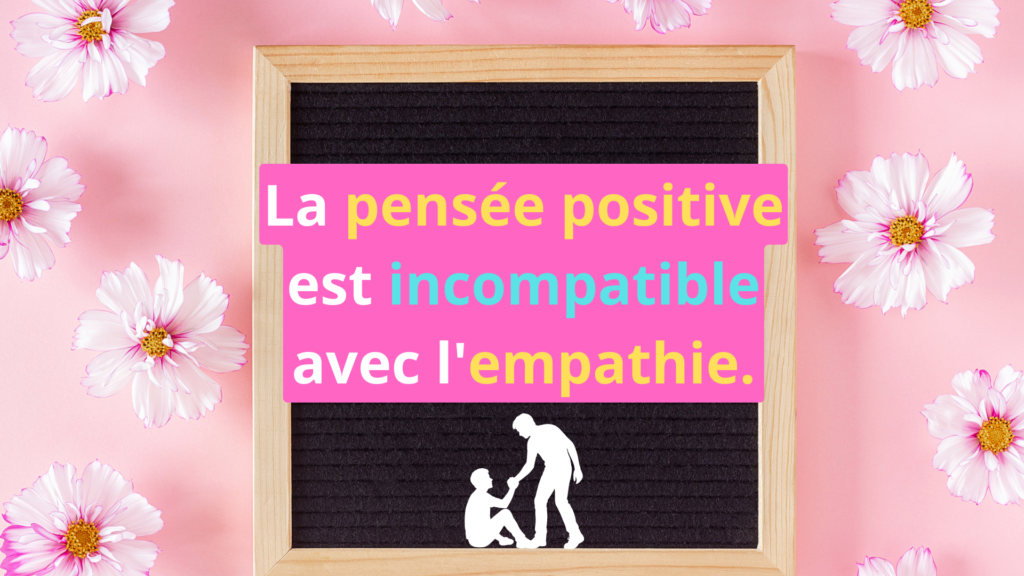
Positive thinking and empathy are often treated as close cousins, yet they pull in opposite directions when someone is struggling. Telling a person, or yourself, to "be positive" does not magically erase fear, sadness or shame, and it rarely turns pain into joy.
The phrase is seldom said with bad intent. Most of us say it because we feel helpless, uncomfortable with vulnerability, or simply unsure what else to offer. But a person in distress usually needs understanding, not a slogan.

This article explains why forced positivity clashes with empathy, what emotions are actually for, and how to respond in a way that truly supports someone.
Quick takeaways
- "Be positive" dismisses real feelings and blocks empathy.
- People sharing a worry usually want understanding, not solutions.
- Every emotion signals an unmet need worth listening to.
- Suppressed emotions build up and can erupt or cause illness.
- Fear is healthy and helps us protect ourselves and others.
- Support growth with listening, validation and presence.
Why "be positive" does not help
When we tell someone in pain to cheer up, or suggest they repeat positive affirmations, we usually do it because we want them to feel better. The intention is kind, but the effect is different: it signals that their emotion is unwelcome. Positive thinking and empathy are contradictory here, because empathy requires making room for the feeling rather than pushing it away.
Few of us learned empathy like a mother tongue. More often we absorbed emotional repression through phrases such as "stop crying", "it is not that scary" or "there is no reason to be so sad". Those lines teach a child that some feelings are unacceptable, a habit that follows us into adult relationships.
Understanding is a basic human need
Someone who shares a worry is often not asking for a solution or advice. They need understanding and empathy: a friendly ear, a shoulder to cry on, permission to feel. Every person, man or woman, wants to be understood and to feel an emotional connection rather than judgment or having their problem minimized.
In any relationship, your role is not to fix the other person's problems but to offer support. Validating emotions means giving someone the right to be sad, angry or afraid. Letting emotions be fully felt is what leads to healing, and being human means feeling the whole range of human emotion.
When emotions find no welcome and are denied with positivity, they accumulate in the body as tension. Like a pressure cooker, they eventually erupt in a disproportionate outburst, or in physical and mental illness. People who cannot "stay positive" may end up ashamed of their feelings and stop confiding at all, and loneliness and shame are fertile ground for depression.
| Emotion | Typical cause | Need to nourish |
|---|---|---|
| Anger | Frustration, injustice, violated integrity | Listening, release, change, repair |
| Sadness | Loss, separation, failure | Comfort, acceptance, expression |
| Fear | Danger, unknown, insecurity | Protection, safety, reassurance |
| Joy | Success, wonder, gratitude | Sharing, connection, celebration |
| Shame | Judgment, mockery, misalignment with values | Acceptance, restored self-esteem |
The flower metaphor: growth cannot be ordered
Think of a flower. To help it grow, we do not order it to grow; we water it, mind its light and enrich its soil. The same applies to people: we cannot simply command someone to flourish. We water them with listening, empathy, validation, support and presence.
This is also why small daily rituals matter in family life. A calm bedtime, shared play or a simple outdoor activity gives children regular space to express what they feel, much like outdoor toys invite movement and release. Fine-motor play such as fine motor toys can also help a child settle and focus, which often makes talking about feelings easier.
What each emotion is telling us
Healthy emotions last a few minutes, rarely more than five, and act as physiological signals that draw attention to unmet fundamental needs. Each emotion has its own cause and its own need to nourish.
Anger, sadness and fear
Anger comes from frustration, injustice, powerlessness or a violation of integrity, and it calls for listening, understanding, release of energy, change and repair. Sadness follows loss, separation or failure and needs comfort, acceptance, emotional expression such as crying, and unconditional love. Fear arises from danger, the unknown, insecurity or threat, and needs protection, help, understanding, safety and reassurance.
Joy, disgust and shame
Joy comes from success, wonder, encounter or gratitude, and needs sharing, connection and celebration. Disgust points to harm or disrespect for physical integrity, including rape, and needs safety, respect, emotional acceptance and justice. Shame comes from misalignment with values, mockery or judgment, and needs restored self-esteem, acceptance and unconditional love.

Fear is a perfectly normal emotion
Fear is entirely normal in troubled times. There is no shame in feeling afraid, even when surrounded by encouragement toward positive thinking, mindfulness or meditation. Fear is a healthy emotion and a signal that potential danger exists.
Fear should be listened to rather than fled, denied or muted. It is fear that pushes us to protect ourselves and others, to respect hygiene measures and to look after one another. Fear becomes a problem when it turns into panic attacks or mental rumination. Then it helps to keep an emotional journal, call someone close to talk about the fear, or sit with it for a moment and simply tell it that it has the right to exist and will be taken into account in daily actions, perhaps even thanked as a useful guide toward protective gestures.
Children feel this too, and everyday care supports them. Knowing the baby check ups schedule reassures new parents, while sensory toys give toddlers a safe outlet for big feelings. Even choosing children's clothes together can offer a small sense of control on anxious days.
How to practise empathy instead of positivity
Empathy is a skill, and like any skill it improves with practice. Start by naming what you notice without judging it: "You look really tired and sad today." Then resist the urge to fix, and ask what the person needs, or simply stay present.
With children, this means allowing tears and naming the emotion behind them. A short story, a game or a shared task can open the door to conversation. Reading together about equality, for instance with board games about feminism, or simply playing quiet toys side by side, creates calm moments where feelings surface naturally.
For adults, the same principle holds. When a partner is overwhelmed, listening without advice is often the most generous thing you can do. Practical support, such as sorting out bicycle safety accessories together or planning snow equipment, can also show care without dismissing the emotion. And if you notice yourself snapping or feeling constantly tense, it may be worth checking your own health, including things like hyperthyroidism in children when a young one seems unusually irritable.


My hands-on take
I used to be the person who rushed to reassure. When my child cried over a scraped knee or a lost toy, my first reflex was "it is fine, don't worry". Then I noticed the crying got louder, not softer. So I tried something different: I sat down, said "that really hurt, didn't it", and waited. The tears came, then stopped, and we moved on far faster than before.
I have made the same shift with adults. When a friend tells me about a hard week, I now bite back the advice and just listen. It feels slower and less useful at first, but people open up more. Forced positivity was my way of managing my own discomfort, and letting go of it made me a calmer, more present parent and friend.
Frequently asked questions
Is positive thinking always harmful?
No. Optimism can be useful, but it becomes harmful when it is used to silence real emotions. The problem is the injunction to be positive, not hope itself.
How long should a healthy emotion last?
According to the source, healthy emotions last a few minutes, rarely more than five. When a feeling lingers for hours or days, it may point to rumination or an unmet need worth addressing.
What can I say instead of "be positive"?
Try naming what you see and offering presence: "That sounds hard, I am here." Asking what the person needs gives them room to choose rather than telling them how to feel.
Is it wrong to want to cheer someone up?
Not at all. The wish to help is genuine. The key is to comfort without denying the emotion, so the person feels heard rather than corrected.
Product Reviews
 Best Toys for Dogs With High Prey Drive |
Best Outdoor Toys for 3-4 Year Olds |
Best Outdoor Toys for 6 Year Olds |
Best Harness for Poodle |
Best LEGO Sets for Adults |
Best Travel Toys for 4 Year Olds on Airplane |
Best Toy Stores in Washington DC |
Best Potty Training Toys |
Best Toys for Tripod Dogs |
Maillot equipe de france







