


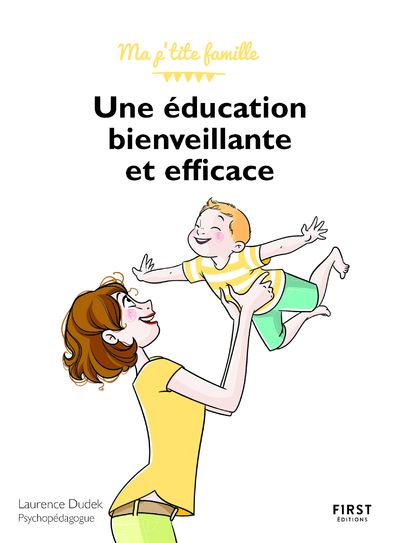
No violence can be educational, and understanding why matters for every family. Psychotherapist Laurence Dudek, who is deeply committed to fighting violence in all settings, explains in her work that so-called "ordinary" and "educational" violence does lasting harm.
Violence is not only about blows. It also includes shouting, humiliation, criticism, guilt-tripping, blackmail, threats, and the denial of emotions, and these psychological forms are just as toxic as physical ones.

This article walks through what educational violence looks like, why it teaches children the wrong lessons, and how punishment-and-reward systems in school and home keep the cycle going.
Quick takeaways
- Violence includes psychological harm like shouting, humiliation, and threats, not just physical blows.
- Physical punishment is recognised as maltreatment and banned in many school settings.
- Children exposed to violence learn fear, mistrust, imitation of aggression, and confusion between love and harm.
- Punishment-and-reward systems trigger fear that blocks reflection and genuine learning.
- Educational violence in all forms harms wellbeing and weakens society as a whole.
- Calm limits, explanation, and repair offer a healthier alternative to correction through fear.
Physical violence is still defended in many families
Dudek observes that using violence against children is a kind of privilege some adults cling to, often unconsciously, whether they are parents, teachers, early-childhood staff, or care professionals. Physical violence takes many forms: cold showers, spankings, slaps, ear-pulling, arm- or hair-pulling, shaking, and pinching.
Such acts are increasingly recognised as maltreatment, yet they remain widespread and even defended in some homes. In French schools, physical punishment is explicitly banned in nursery and primary settings under a 1991 circular. Parents building calmer routines often find that a toys for crawling guide helps them focus on connection with babies rather than correction.
Recognising these acts as violence is the first step. Many adults were raised with them and mistake them for normal discipline, so naming them clearly is essential before anything can change.
Psychological violence is just as toxic as blows
Violence is not limited to hitting. Shouting, humiliating, criticising, guilt-tripping, blackmailing, threatening, and repressing or denying emotions all count as psychological violence, and Dudek stresses it is as toxic as physical blows.
This "ordinary" educational violence plays out daily everywhere: in parenting, at school, in care homes, sports clubs, and nurseries. Dudek argues that whatever form it takes and whatever educational "disguises" justify it, violence harms children's wellbeing and degrades society as a whole.
Learning to spot these patterns in everyday talk is a skill, much like the awareness covered in our maturational delay article, where recognising a child's real needs changes how adults respond. The same thoughtful approach applies to choosing science toys and to the treats children eat.

| Form of violence | How it shows up | Gentler alternative |
|---|---|---|
| Physical | Spanking, slaps, shaking, pinching | Calm limits and clear expectations |
| Verbal | Shouting, criticism, humiliation | Respectful, specific feedback |
| Emotional | Threats, blackmail, guilt-tripping | Naming feelings and problem-solving |
| Systemic | Punishment-and-reward, competition | Cooperation and shared responsibility |
| Denial of feelings | Dismissing emotions as unimportant | Validating and listening |
What children actually learn from violence
Hitting or humiliating a child to force obedience, to punish, or to discharge an adult's own sense of powerlessness floods the child's brain with fear and stress and produces perverse lessons. The child learns that harming others is allowed in the name of good, and that force may be used on anyone smaller or weaker.
When an adult resorts to violence, the child learns that violence is a normal, healthy, inevitable part of human relationships, and that only two roles exist: dominant aggressor or dominated victim. Children exposed to educational violence genuinely learn several things:
The lessons no child should learn
They learn to fear adults in general, especially those supposed to protect them. They learn to hurt, to harden, and to stop trusting their own sensations and emotions, which are useful internal compasses. They learn by imitation to use violence on the weak. They learn to confuse love with violence. They learn to fear punishment or chase rewards rather than develop ethics and responsibility. They learn to avoid consequences for themselves without considering those affecting others, and to lie and hide, as the saying goes: "When the cat is away, the mice will play."
Why punishment and reward fail at school
Dudek regrets that methods favouring punishment, reward, and competition between children are applied in families largely because they are built into school and social-system practice at scale. These violent "educational" practices are simultaneously the mother and daughter of society.
Such emotionally charged practices inhibit intelligence in a vicious circle: fear switches on the emotional brain, short-circuits the higher thinking brain, and blocks reflection. If children learn anything in these conditions, they learn despite the methods, not because of them. A calmer home environment, perhaps with the party favor toys you choose for celebrations, models a very different tone. Playful tools like a Ninjago character quiz can also spark lighthearted connection.
Educational violence in all its forms and intensity has harmful consequences. It turns children's natural empathy and cooperation into a predisposition for competition and performance at any cost, risking generations of irresponsible people with no morality beyond individual profit and no empathy in social life.
Choosing a gentler path forward
Awareness is the starting point. Once adults recognise shouting, threats, and humiliation as violence rather than discipline, they can begin replacing them with calm limits, clear explanations, and repair after mistakes. This shift is a form of care as deliberate as choosing the right illustrated books to share at bedtime.
Families and schools reinforce each other, so change in one setting supports change in the other. Modelling respect and cooperation shows children that relationships need not be a contest between aggressor and victim. The same principle of attentive, respectful care appears in our guide to physiotherapy in babies, where gentle handling supports development.
It also helps to remember that motherhood reshapes priorities, and that new family models each bring their own strengths to this work.
No single adult can undo every cultural habit at once, but each calm response teaches a child something better than fear: that they matter, that their emotions are valid, and that problems can be solved without harm.

My hands-on take
In my own home, the hardest habit to break was raising my voice when I felt powerless. I used to tell myself that a sharp tone was just "being firm," but watching my child flinch taught me otherwise. What helped was pausing before reacting and naming what I felt out loud, then setting the limit calmly once I had settled.
I also started repairing after I slipped. A simple "I shouted, and that wasn't fair, I'm sorry" did more for our relationship than any punishment ever did. It took practice and plenty of imperfect days, but the shift from fear to trust was worth every awkward apology.
Frequently asked questions
Is psychological violence really as harmful as physical violence?
Yes. Dudek stresses that shouting, humiliation, threats, and denial of emotions are as toxic as blows. They affect the child's wellbeing and shape how they understand relationships.
Doesn't punishment teach children to behave?
Punishment triggers fear, which switches on the emotional brain and short-circuits reflection. Children may comply, but they learn to avoid consequences rather than develop ethics and responsibility.
Can gentle discipline still set limits?
Yes. Gentle discipline replaces fear with calm, clear limits, explanations, and repair after mistakes. It models respect and cooperation rather than an aggressor-victim dynamic.
Why does school matter in this discussion?
Punishment, reward, and competition are built into school practice at scale, and families often mirror them. Changing these practices in one setting supports change in the other.
Product Reviews
 Best Toys for Dogs With High Prey Drive |
Best Outdoor Toys for 3-4 Year Olds |
Best Outdoor Toys for 6 Year Olds |
Best Harness for Poodle |
Best LEGO Sets for Adults |
Best Travel Toys for 4 Year Olds on Airplane |
Best Toy Stores in Washington DC |
Best Potty Training Toys |
Best Toys for Tripod Dogs |
Maillot equipe de france







