


Memory strategies that feel productive are not always the ones that build lasting knowledge. Rereading a lesson, highlighting whole paragraphs and copying notes again can help a child scrape through a test, yet the return on all that effort, energy and time stays low.
What these habits produce is short-term recall, and they do little for real understanding. The good news is that a different approach, based on how memory actually works, is simple enough to teach at home.

This article looks at the three classic habits worth retiring, then walks through a practical routine that trains the brain to rebuild information rather than merely store it.
Quick takeaways
- Rereading, highlighting and copying notes mostly build short-term recall, not understanding.
- Memory is reconstructive: remembering means rebuilding information, not retrieving a stored file.
- Studying is training that reconstruction, which is why self-testing beats passive review.
- Describe concepts in your own words, summarise them in a word or drawing, then check the source.
- Personal, humorous retrieval cues and a simple mind map make revision active.
- Always finish with a break of at least thirty minutes, then test again without cues.
Why Rereading, Highlighting and Copying Fall Short
These three strategies share a common flaw: they feel like studying because the eyes and the hand are busy, but the mind stays passive. Rereading a course creates a warm sense of familiarity that is easily mistaken for mastery. Highlighting and underlining simply move the same words around on the page.
Rewriting a lesson several times is the most time-hungry of the three. It can carry a student through a quick test, yet the information tends to vanish soon after, and none of these methods asks the child to understand what the words mean.
A quick reality check
If your child can recite a definition but cannot explain it in their own words, the material was stored shallowly. That is the signal to switch methods, not to add more highlighting. Even young children benefit from this shift, much as they do when toys for four year olds invite them to build and rebuild rather than simply watch.
Memory Is Reconstructive, Not a Mental Drawer
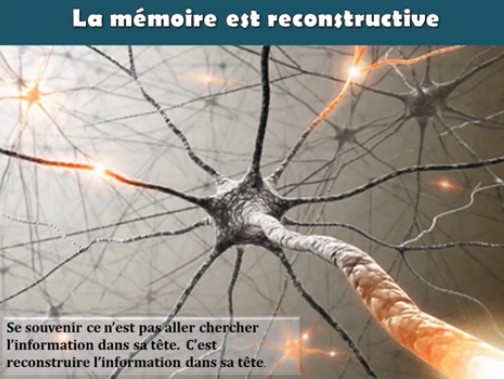
It is tempting to picture memory as a drawer where information is filed and later retrieved intact. In reality, memory is reconstructive: there is no single spot in the head holding a fact. Remembering means rebuilding the information and bringing it back to consciousness.
Studying, then, is not about putting information into the head. It is about practising the reconstruction of that information. This also explains why we sometimes know a great deal yet can only rebuild a fraction of it in a given moment.
The system works this way on purpose, so we are not flooded by irrelevant detail at every instant. The best way to ensure a child can rebuild knowledge when it matters, whether in an exam or the next lesson, is to train that rebuilding directly. Testing yourself is where the learning happens, which is why a calm nap routine before a study session can help a tired brain focus on the task. Just as baby sign language builds communication step by step, recall grows through repeated practice.
| Habit | What it feels like | What to do instead |
|---|---|---|
| Rereading the lesson | Familiar and comfortable | Close the book and describe it aloud |
| Highlighting text | Productive and colourful | Summarise the idea in one word or drawing |
| Copying notes repeatedly | Thorough and diligent | Make question-and-answer cards |
| Checking the answer key | Reassuring | Attempt recall first, then verify |
| Studying in one long block | Efficient | Split with a break of at least thirty minutes |
Step One: Explain It in Your Own Words
The routine begins with description. Ask your child to describe the thing, event, process or theorem using their own words, without looking at the page. This immediately exposes gaps that rereading would have hidden.
Next, have them summarise a concept or an idea from the chapter in a single word or a small drawing. Then they return to the lesson to check whether their version was accurate. That return trip is not a failure; it is the moment the correction sticks.
Children who resist writing may respond better to talking it through aloud, and a little playfulness helps. The same principle of active engagement shows up in pretend play toys, where a child rehearses a scene rather than passively watching it. Keep sessions short and encourage honesty about what they could not recall.
Step Two: Build Retrieval Cues and a Revision Support
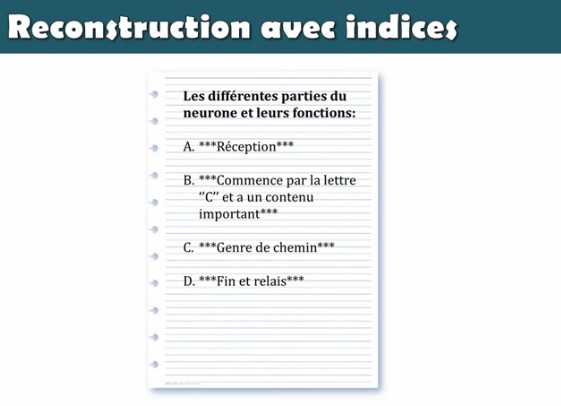
Retrieval cues are the next tool. These are not answers but crutches: a keyword, a drawing, an acronym, a rhyme. The more personal, humorous and exaggerated the cue, the better it tends to work, because the child's own imagination does the anchoring.
With those cues in hand, create a revision support. A mind map works well, as do cues written in the margin or gathered on a single sheet. The act of designing the map is itself a round of reconstruction, so resist the urge to copy a ready-made one.
Some children like to colour-code their maps, and a set of LEGO Technic colours can inspire a simple system of categories. Others prefer to draw. Either way, the support should be sparse enough to prompt memory rather than replace it.
Step Three: Describe Again, Pause, Then Test Without Cues
Now the child describes the material once more, using the cues only when stuck. This second pass is noticeably faster than the first, which is encouraging in itself. Then comes the part most families skip: a real break.
Take at least thirty minutes to do something completely different. A walk, a snack, a game, anything unrelated. This pause lets the reconstruction settle instead of blurring into the next task. If your child is jet-lagged or short on sleep, a children's jet lag plan may matter more than any study technique that day.
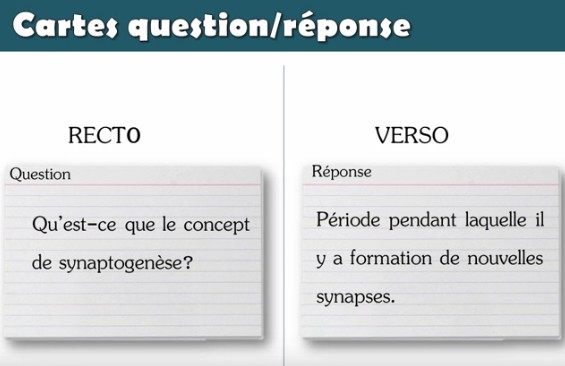
Finally, practise rebuilding the information without the cues, as in a real classroom or test. Flash cards, or question-and-answer cards, suit this stage well because they push the child to invent relevant questions and answer them. Making the cards is itself useful revision.
Making the Routine Stick at Home
A routine only helps if it survives a busy week. Keep sessions to fifteen or twenty minutes and place them where distractions are low. If a younger sibling is around, a basket of Mega Blocks bricks can keep small hands busy while the older child works.
Model the method yourself. Show your child how you summarise a recipe or a news story in one word, and let them catch you checking back against the original. Children copy what they see far more readily than what they are told, and the same holds for the regular medical check ups you keep on the calendar.
Track effort rather than marks, and celebrate the moment a child explains something clearly in their own words. That is the visible sign that reconstruction is happening, and it is worth far more than a page of neat highlighting. For families juggling several children, a simple computer for five year olds is rarely the answer; a quiet corner and a timer usually are.

My hands-on take
I tried this with my own child after years of watching him highlight entire pages and then blank on the same material a week later. The turning point was asking him to close the book and explain a single concept to me out loud. The first attempt was halting and full of gaps, and I nearly jumped in to rescue him. I am glad I did not, because the gaps showed us exactly where to start.
What surprised me most was how much he enjoyed making his own cues. He drew ridiculous little cartoons in the margins, and those silly drawings turned out to be the things he remembered under pressure. The thirty-minute break was the hardest rule to enforce, since he wanted to keep going, but the second round after a proper pause was always noticeably sharper. We now keep sessions short and finish with a walk.
Frequently asked questions
Are rereading and highlighting completely useless?
Not completely. They can help a student pass a quick test, but the return on the time invested is low and the knowledge fades fast. Treat them as a first contact with the material, not as studying.
How long should a study session last?
Short sessions work best, roughly fifteen to twenty minutes of active reconstruction. What matters more is the pause afterwards: at least thirty minutes of something completely different before testing again.
What are retrieval cues, exactly?
They are prompts such as a keyword, drawing, acronym or rhyme that help a child rebuild information. They are not answers, and the more personal, funny or exaggerated they are, the better they tend to work.
Does this approach suit young children too?
Yes, in simplified form. Asking a child to explain something in their own words or draw it works at almost any age. The key is keeping it playful and brief.
Product Reviews
 Best Toys for Dogs With High Prey Drive |
Best Outdoor Toys for 3-4 Year Olds |
Best Outdoor Toys for 6 Year Olds |
Best Harness for Poodle |
Best LEGO Sets for Adults |
Best Travel Toys for 4 Year Olds on Airplane |
Best Toy Stores in Washington DC |
Best Potty Training Toys |
Best Toys for Tripod Dogs |
Maillot equipe de france







