


Living books for beginner readers are the heart of a Charlotte Mason approach to reading, and choosing them well is one of the most useful things a parent can do. Charlotte Mason was an English educator and a contemporary of Maria Montessori, and she placed enormous weight on the quality of the books placed in a child's hands. Her idea was simple: children need living books in abundance, because an intellectual life is fed by living ideas.
Our job as educators, in this view, is to expose a child to as many beautiful and great ideas as possible. A child needs a generous quantity of noble material to build a life of their own. Living books are superbly written and beautiful, created by passionate authors who share knowledge in an engaging, committed way rather than in a dry, fact-dumping style. They should strike sparks in a child's mind.

Such books have a soul. They leave a positive mark, stir emotion, carry the reader along, make things feel alive, are often funny, and overflow with rich vocabulary. Below is a selection read and approved recently, suitable from age five and for independent reading from roughly seven or eight.
Quick takeaways
- Living books are superbly written, passionate and full of ideas, not dry fact-dumpers.
- They should spark emotion, humour and curiosity, and carry rich vocabulary.
- Read aloud from age five; many titles suit independent reading from seven or eight.
- Dr. Seuss builds rhythm and phonological play; Dahl builds wordplay and mischief.
- Usborne classics are well made and worth keeping, with padded covers and ribbons.
- Pair fiction with science stories to feed general knowledge and moral character.
What makes a book a living book?
A living book is not simply an easy reader. It is extremely well written, often beautiful as an object, and written by someone who genuinely loves the subject. It delivers knowledge in an interesting and engaged way, so the facts arrive attached to feeling and story rather than presented as a list.
The test is whether the book sparks something. A living book has a soul, marks the mind positively, provokes emotion, transports the reader, and makes things feel alive. Humour helps a great deal, and so does a rich, varied vocabulary — children absorb far more language from a book they love than from one they merely decode.
Why vocabulary and story matter more than level
These titles share three traits: rich and varied language, inspiring stories, and a contribution to a solid general culture as well as a strong moral character. That combination is what makes them worth rereading. If you want to widen the shelf beyond fiction, there are also stories about art that work well for young children.

Dr. Seuss: rhythm, fantasy and humour
Dr. Seuss is prized for musical writing, fantasy and humour, and two of his books are ideal first steps into living books.
Green Eggs and Ham (Les oeufs verts au jambon) is translated from the American original and faithfully reproduces the author's playful style. It tells the story of Sam-I-am, who desperately tries to get a stubborn old grouch to taste a strange dish. The repetition and bounce make it a pleasure to read aloud, and a child who is tired or overstimulated will often still settle for a rhythmic book — useful to know when you are managing child fatigue at the end of a long day.
Horton Hears a Who! (Horton entend un Zou) is perfect for playing with the sounds of language, and it carries a message too: everyone deserves to be loved and supported, whether they are big, small or even microscopic. Horton the elephant saves the tiny inhabitants of a speck of dust through sheer courage.

| Title | Author or publisher | Best suited to |
|---|---|---|
| Green Eggs and Ham | Dr. Seuss | Read aloud, ages 5+ |
| Horton Hears a Who! | Dr. Seuss | Read aloud, sound play |
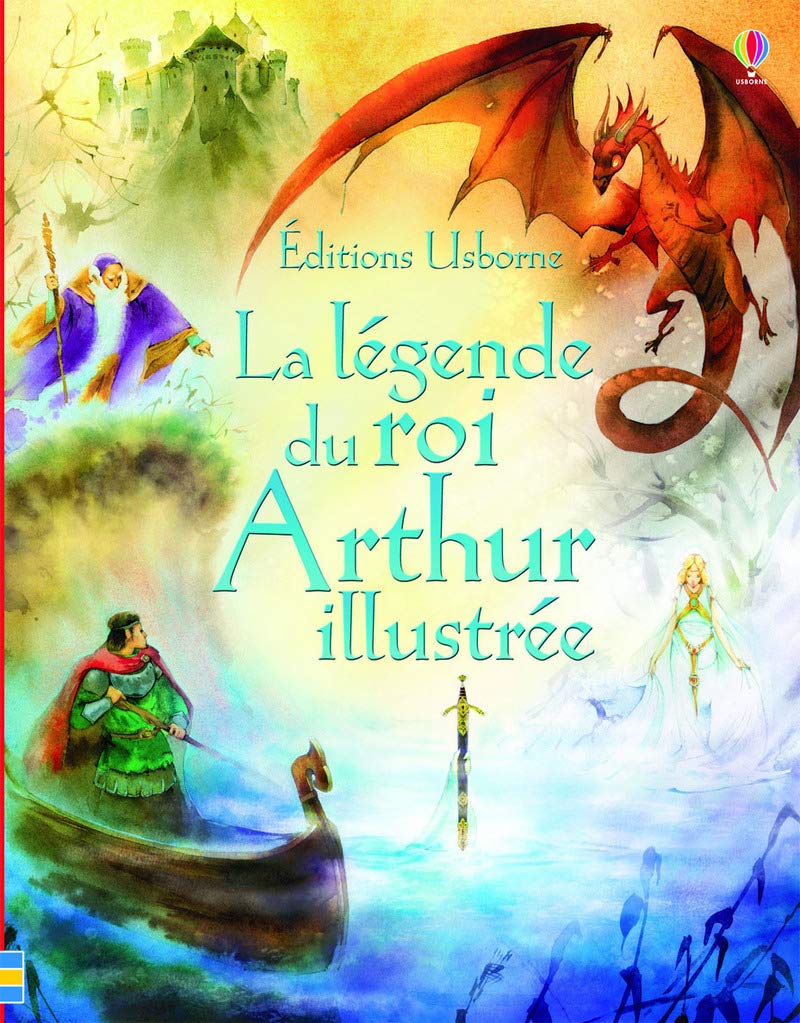
| The Legend of King Arthur | Usborne | Gift, shared reading |
| The Wizard of Oz | Usborne | Confident readers, 7+ |
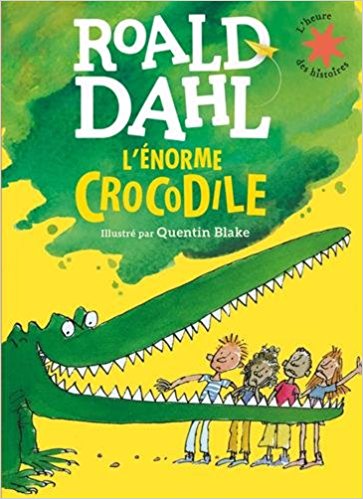
| The Enormous Crocodile | Roald Dahl | First independent reads |
| Fantastic Mr. Fox | Roald Dahl | Read aloud or 7+ alone |
Usborne editions: classics worth keeping
Usborne keeps appearing in this selection for good reason: the production values are high, and the retellings are careful.
The Legend of King Arthur is a beautifully illustrated collection recounting the deeds of Arthur and the knights of the Round Table. From Excalibur to the final battle, children are fascinated by the Arthurian legend. It is a lovely gift book, bound with a padded cover and a ribbon bookmark.
The Wizard of Oz offers the complete text of Lyman Frank Baum's novel in a sumptuous illustrated edition. Young readers follow Dorothy and Toto through the land of Oz, and the story's popularity has never faded, having been adapted many times for stage and screen. Modern illustrations give this classic fresh energy for a new generation. It belongs to a collectable series of illustrated classics with beautiful binding, headbands, a padded cover and a ribbon marker — the kind of book a child reads and rereads. A sturdy, well-made volume also survives being carried around, much like the toys for flights that keep a journey calm. For quiet days at home, these screen free toys pair well with a good book.
Roald Dahl: wordplay and mischief
Dahl earns his place twice over. The Enormous Crocodile (L'énorme crocodile) opens with the beast deciding that nothing is more delicious than a plump, juicy child. Fortunately his plans are thwarted: it is not so easy to find a child to devour when the other jungle animals do everything to stop you.
This is the smallest book in the selection and can be read independently quite quickly by young readers. It is packed with puns and rhymes, offers very rich vocabulary, and reads with a strong rhythm — and it is extremely funny, especially the ending, which usually produces explosions of laughter.
Fantastic Mr. Fox (Fantastique Maître Renard) introduces three rich farmers — Boggis, Bunce and Bean, fat, small and lean, ugly as lice, mean, miserly and nasty — feared by everyone nearby, especially children and animals. Above the valley, a fox family has made its den, and Mr. Fox has found a clever way to provision himself from the three men's henhouses. Fat turkeys and tender chickens appear on the menu every evening, until the three farmers plot a terrible revenge. Fierce and delicious.

Science and the wider world
George's Secret Key to the Universe (Georges et les secrets de l'Univers) begins when George meets his new neighbours: young Annie and her scientist father, Eric. At their house he discovers a secret that overturns his view of the world. Eric owns Cosmos, the most sophisticated computer imaginable, able to project you to the four corners of the universe, so exploring space, skimming past planets and crossing an asteroid storm becomes child's play.
But in the wrong hands this super-intelligence could be formidable, and Eric and George are about to find out how. The book was co-written by the astrophysicist Stephen Hawking and his daughter, which gives the science real weight without losing the story.
Reading aloud is one of the simplest ways to build a family culture around books, alongside small rituals that hold a household together — the kind of everyday glue discussed in happy family keys. And if you are choosing what to pack for a trip or a quiet afternoon, the same logic of quality over quantity applies as with toys for one-year-olds: few things, chosen well. The same care shows in everyday choices, from a good children's comb to the stories we share as children grow.



My hands-on take
In our house the read-aloud slot is non-negotiable, and it has taught me more about book choice than any list. When I tried a dry early reader, my child fidgeted and negotiated; when I opened The Enormous Crocodile, the same child begged for one more page. The difference was never difficulty — it was whether the language had life in it.
Practically, I keep a small basket of living books rather than a towering shelf, and I let my child choose from it. I read Dr. Seuss aloud for the rhythm and let Dahl be discovered alone when confidence arrives. If a book does not spark anything after a few pages, I put it away without guilt and try another. That single habit has done more for our reading life than any reading scheme.
Frequently asked questions
What exactly is a living book?
A living book is an extremely well-written book by a passionate author that conveys knowledge in an engaging way. It has a soul, stirs emotion, is often funny, and uses rich vocabulary rather than dry summaries.
At what age can my child read these alone?
The selection works from about age five as read-alouds, and from roughly seven or eight for independent reading. The Enormous Crocodile is the shortest and easiest to finish alone.
Does a living book have to be fiction?
No. George's Secret Key to the Universe mixes story with real astrophysics, and it still qualifies because the ideas arrive alive rather than as a list of facts.
Should I worry if my child rereads the same book?
Not at all. Rereading is a sign the book is doing its job, and each pass tends to add vocabulary and noticed detail.
Product Reviews
 Best Toys for Dogs With High Prey Drive |
Best Outdoor Toys for 3-4 Year Olds |
Best Outdoor Toys for 6 Year Olds |
Best Harness for Poodle |
Best LEGO Sets for Adults |
Best Travel Toys for 4 Year Olds on Airplane |
Best Toy Stores in Washington DC |
Best Potty Training Toys |
Best Toys for Tripod Dogs |
Maillot equipe de france







