


Going with your emotions rather than against them starts with one simple idea: an unpleasant feeling is a message, not an enemy. Anger, fear and sadness tend to arrive right after the brain registers a "danger, this is not good!" signal, and the authors of a French book on emotions call that trigger a grain of sand. It may be a blockage, a deprivation or an obstacle, something that stopped life from moving or stirred up an old memory.
That grain of sand can easily become a mountain. We cannot do much about the automatic bodily reactions, but we can learn to notice our sensations and understand what our emotions are telling us. The method below walks through five steps, from a two-minute pause to stretching and breathing.

Quick takeaways
- An unpleasant emotion is a message triggered by a "grain of sand", not an enemy.
- The emotional wave lasts about two minutes if the mind does not interfere.
- Use a physical pause, such as walking or cool water, to interrupt defensive reactions.
- Name the mental chatter and check whether you are jumping to conclusions.
- Return to the facts your senses recorded before any interpretation.
- Stretch, open the chest and breathe out fully to move through discomfort.
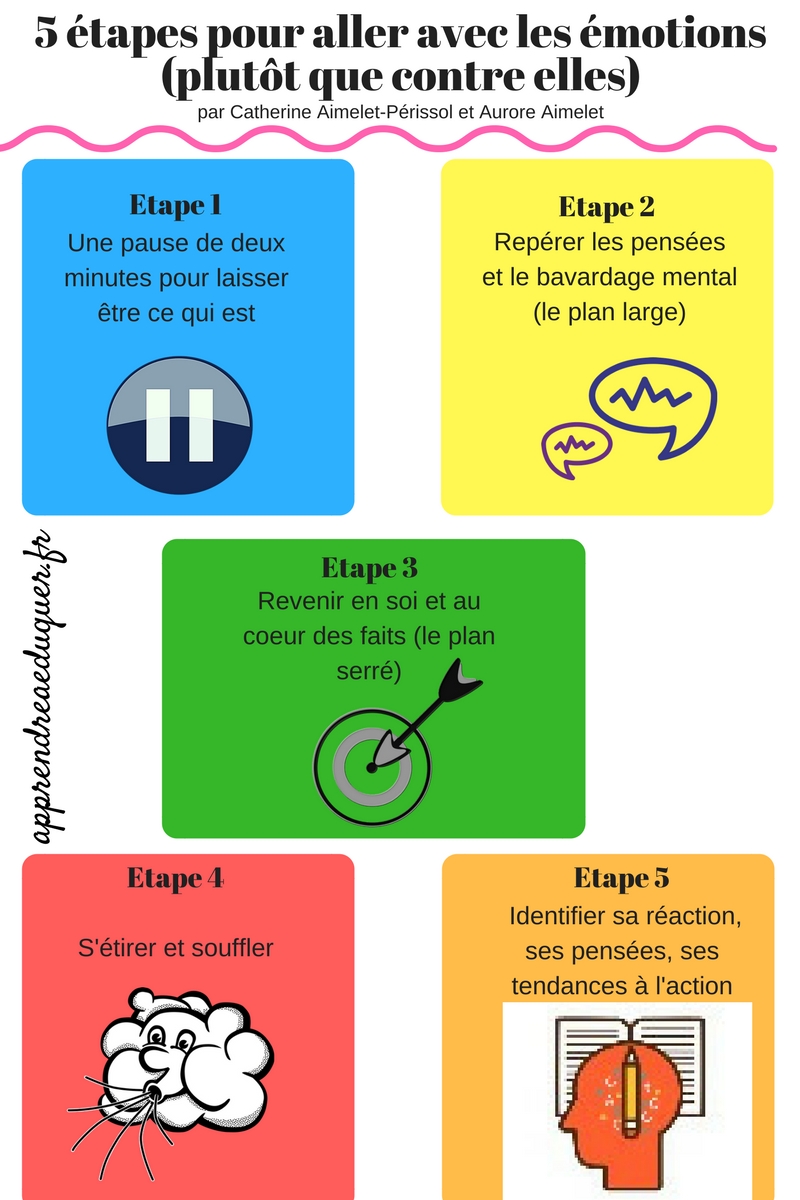
Step 1: A Two-Minute Pause to Let What Is Be
The emotional wave takes about two minutes to travel through the body, provided the mind does not jump in. You sense the grain of sand, the brain decides "this is not good", your body feels uncomfortable, and then it passes. This pause comes right after the physical sensations: a knotted stomach, clenched fists, a tight jaw, short breathing or a racing heart.
The point is to stop the mind from grabbing the experience and producing defensive thoughts and behaviour. A pause can be an action rather than stillness: walk a few steps, close your eyes, drink a glass of cool water, run your hands under warm water, massage your face or eat something pleasant. Parents juggling a household will recognise how hard this is in the heat of the moment, much like keeping calm during baby sleep troubles.
Step 2: Spot the Thoughts and Mental Chatter
After the pause, the mind tends to take over and give meaning to what happened. This is the moment to become aware of the mental show running inside you, the little voice narrating the scene. Ask yourself whether you are confusing the trigger, the outside event, with your emotion, the inside effect.
Then check whether you are jumping to conclusions too quickly. Are you losing nuance, condemning someone for a single mistake, focusing on weaknesses and forgetting strengths, or guessing other people's intentions? Perhaps you are blaming yourself or setting unrealistic goals. Catching this chatter early is a skill that pays off in everyday parenting, whether you are handling pacifier questions or a toddler's mealtime refusals. The same awareness helps you stay calm when bigger worries surface, such as the Blue Whale challenge or choosing STEM toys.
| Step | What you do | Why it helps |
|---|---|---|
| 1. Pause | Walk, sip water, massage your face | Lets the two-minute wave pass |
| 2. Notice thoughts | Ask if you are jumping to conclusions | Stops the mind from building a mountain |
| 3. Return to facts | Ask what a camera would have recorded | Separates the trigger from the emotion |
| 4. Stretch and breathe | Open the chest, exhale fully | Moves through the physical discomfort |
| 5. Accept vulnerability | Let the emotion pass without fighting | Lowers the stress of resisting |
Step 3: Return to Yourself and the Facts
Now listen to yourself so you can see more clearly how you exist in the situation. The invitation is to identify what was perceived as a brake, an obstacle or a deprivation and sparked the emotion, linking it to bodily sensations and thoughts. Ask what really happened, without interpretation or judgement: if a camera had filmed the scene, what would it have recorded?
Then ask what your senses perceived objectively, the words, images, smells and contacts. This step brings you back to the bodily experience, to what jolted or alerted the body before any mental interpretation. It is a reality check that keeps you grounded, a little like the careful observation parents use when choosing Montessori toys for a growing child.
Step 4: Stretch and Breathe Out
Emotions can be uncomfortable, but they are not dangerous. When an unpleasant emotion passes through us, we may feel blocked, deprived or prevented from living fully, as if we were losing substance, energy and vitality. The shock wave travels through the body, then the head. Let it pass; that is normal.
To move through the discomfort, return to the breath. Sit on a chair, stretch your back straight against the backrest, lift the back from the pelvis, open the chest and free the belly. Then take several deep breaths, blowing out fully on the exhale and inhaling naturally. This is the same steadying rhythm many parents look for when starting cereals and settling into calmer routines.

Step 5: Accept Being Vulnerable and Keep Practising
We cannot escape the trial of being alive and therefore vulnerable to outside events. Trying to flee, fight or simply endure, in an absolute desire for safety, recognition or harmony, only raises the level of stress. Going with your emotions means accepting that discomfort is part of the experience rather than a failure to fix.
Practise the five steps regularly so they become familiar, and be patient with yourself when the mountain appears again. The same gentle awareness helps in countless family moments, from choosing quiet toys for a calm afternoon to managing screen time with digital books at bedtime. As you build these habits, you might also enjoy a collection together, and it can even help to know what a master builder earns when patience pays off. Small repetitions build the habit.

My hands-on take
I first tried the two-minute pause on a chaotic morning when everything seemed to go wrong at once. Instead of launching into a lecture, I stepped into the kitchen, ran my hands under warm water and breathed out slowly. Nothing dramatic happened, but the wave did pass, and I could speak to my child without the sharp edge I usually regret.
The step that surprised me most was the camera question. Asking what a camera would have recorded strips away the story I build so quickly, the assumptions about intentions and the conclusions I jump to. I still forget to do it, especially when I am tired, but each time I remember, the mountain shrinks back to a grain of sand.
Frequently asked questions
How long does an emotion actually last?
The emotional wave takes roughly two minutes to cross the body, as long as the mind does not keep feeding it. Thoughts and stories are what stretch it out.
What if I cannot pause in the heat of the moment?
That is normal, because reactions chain together in a fraction of a second. Start by noticing afterwards, then practise the pause in calmer moments so it becomes easier.
Is it wrong to feel angry or sad?
No. Unpleasant emotions are not dangerous, even if they are uncomfortable. They carry a message about a blockage or deprivation, and letting them pass is part of being alive.
Do these steps work for children too?
The same principles, pausing, naming feelings and returning to facts, can guide how you respond to a child's emotions. Model the steps and children gradually pick them up.
Product Reviews
 Best Toys for Dogs With High Prey Drive |
Best Outdoor Toys for 3-4 Year Olds |
Best Outdoor Toys for 6 Year Olds |
Best Harness for Poodle |
Best LEGO Sets for Adults |
Best Travel Toys for 4 Year Olds on Airplane |
Best Toy Stores in Washington DC |
Best Potty Training Toys |
Best Toys for Tripod Dogs |
Maillot equipe de france







