


Ernest and Célestine: Street Musicians is a picture book that earns its place as a genuine modern classic, and it is one of the titles we return to most often at home. It follows the gentle, slightly shabby old bear Ernest and the small, curious mouse Célestine, a pair whose friendship carries the whole story.
We first met them through the animated film, and we loved the artwork, the characters and the values it passes on. The books hold that same warmth, and this particular title stands out for its optimism and its quiet invitation to celebrate life, for small readers and grown ones alike.

Quick takeaways
- A simple, tender story about a leaky roof and a violin-playing bear
- Illustrations that are soft, richly worked and full of quiet detail
- An optimistic message: when one solution fails, another path exists
- Mutual help and friendship shown through actions, not lectures
- Invites children to appreciate what they have and enjoy the present
- Recommended from age three; works for library, gift or bedtime
A simple story about a leaky roof
The plot could hardly be simpler, and that is part of its charm. One day Ernest and Célestine discover that it is raining inside the attic: the roof needs fixing, and there is no money to pay for it. Célestine, being the quicker thinker of the two, comes up with an idea. What if Ernest played his violin in the street?
From that small premise the book unfolds with real delicacy. It touches on the value of the present moment, on helping one another, on optimism and on the strength of love, without ever turning into a lecture. Children follow the plan, the setback and the next attempt, and they understand the emotional arc without needing it explained.
If you are building a shelf of read-alouds that carry real feeling, this belongs beside the other gentle titles you keep coming back to, much like the everyday moments captured in always together.

Soft, richly worked illustrations
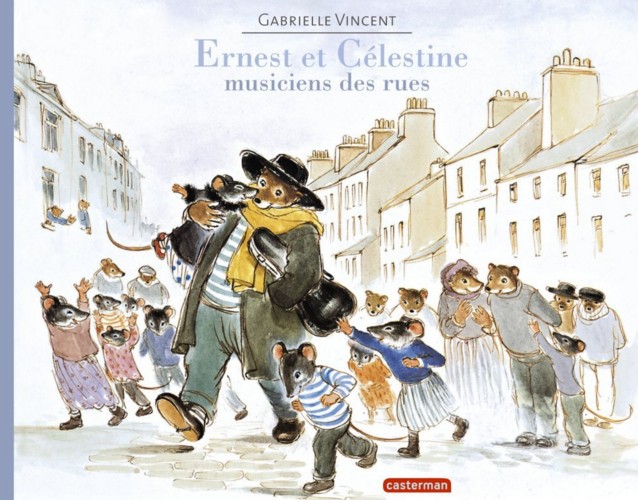
The artwork is the first thing that strikes you. The drawings are soft and tender, richly worked, with a texture that rewards slow looking rather than a quick page turn. There is a slight nostalgia to the palette and the line, which is exactly why the book feels timeless rather than dated.
For a child, the pictures carry as much of the story as the words do. Ernest's slumped shoulders, Célestine's bright expression, the cramped attic: all of it is legible before anyone reads a sentence aloud. That makes the book forgiving for a tired parent reading at bedtime and generous for a child who wants to linger.
Illustration quality matters more than we sometimes admit when we choose books, in the same way that the design of a toy shapes how a child plays with it, as with the picks in toddler toys reviews.
Why the pictures work so well
The softness of the line keeps even the worrying moments safe. Nothing in the images frightens a small child, and the warmth of the two characters is visible on every spread.

| Element | What it offers | Best for |
|---|---|---|
| Story | A small problem, a plan and a setback | Ages 3 and up |
| Illustrations | Soft, textured, nostalgic artwork | Slow page-turning |
| Message | Optimism and another-way thinking | Talking about resilience |
| Characters | Mutual encouragement and care | Discussing friendship |
| Tone | Warm, calm, never preachy | Bedtime reading |
Optimism: there is always another way
The message that comes through most clearly is optimistic without being naive. The book shows that problems can be solved, and, just as importantly, that when one solution does not work out as planned, another path usually exists. That is a genuinely useful idea for a young child to meet early.
It also models a healthy response to disappointment. Ernest and Célestine do not collapse when the plan goes sideways; they adjust. Parents reading aloud can pause there and let the child notice it, which turns a story into a small conversation about resilience.
That kind of emotional scaffolding is the same patient work that goes into early communication skills, the territory covered in language development toys.

Solidarity between the two characters
What holds the book together is the relationship. Ernest and Célestine encourage each other, sense what the other needs and do what they can to meet it. You can feel how much they enjoy simply spending time together, even when things are difficult.
This is friendship shown through action rather than announced in a moral. Célestine spots the problem and pushes gently; Ernest, hesitant and self-deprecating, agrees to try. Each one gives the other something they could not supply alone, and children absorb that model quietly.
It is a good companion to conversations about how we treat the people closest to us, the same ground covered in dad attachment stage and in teenage choking trend when children get older and peer pressure grows.
Talking about it afterwards
Ask your child what Célestine did to help, and what Ernest did in return. The answers usually surprise you.

Appreciating what you have
The final note is one of gratitude. The story invites readers to appreciate what they already possess, even when it is modest, and to celebrate life and the present moment. Given that the two characters have very little, this never feels preachy; it feels earned.
It is also a useful counterweight to the constant pull of wanting more. A child who has just met Ernest and Célestine has a reference point for the idea that a shared afternoon can matter more than a new object, which is a conversation worth having before birthdays and holidays arrive, as with these Christmas gift ideas.
The book is recommended from age three, and that feels right: the story is short, the emotions are clear, and the pictures do a lot of the work. Younger children will follow the images; older ones will start asking the interesting questions.

Reading it at home and finding it
This is a book that works well in several settings: a library borrow, a gift, or a permanent place on the shelf. It sits comfortably in a bedtime routine, and it is short enough that a child can ask for it twice without the reader losing patience.
If you are stocking up for a season of indoor reading, it pairs nicely with a few open-ended playthings that keep the mood calm, such as the options in toys under twenty or the sturdier picks in outdoor toys reviews for the days when everyone needs fresh air instead.
You can find it in libraries, bookshops and online retailers, and it is widely available, so there is no reason to hunt. For families who like to plan reading alongside outings, it also travels well, much like the essentials in baby luggage checklist or the gear in snow equipment children.

My hands-on take
We came to these characters through the animated film first, and my daughter was immediately attached to the pair. When we moved to the books, this was the one she asked for again and again, and I did not mind, because the pictures give an adult something to look at too.
What I noticed in practice is how the story invites conversation without forcing it. After a few readings she started telling me what Célestine should try next, and later she began pointing out when Ernest was worried. That is the small payoff of a well-made picture book: the child starts doing the interpreting. I would suggest reading it once straight through, then a second time pausing on the pages where the plan changes, and letting your child say what they think will happen. It is short enough that a repeat request at bedtime is not a problem.
Frequently asked questions
What age is this book suitable for?
It is recommended from age three. Younger children follow the pictures, while older ones begin asking questions about the story and the characters.
What is the story about?
Ernest and Célestine discover rain coming through the attic roof and have no money to repair it, so Célestine suggests Ernest play his violin in the street.
What themes does it cover?
Optimism, mutual help, appreciating what you have and celebrating the present moment, all handled gently through the relationship between the two characters.
Where can I find it?
It is available in libraries, bookshops and online retailers, so borrowing before buying is easy.
Product Reviews
 Best Toys for Dogs With High Prey Drive |
Best Outdoor Toys for 3-4 Year Olds |
Best Outdoor Toys for 6 Year Olds |
Best Harness for Poodle |
Best LEGO Sets for Adults |
Best Travel Toys for 4 Year Olds on Airplane |
Best Toy Stores in Washington DC |
Best Potty Training Toys |
Best Toys for Tripod Dogs |
Maillot equipe de france







