


Classroom rituals are small, repeated gestures that tell children they are expected, recognized and safe, and they cost a teacher almost nothing but attention. A predictable welcome, a kind word, a familiar routine at the door: these details shape how a group feels about walking into the room each morning.
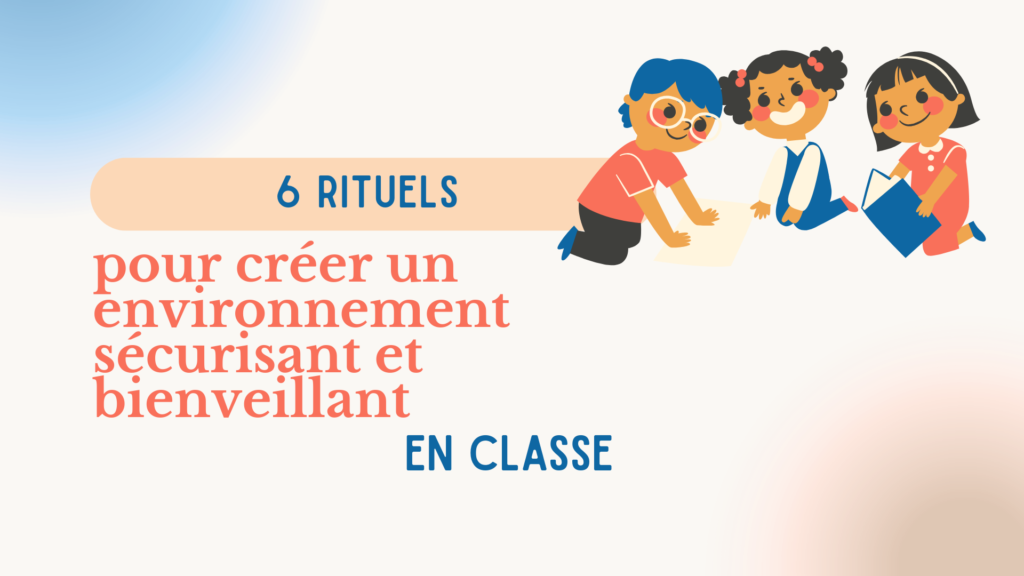
What follows are six rituals a secondary-school teacher uses to create a stimulating, caring environment where cooperation can grow. None of them requires special equipment or a new curriculum. They are habits of relationship, and most can be adapted to a family kitchen table as easily as to a classroom.

Quick takeaways
- Greet every child by name with a small, consistent sign of recognition.
- Phrase instructions in the affirmative: say what to do, not what to stop.
- Use non-verbal signals, and always ask before touching a child.
- When a child is stuck, ask open questions and trust their route to the answer.
- Offer two genuine choices to hand back a little control.
- Keep a written toolbox of the moments that bring calm and interest.
A personalized welcome that makes each child feel special
The first ritual happens at the threshold. Each child is greeted with a small word and a sign of recognition, so that they feel special, seen and genuinely welcome. It can be as short as a name and a smile, or a quick question about the weekend.
The point is not to be theatrical but to be consistent. When a child knows that someone notices their arrival, the room stops being an anonymous space. Parents can borrow the idea at the school gate or after daycare, and it pairs naturally with the kind of warm, reflective presence described in parental mirror.
A welcome also sets the emotional temperature for what follows. If the first thirty seconds are calm and friendly, the next hour is easier for everyone, including the adult.
Positive instructions instead of negations
The second ritual concerns the words we choose. Instructions are given in the affirmative: “walk” rather than “don’t run”, “whisper” rather than “don’t shout”. A negation tells a child what to stop, but it leaves the desired behaviour invisible.
A positive instruction paints a picture the child can actually follow. It also keeps the tone cooperative rather than corrective, which matters when a group is excited or tired. The same principle works at home, where “shoes on the mat” lands better than “don’t leave your shoes there”. Clear, affirmative guidance is especially important with everyday products too, as explained in hydroalcoholic gel safety.
Why it changes the mood
Speaking in terms of what to do shifts the adult’s attention too. Instead of scanning for mistakes, you start naming the behaviour you want to see more of, and children tend to repeat what gets named. The same positive framing helps when you build a wooden house together.
| Ritual | What it looks like | Why it helps |
|---|---|---|
| Personalized welcome | A word and a sign of recognition at the door | Child feels seen and expected |
| Positive instructions | “Walk”, “whisper” instead of negations | Desired behaviour becomes visible |
| Non-verbal signals | Thumbs up, wink, smile, asking before touch | Connection without interrupting |
| Guided answers | Open questions and “you’ll get there” | Thinking slowly is allowed |
| Choices | “Carry on or start again?” | Cooperation instead of standoff |
| Toolbox | A written list of what works | Calm available on hard days |
Non-verbal communication and respect for touch
The third ritual is silent. Non-verbal signs, a thumbs up, a wink, a smile or a quick check, are efficient ways to pass a message and create a connection without interrupting the group. A small gesture across the room can reassure a child more discreetly than a public comment.
Touch deserves care. Some children are simply not comfortable being touched, and that must be respected. Asking first, “would you be okay if I…?”, is a simple way to keep the gesture kind and consensual, and there are plenty of non-contact signs that work just as well. These gentle habits echo the early postpartum days, when respectful touch first builds trust.
These small signals build the kind of everyday trust that children carry with them, the same quiet confidence that values from Heidi reminds us to protect as they grow, much like the care taken when deciding where to sell unopened sets.
Guiding a child toward the answer
When a young person cannot answer a question, the easiest move is to ask someone else or give the answer away. The fourth ritual does the opposite: it welcomes every attempt and accompanies the child along the way with open questions, “how…?”, “where…?”, “who…?”, and with real faith in their ability to get there.
“You’ll get there” is not empty encouragement when it is followed by patient questioning. It tells the child that thinking slowly is allowed, and that a wrong turn is part of the route rather than a failure.
This patience is a form of respect for the child’s own pace, an idea that runs through many of the controversial parenting issues families debate, from homework to independence.
Offering choices as a caring classroom ritual
The fifth ritual gives children a voice. Offering a choice, “would you rather carry on or start again?”, hands back a little control without abandoning the frame. The adult still holds the boundary; the child simply gets to steer within it.
Choices work best when they are genuine and limited. Two options are usually enough, and both should be acceptable to the adult. This small autonomy is often what turns a standoff into cooperation.
At home, the same approach helps with routines that can otherwise become battlegrounds, much like the sensory games that engage children through stimulating the senses rather than through orders.
Building a toolbox of what works
The sixth ritual is a habit of noticing. The advice is simple: do more of what works. What contributes to a safe, caring frame? What brings back calm or interest? Write those moments down and build yourself a toolbox of good practices.
Examples include reading a story aloud, offering a short mindfulness session, or colouring a mandala. The list becomes a resource you can reach for on a difficult day, instead of improvising when everyone is already tense.
This reflective habit is close to the way families choose what to keep, whether it is a bedtime ritual, a well-chosen maternity bag, or the stained glass cookies baked together on a rainy afternoon. Small, repeatable moments do the quiet work of security.

My hands-on take
I tried the positive-instruction habit first, mostly because it was the easiest to start on a Monday morning. Saying “walk” instead of “don’t run” felt awkward for about a week, and then it became automatic. What surprised me was how much calmer I sounded, and how much less I had to repeat myself.
The toolbox idea took longer to take root, but it has become the one I return to. I keep a short list of things that reliably bring the room back down: a story, a few minutes of quiet colouring, a silly question. On the days when I am tired and out of ideas, I do not have to invent anything. I just open the list and pick one.
Frequently asked questions
Do these rituals take a lot of class time?
Very little. Most last a few seconds and replace moments that were already happening, such as greetings or instructions. The investment is consistency rather than duration.
What if a child refuses physical contact?
That is entirely their right and should be respected without comment. Switch to non-contact signals such as a smile, a nod or a thumbs up, which carry the same message of recognition.
Can parents use the same rituals at home?
Yes. A warm welcome, positive instructions, genuine choices and a toolbox of calming activities adapt easily to family routines. The underlying principle is predictability plus warmth.
Is offering choices the same as giving up authority?
No. The adult sets the frame and limits the options to two acceptable ones. The child gains a sense of control inside boundaries that remain firm.
Product Reviews
 Best Toys for Dogs With High Prey Drive |
Best Outdoor Toys for 3-4 Year Olds |
Best Outdoor Toys for 6 Year Olds |
Best Harness for Poodle |
Best LEGO Sets for Adults |
Best Travel Toys for 4 Year Olds on Airplane |
Best Toy Stores in Washington DC |
Best Potty Training Toys |
Best Toys for Tripod Dogs |
Maillot equipe de france







